Skyhawks fall in close G League loss despite Hawkins triple-double
The College Park Skyhawks lost 132-128 to the Grand Rapids Gold on Jan. 8, a high-scoring game that highlighted both the Skyhawks' offensive efficiency and persistent vulnerabilities on the glass. For Prince George's County, the result underscores on-court development questions and broader concerns about player workload, health protections, and the community value of a local developmental franchise.
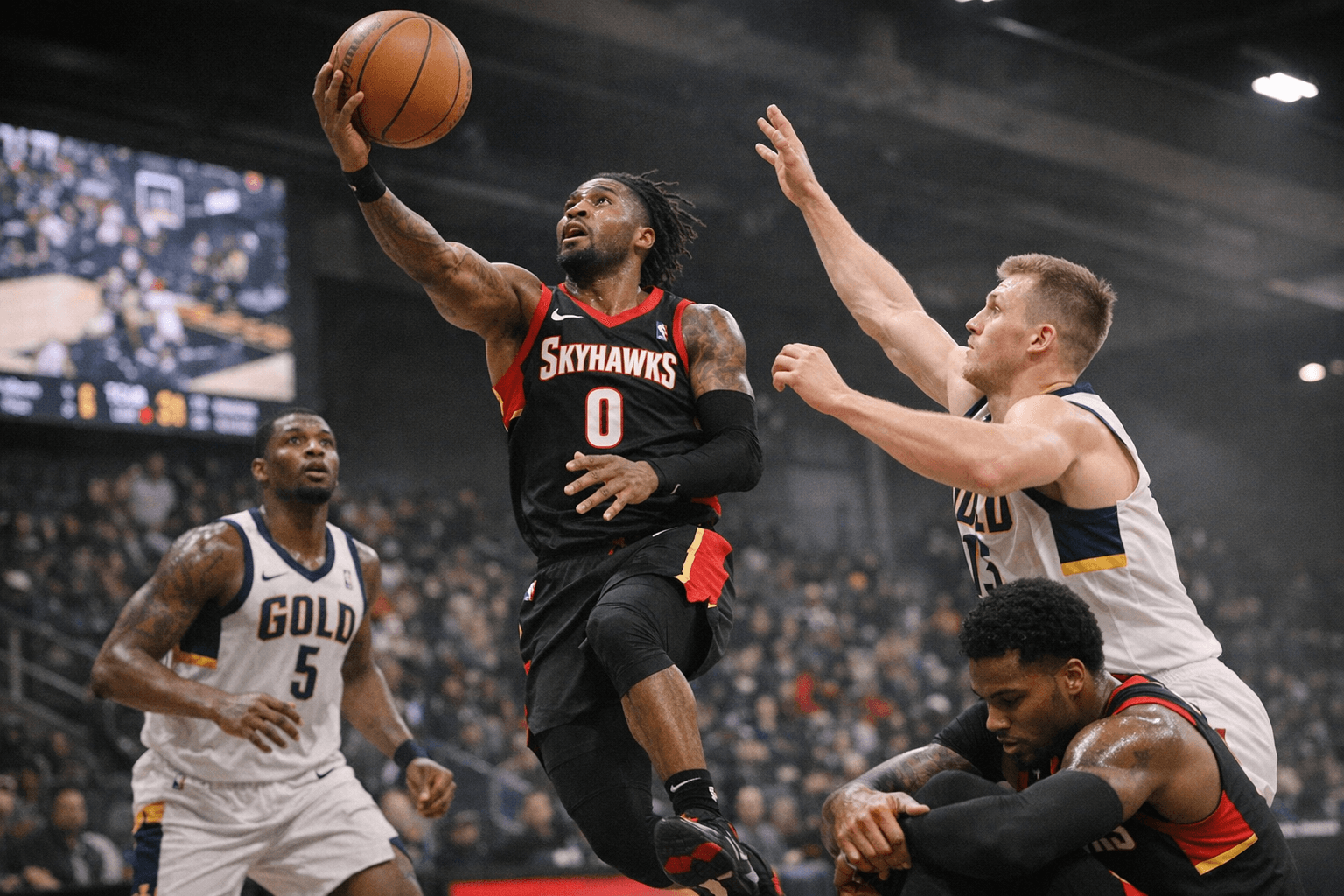
The College Park Skyhawks dropped a 132-128 decision to the Grand Rapids Gold at Van Andel Arena on Jan. 8, leaving the Skyhawks 1-5 on the young G League season while Grand Rapids improved to 3-3. The game drew 3,641 fans and featured an extreme offensive display from College Park that nevertheless fell short because Grand Rapids outrebounded the Skyhawks and produced more balanced scoring across their roster.
Individually, the Skyhawks put up impressive numbers. Kessler Edwards led all scorers for College Park with 26 points on 9-of-13 shooting, including four 3-pointers. Curtis Jones added 25 points on 10-of-21 shooting, hitting five of 13 from deep. Forward Coleman Hawkins posted a rare stat line for the team with 14 points, 15 rebounds and 11 assists, delivering a triple-double while logging heavy minutes. Terrence Hargrove Jr. chipped in 18 points. Team advanced metrics show College Park posted an effective field goal percentage of .615, a figure that typically correlates with winning but was undermined by rebounding and defensive balance favoring Grand Rapids.
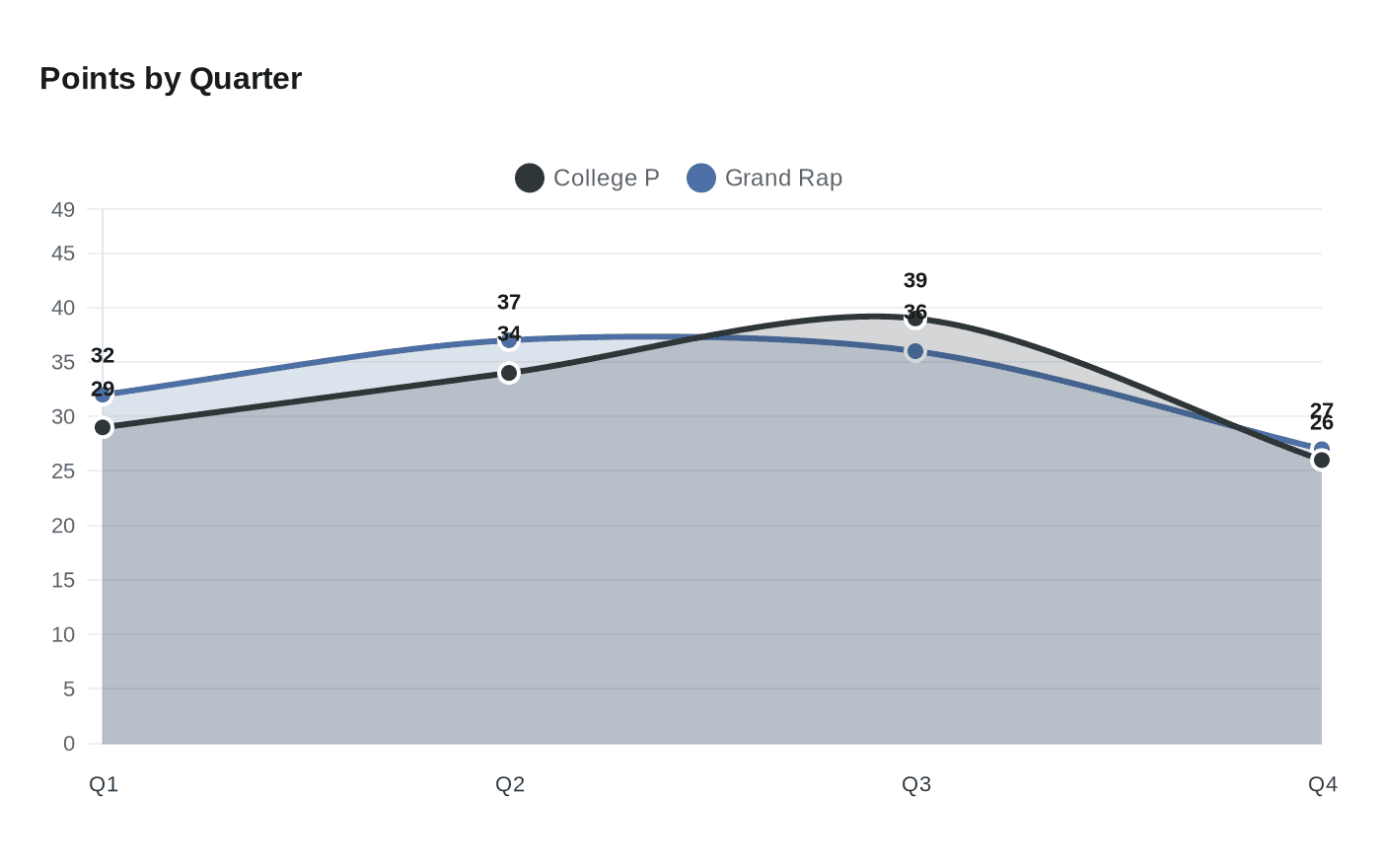
The quarter-by-quarter scoring showed a back-and-forth contest. College Park scored 29, 34, 39 and 26 by quarter, while Grand Rapids posted 32, 37, 36 and 27. The Gold’s ability to win the rebounding battle and spread scoring among multiple players proved decisive in overcoming College Park’s high efficiency.
Beyond the box score, the game raises issues that matter to Prince George's County residents who follow the Skyhawks or participate in local basketball development. Hawkins’ heavy usage and minute load exemplify a broader tension in developmental basketball: players are asked to perform as many roles as possible to earn NBA consideration, which can increase fatigue and injury risk. Those physical demands intersect with mental health stressors tied to job insecurity and travel schedules in the G League model.
For local policymakers and health providers, the Skyhawks’ season is a reminder that supporting athlete health is also a community public health matter. Access to timely sports medicine, concussion protocols, mental health services and rest-friendly scheduling are practical areas where teams, county health departments and local clinics can align to protect young athletes who often come from underrepresented communities. The Skyhawks also remain an important conduit for youth engagement in Prince George's County, offering inspiration and a pathway for aspiring players; ensuring the franchise promotes safe training and equitable access to medical care strengthens that role.
As the Skyhawks regroup, fans will watch how the team balances offensive firepower with rebounding and defensive consistency, while public health advocates and local leaders may see renewed reason to prioritize athlete health and equitable support systems for developmental players.
Sources:
Know something we missed? Have a correction or additional information?
Submit a Tip