SlamBall Broadcast Team Builds 14-Camera Package to Capture 20-Foot Aerials
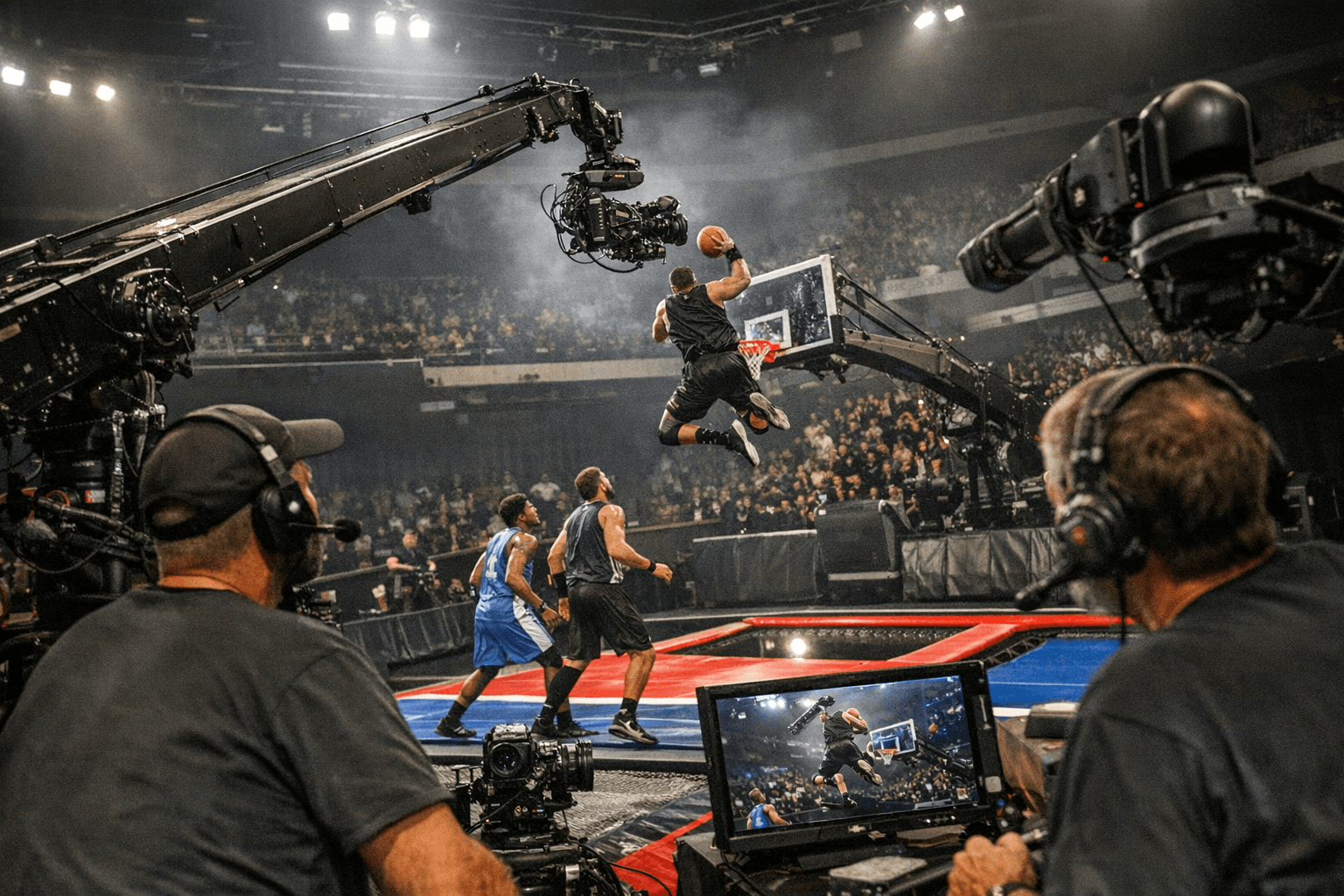
The Switch built a 14-camera, truck-backed kit, two 27-foot Techno‑Jibs, telescopic cranes, mini-cameras under the court and PTZs, to translate SlamBall’s 20‑foot aerials into a home-screen spectacle.
1. Capturing the vertical game
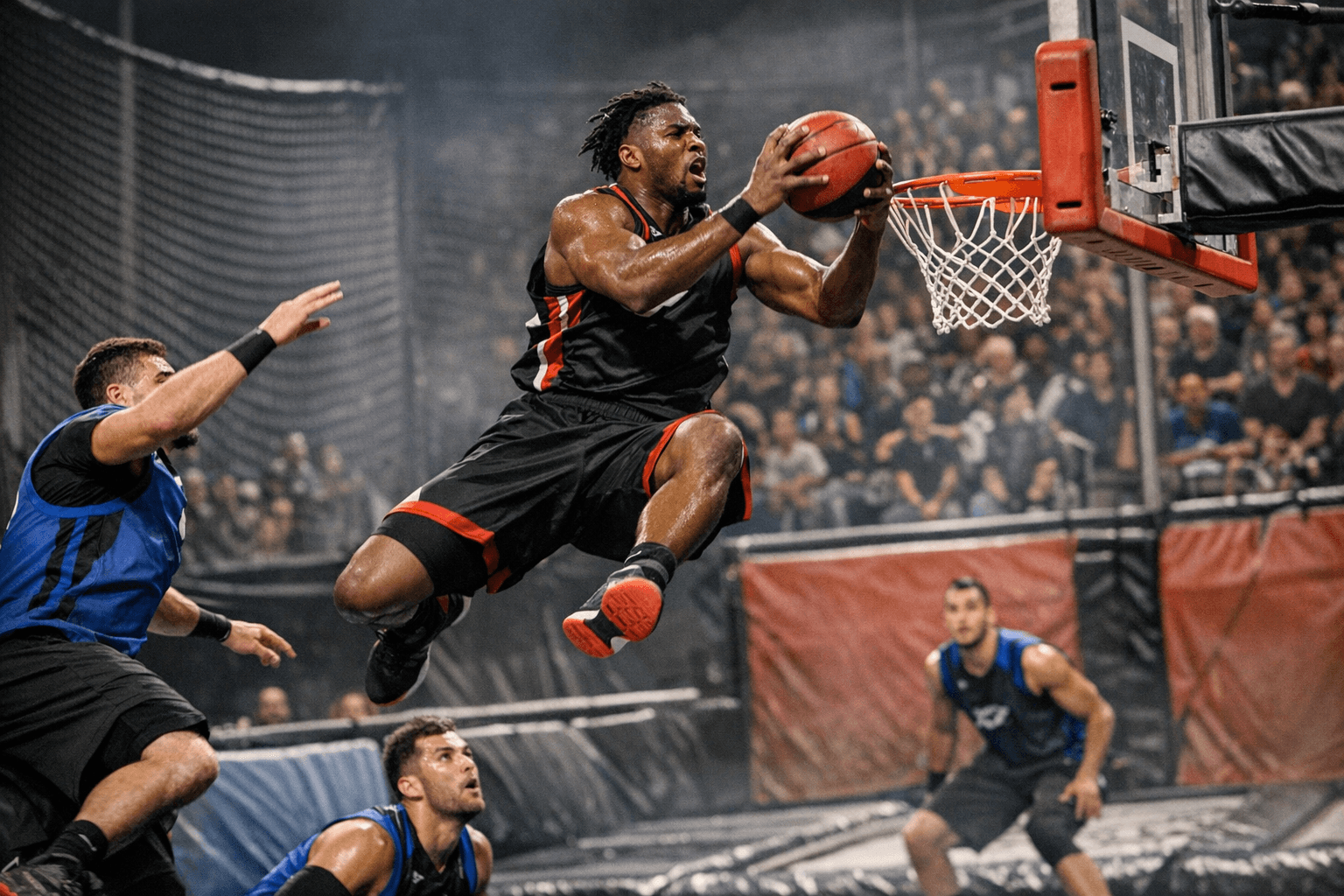
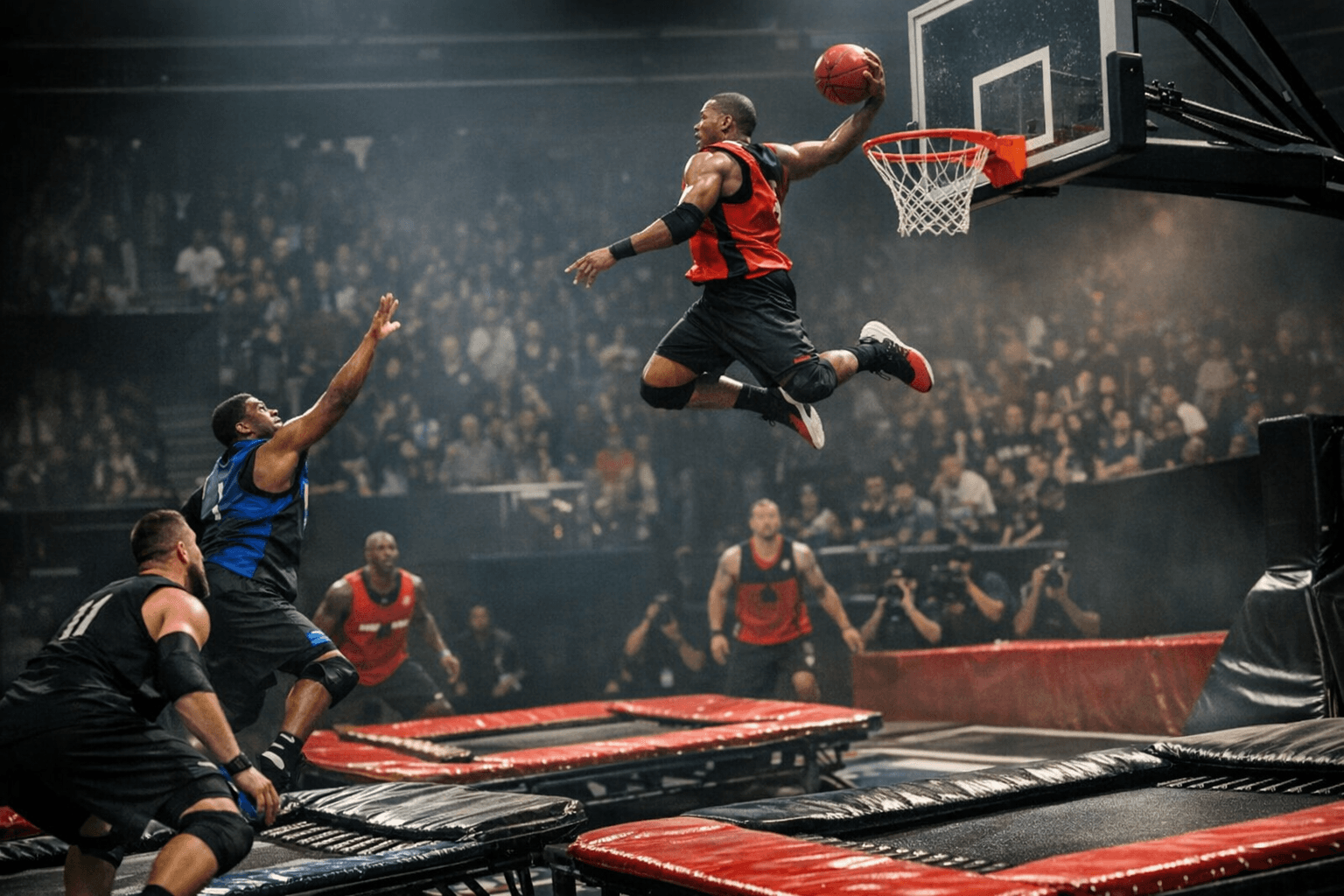
“Capturing SlamBall’s explosive vertical movement, trampoline-driven slams, airborne contests and high-speed collisions, demanded a bespoke broadcast approach.” That fragment from the original report frames the production imperatives: SlamBall’s trademark 20-foot aerials and midair contact required a camera strategy that follows players vertically, delivers crisp closeups of slams and collisions, and stitches fast transitions into a coherent live presentation.
2. Production summary and mission
The Switch served as the production and transport services partner, assembling a 14-camera production to film the SlamBall Summer Series at Cox Pavilion on the UNLV campus and packaging 17 days of broadcast and livestreamed games. The games were distributed across ESPN, ESPN2 and the ESPN+ OTT platform, a combination that demanded both broadcast-grade camera coverage and robust first‑mile connectivity and network reach to serve linear and streaming audiences.
3. Courtside telescopic camera cranes (two cameras)
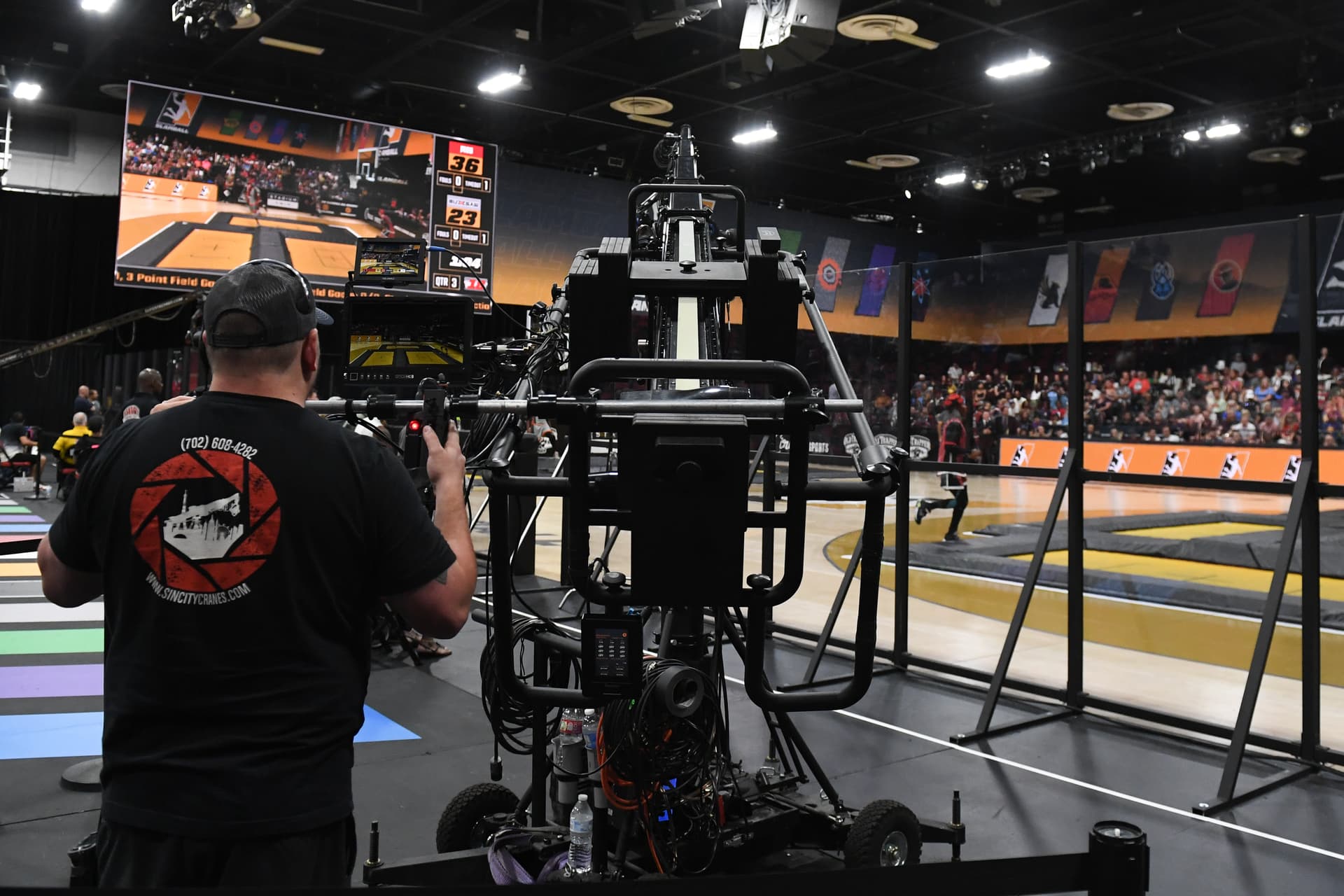
Two cameras were mounted on courtside telescopic camera cranes to “bring viewers close to the live action.” Those telescopic cranes give producers dynamic, low-angle approaches that can track players as they spring off trampolines and land, providing kinetic, immersive shots that emphasize SlamBall’s verticality and physicality.
4. Two 27‑foot stabilized‑head Techno‑Jibs
The package included “two 27-foot stabilized head Techno‑Jib mounted cameras” designed “to capture the rapid flow of the game.” These long‑reach, stabilized heads extend framing well above the playing surface and can follow aerial trajectories smoothly, which is critical when athletes spend significant time airborne and the action traverses court and airspace in seconds.
5. Two long‑lens cameras for high and wide shots
Two long‑lens cameras provided high and wide shots, supplying context and frame composition that balance the close-in cranes and jibs. Their role is to maintain court geography, who’s in position under the net, lane spacing and transitional defense, while allowing producers to cut between cinematic aerials and broader tactical views.
6. Two handheld courtside cameras
Two hand-held cameras courtside offered nimble, on-the-move coverage for scramble plays and bench reactions. Handheld operators can pivot from fast collisions to post‑play interviews or coach reactions, adding an intimate, documentary feel to live coverage that complements stabilized aerial shots.
7. Two robotic PTZ cameras behind the backboards
Two robotic pan‑tilt‑zoom (PTZ) cameras were positioned behind the backboards to lock on rim action and rebounds. Those behind‑net perspectives are tailored to SlamBall’s trampoline-driven slams, capturing the precise moment of contact and the arc of players as they rise and descend around the hoop.
8. Mini‑cameras under the court
The production deployed plural mini‑cameras under the court to provide unique angles of all the action near the hoop. While the exact count isn’t specified, those under‑court perspectives create dramatic low‑angle closeups of takeoffs and landings that can’t be achieved from above or the sideline, adding visceral detail to replays and highlight packages.
9. 50‑foot expandable OB truck and transport systems
A 50-foot expandable Outside Broadcast (OB) truck formed the mobile backbone of the operation, housing live production systems and serving as the hub for signals headed to ESPN’s platforms. The Switch also provided first‑mile connectivity expertise and network reach, combining on‑site production with transport services to deliver a consistent feed for linear broadcast and OTT distribution.
10. Production crew assembled per game
For each game The Switch assembled a live production team that included executive producer, producer, technical director, associate director, camera operators, replay operators, audio engineers, assistants and “other personnel.” That staffing mix reflects a full live‑event workflow, from director calls and technical switching to replay control and audio mix, essential when fast aerial plays demand near‑instant slow‑motion and multi‑angle replay decisions.
11. Jerry Cole on the ambition and originality
“The set‑up we have created with the SlamBall team delivers an unparalleled sports viewing experience; there is nothing like it. It involves a blend of different camera angles and production concepts to fully capture the bruising, in‑the‑air game action,” said Jerry Cole, vice president of live production services at The Switch. “The complexity and originality of SlamBall’s production configuration set it apart from any major or minor league sport today. We’re incredibly proud to be the chosen production and transport services partner, and to be asked to bring this awesome sport to life on the screen for fans everywhere.”
12. Distribution implications: linear plus OTT
Streaming and linear distribution across ESPN, ESPN2 and ESPN+ meant the production had to satisfy different viewing habits in parallel: appointment TV audiences on ESPN/ESPN2 and on‑demand/streaming viewers on ESPN+. Packaging 17 days of broadcast and livestreamed games shows a deliberate push to create concentrated, high‑quality content windows that are attractive to both rights holders and streaming platforms.
13. How this changes the fan experience (performance takeaway)
Surprising stat: 14 cameras, anchored by two 27‑foot Techno‑Jibs and a 50‑foot OB truck, give viewers home‑court proximity they wouldn’t get from a standard gym broadcast. That technical density translates into clearer understanding of player movement in the air, more compelling slow‑motion replays of collisions and slams, and highlight clips that travel better on social platforms, a direct impact on how fans consume and discuss SlamBall from their living rooms.
14. Industry trend and cultural context
The Switch’s bespoke package for SlamBall illustrates a wider industry trend: niche or hybrid sports investing in specialized production to win platform attention. By tailoring cameras and transport, rather than shoehorning SlamBall into a generic multi‑sports rig, the production team created a visual identity for the sport that broadcasters can market to mainstream audiences and streamers alike.
15. Broader social implications
Bringing SlamBall’s high‑impact, trampoline‑driven game to ESPN’s linear and OTT feeds via this production approach widens access to a sport that blends basketball, football, hockey and gymnastics, potentially influencing youth interest and cross‑disciplinary athletic engagement. As Jerry Cole put it, the project aims “to bring this awesome sport to life on the screen for fans everywhere,” a phrasing that signals both cultural reach and commercial intent.
16. Practical takeaway for fans and media planners
The Switch’s 14‑camera kit, staffed game‑by‑game and backed by a 50‑foot expandable OB truck and first‑mile network reach, turned SlamBall’s vertical spectacle into television and streaming‑ready content from Cox Pavilion. For fans, that means more dramatic, multi‑angle coverage of those 20‑foot aerials; for rights holders and producers, it’s a production template for elevating niche sports on major distribution platforms.
Know something we missed? Have a correction or additional information?
Submit a Tip