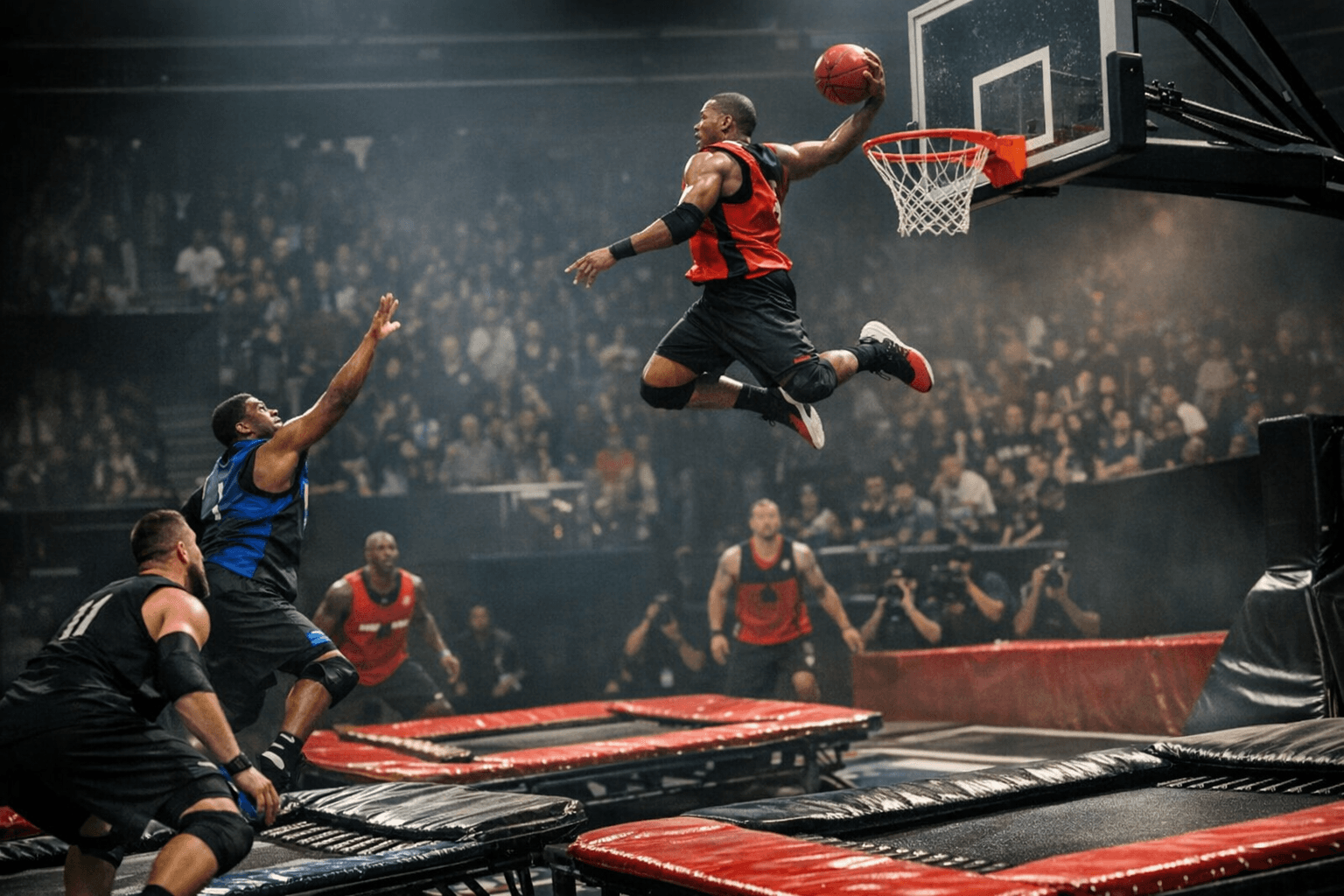
SlamBall Primer: Rules, Teams, and What to Expect
SlamBall is the trampoline‑enhanced team sport that blends basketball, football, hockey and acrobatics into short, high‑energy contests designed for modern broadcast windows. This primer explains how the game is played, the rule differences that shape aerial strategy, who suits up, and what to expect when you watch or attend a SlamBall event.
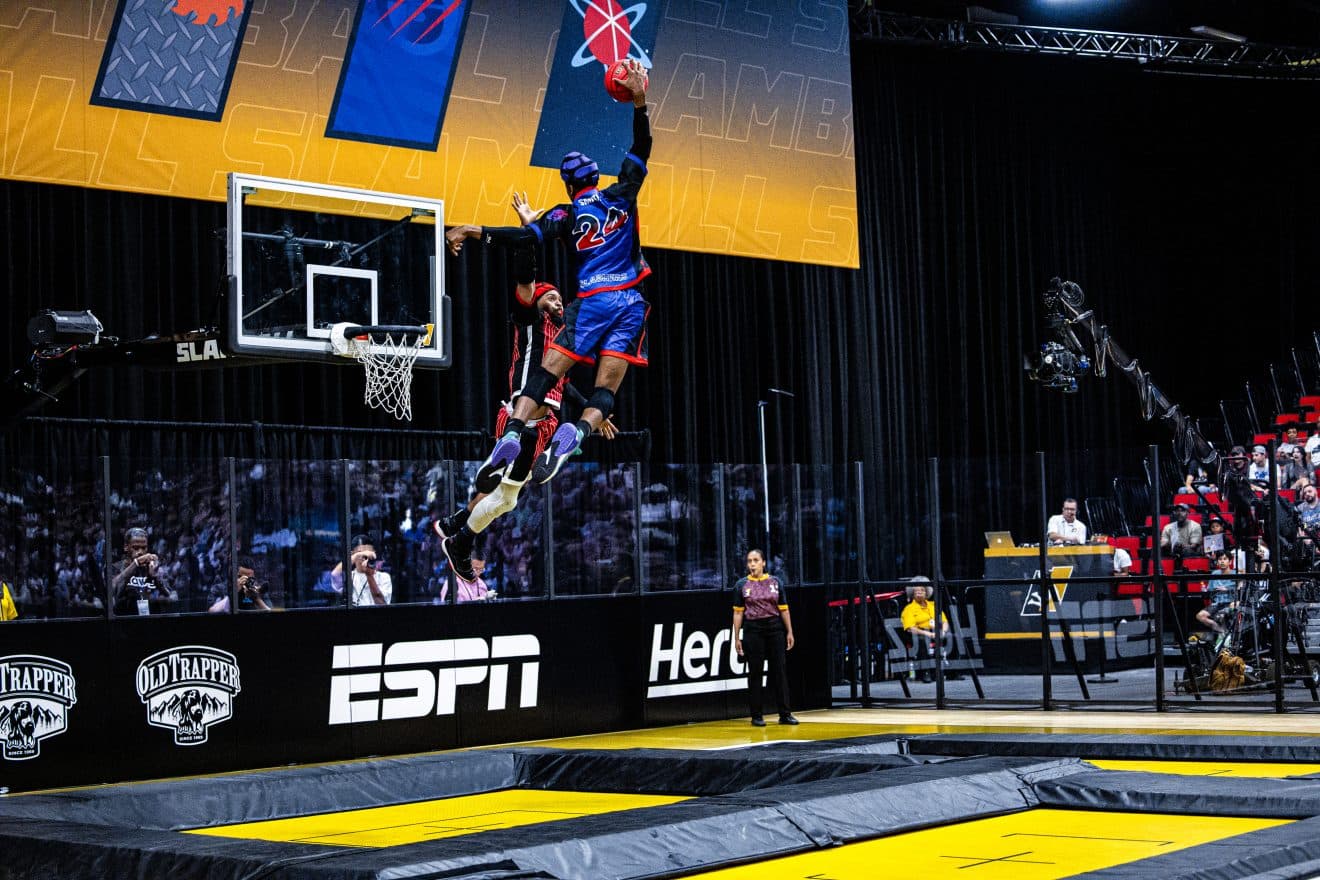
SlamBall is played 4-on-4 on a compact court built for vertical action. Springbeds or trampolines sit in the paint at both ends, and plexiglass-style boards surround the playing area to contain play and encourage full‑contact, acrobatic finishes. Games are compact and intense: four 5-minute quarters with frequent on-the-fly substitutions to keep lineups fresh and play continuous.
Scoring emphasizes spectacular plays and long-range shots. Modern rule sets use a multi-point structure that can include a 4-point arc from deep, three-point values for certain long shots, and versions that award three points for slam dunks. Defensive and goaltending rules change when players are using the trampolines; referees allow different aerial contact and challenges compared with traditional basketball, and many fouls do not lead to free throws. Instead, one-on-one “face-offs” are used in numerous situations to settle possession or scoring opportunities, keeping stoppages short and drama high.
Teams are assembled from athletic pools rather than single-sport pipelines. Rosters typically mix players with basketball, football and track backgrounds; ideal profiles skew toward explosive vertical leapers who can take contact midair and convert improvised plays. Physicality and aerial coordination matter as much as ball skills, so look for athletes comfortable with collisions, timing on the trampolines, and spatial awareness around the plexiglass arena.

League and season design reflect a focus on short-form spectacles built for TV and streaming. Recent relaunch efforts staged seasons in limited venues and worked with broadcast and streaming partners to package highlightable content aimed at younger audiences and digital consumption. That approach shortens windows between games, concentrates production, and gives social platforms bite-sized moments that travel easily. Private investors and sports entrepreneurs backed those revival rounds, supporting production, venue builds and distribution strategies meant to grow viewership through shareable plays.
For newcomers, watching a SlamBall event delivers non-stop momentum swings and high-impact dunks. Expect quick possessions, dramatic contests resolved by athletic one-on-one duels, and a rules set intentionally distinct from pro basketball to prioritize spectacle. Check the league’s current broadcast and streaming partners to catch live games or condensed highlight packages, and arrive early at arenas to see warmups and trampoline drills, those sessions reveal the athleticism that makes SlamBall distinctive.
Know something we missed? Have a correction or additional information?
Submit a Tip