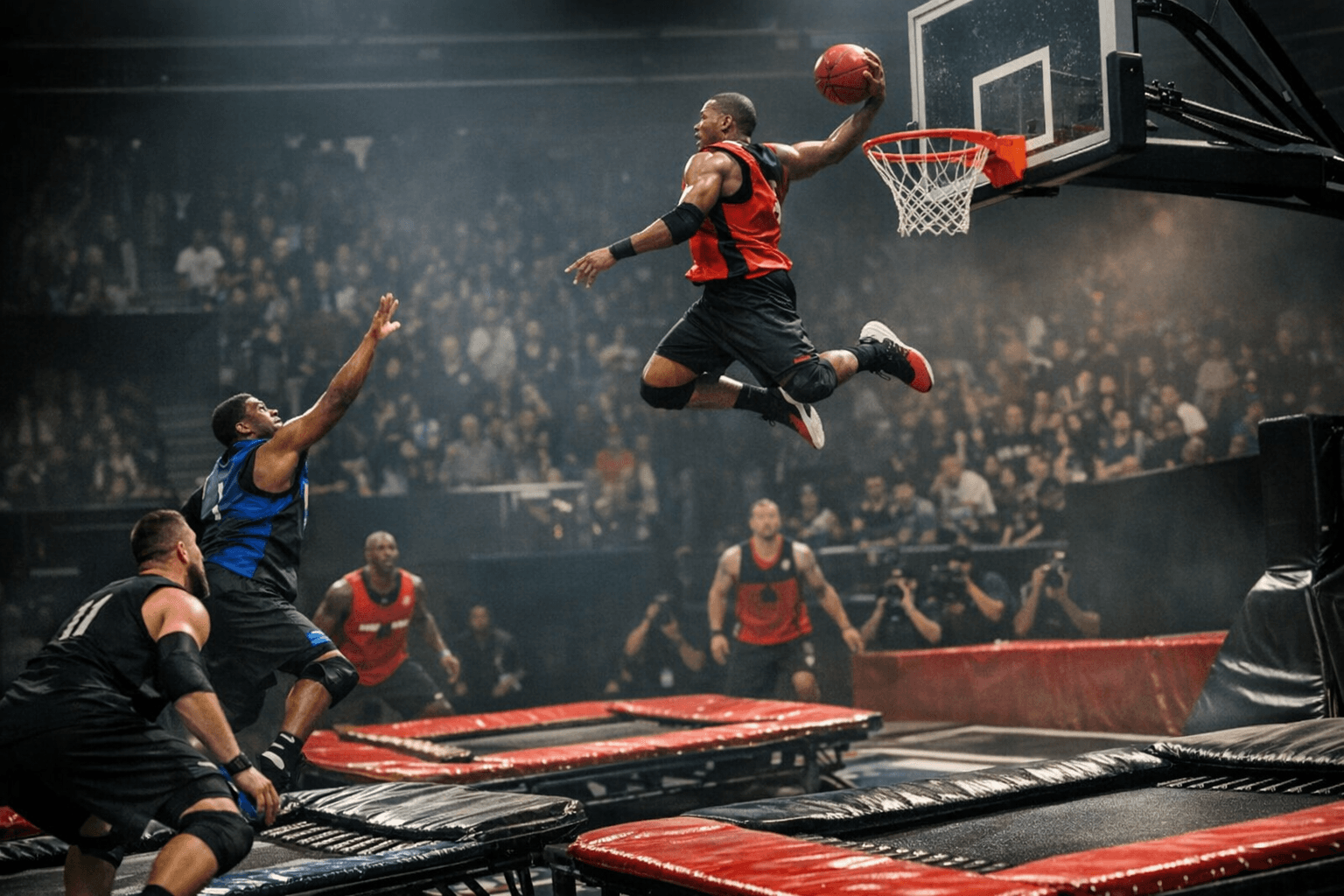
SlamBall’s 2023 relaunch explained - rules, roles, and what to expect
SlamBall returned in 2023 with a compact, high-flying format staged in Las Vegas, offering fast-paced, highlight-ready play that appealed to media and investors. This primer explains the modern rules, roles, and season structure.
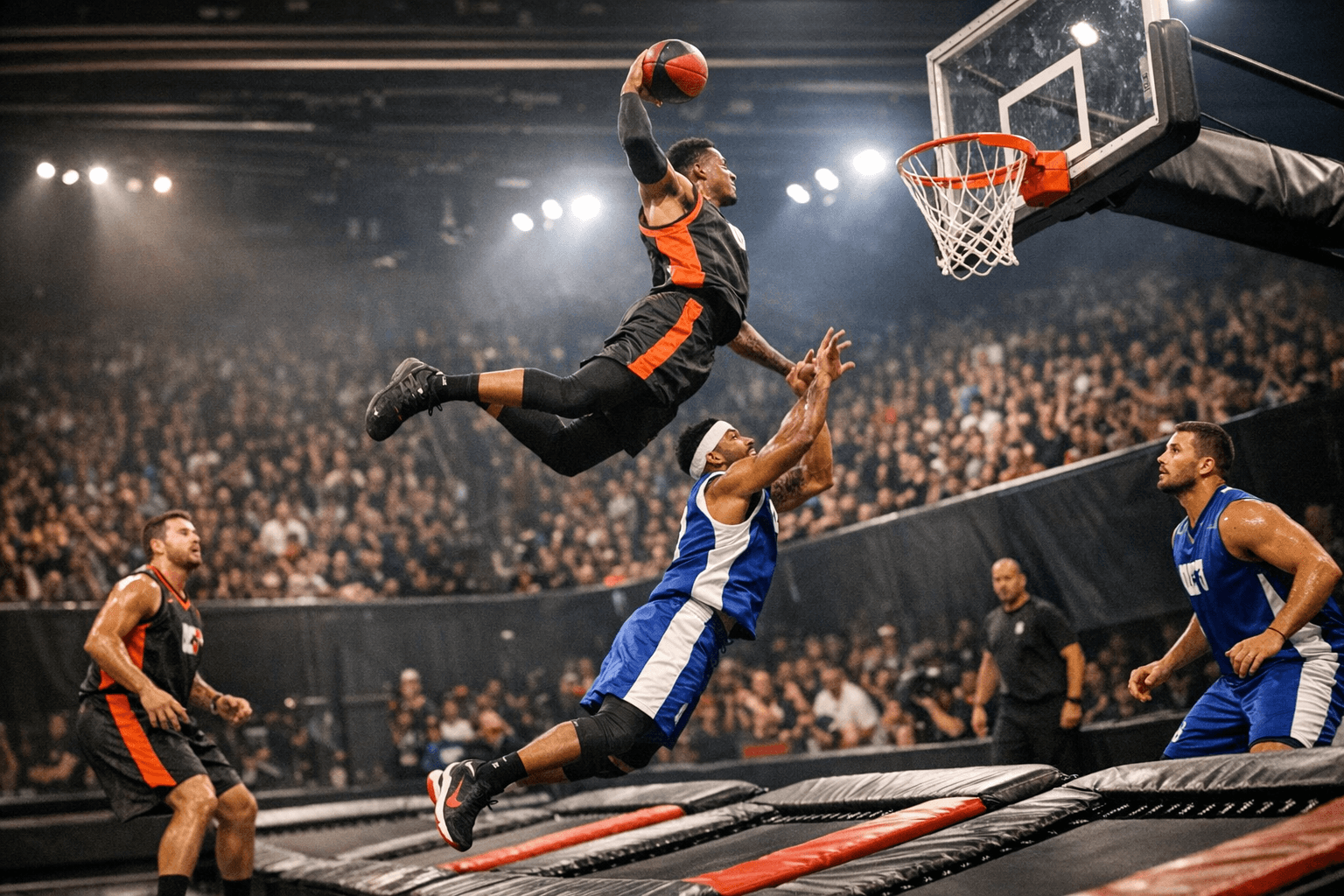
SlamBall re-emerged in 2023 as a deliberately TV-friendly, spectator-first sport built around speed, vertical play, and slam-heavy highlights. Organizers staged a multi-week regular season in Las Vegas followed by playoffs and positioned the league to attract broadcast partners and younger viewers with a short, intense game format and obvious highlight potential.
The modern rules prioritized action and quick restarts. Teams played four-on-four across four five-minute quarters, with trampolines set at each key to create consistent air time and explosive dunk opportunities. After fouls, play resumed with a face-off mechanic rather than long stoppages, keeping momentum and viewer engagement high. The scoring system differed from traditional basketball to reward aerial plays and rim-focused scoring, emphasizing spectacular finishes over mid-range possessions.
On court, roles were defined to fit the SlamBall tempo. The handler served as the primary playmaker, taking on ball distribution and transition orchestration. The gunner operated as the chief scoring threat, hunting high-percentage rim plays and finishing through contact off the trampolines. The stopper specialized in disrupting opponents and anchoring defense in the more chaotic, vertical environment. Those familiar with basketball will recognize the parallels, but the presence of trampolines, altered pacing, and restart mechanics meant strategies and personnel priorities shifted to favor vertical athleticism and quick decision making.
Safety and protective equipment received renewed attention in the modern iteration. Later iterations of the league emphasized padding and protective gear to mitigate the unique risks of repeated trampoline-assisted contact. That emphasis aimed to reassure players, coaches, and partners that the sport could deliver extreme visuals without sacrificing basic safety standards.
For newcomers, expect short bursts of play, frequent highlight sequences, and a format that rewards vertical specialists and aggressive transition offense. The Las Vegas staging meant a condensed schedule that concentrated media exposure and allowed teams to build narratives quickly over a few weeks before entering playoff competition.
The 2023 relaunch mattered because it packaged an already spectacle-driven sport into a coherent, broadcast-ready product. For community members, players, and local organizers, the revival demonstrated a viable blueprint for staging games that are easy to market, fast to learn, and designed to generate replayable moments. If the league maintained investor and broadcast interest, the model offered a clear path to more seasons, expanded events, and greater opportunities for players who thrive in the air.
Know something we missed? Have a correction or additional information?
Submit a Tip