SlamBall's Comeback: Rules, Gear, and What Fans Need
SlamBall is seeing renewed attention with league revivals, clearer playing regulations, and modern safety upgrades that make the high-flying, full-contact sport easier to follow and safer to play. For local players, event organizers, and fans, the refreshed rule set and broadcast partnerships mean more organized seasons, clearer positions, and practical guidance for competing and spectating.
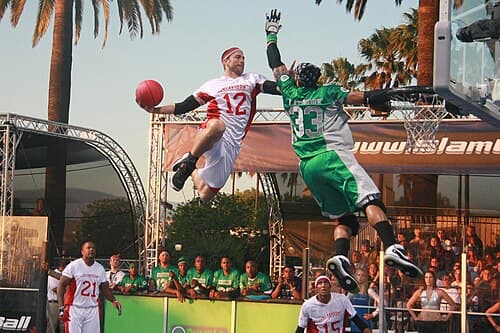
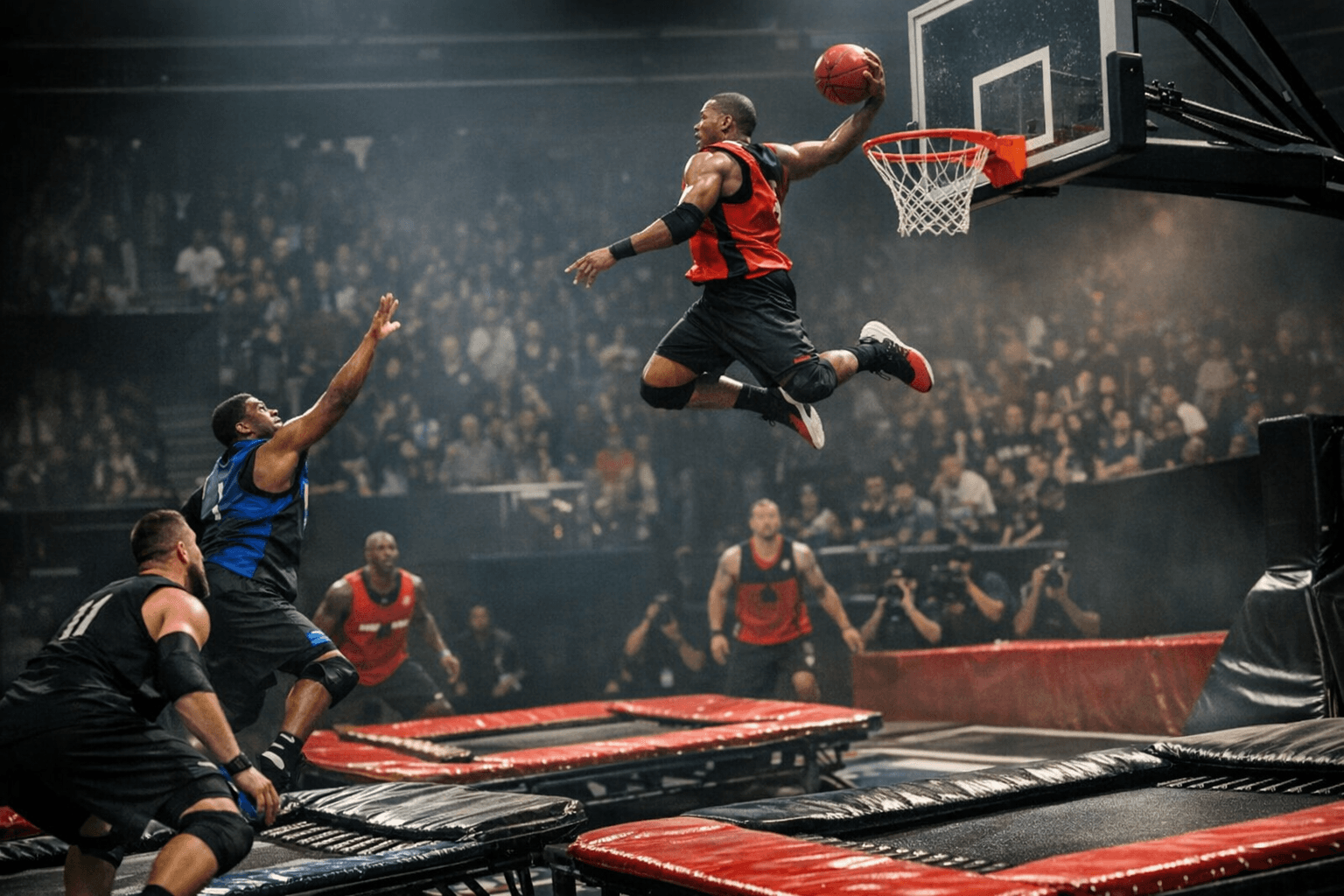
SlamBall combines basketball, American football, hockey, and acrobatics into a fast, full-contact spectacle built around four trampolines in front of each net and rigid boards around the court. The sport’s distinctive features and updated regulations are central to its current revival: four 5-minute quarters, a 20-second shot clock, and a four-player-on-court format with unlimited substitutions modeled on hockey keep the pace relentless while allowing strategic line changes. The signature restart, known as the Throwdown, is a center-court bounce-off that sets the tone for possession battles.
Play emphasis and safety have evolved alongside the resurgence. Trampoline beds are now specially engineered and encased in shock-absorbent pads around their frames, and courts are surrounded by an 8-foot plexiglass perimeter wall designed to contain play and reduce injury from collisions. Recent competitive variants require scrum-cap-style helmets and protective padding, and goaltending and allowed physical contact are regulated differently than in basketball to reflect the sport’s hybrid nature. Fouls carry unique consequences: certain infractions can lead to one-on-one face-off opportunities that reward individual offense and defense.
Positions on the court are defined to help teams structure play and coaching. Handlers control set-ups and distribution, gunners act as primary finishers who exploit trampoline launches for high-angle dunks, and stoppers focus on protecting the net and disrupting drives. That clear role structure helps clubs, coaches, and pickup groups teach new players faster and craft game plans that fit the sport’s vertical and physical demands.
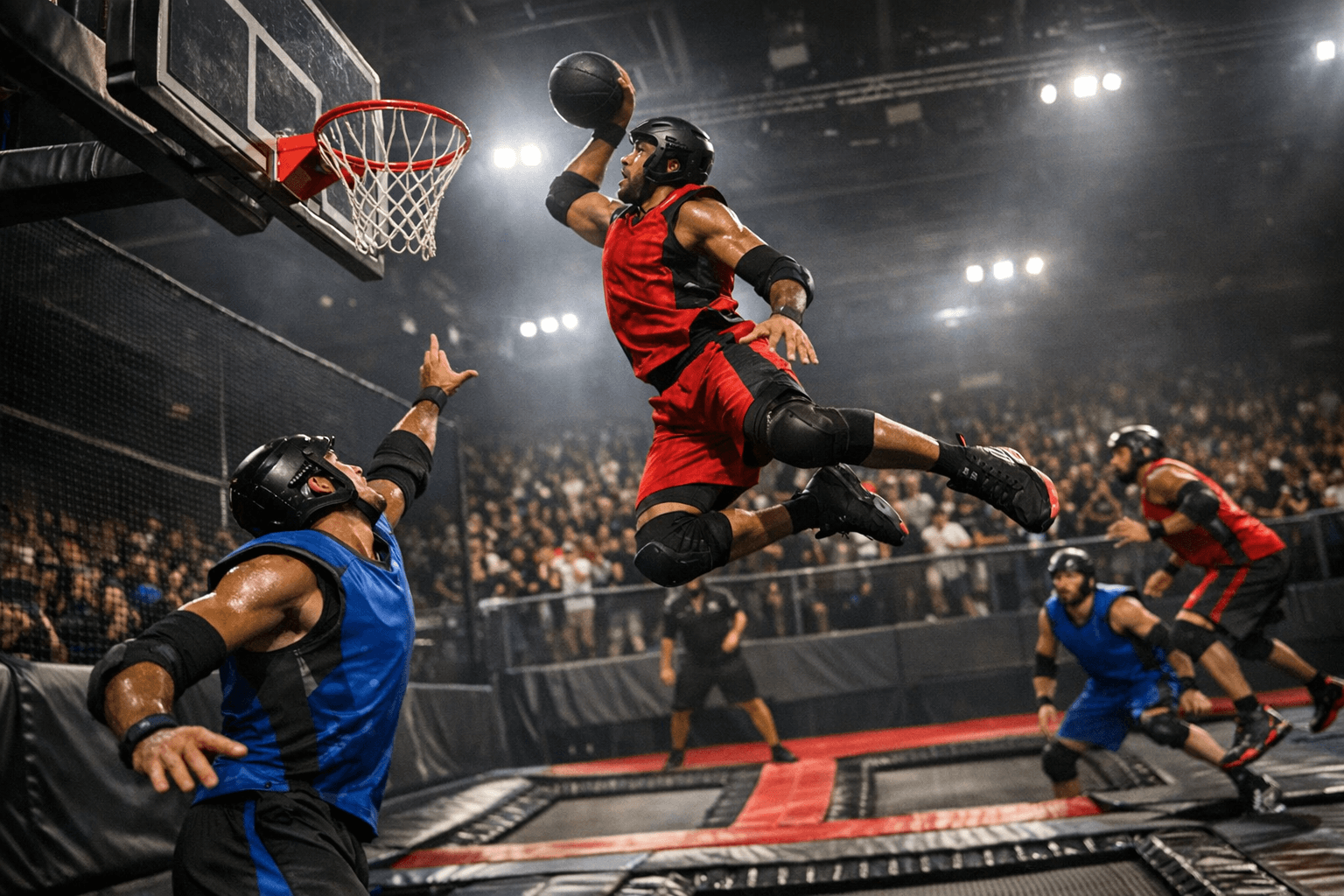
SlamBall’s origin dates to 1999 under founder Mason Gordon, and the sport ran organized seasons in the early 2000s before intermittent revivals. Current league efforts emphasize season structure, standardized equipment, and broadcast partnerships that bring games to wider audiences. For community organizers and venue managers, the modern court specifications and safety measures offer a roadmap for hosting sanctioned games or programming youth clinics.
For fans and prospective players the practical takeaway is straightforward: the sport now balances spectacle with safety and repeatable competition formats. Verify court and equipment compliance before playing, seek teams or leagues that enforce the updated helmet and padding requirements, and follow scheduled broadcasts or league pages to catch revived seasons. The combination of clear rules, defined positions, and improved protective standards makes SlamBall more accessible for local leagues while preserving the high-flying collisions that drew attention in the first place.
Know something we missed? Have a correction or additional information?
Submit a Tip