Small-batch bath bomb essentials - a practical starter checklist
A concise supplies-and-setup checklist for hobbyists starting small-batch bath-bomb making. Covers ingredients, tools, packaging, troubleshooting, pricing, and safety.
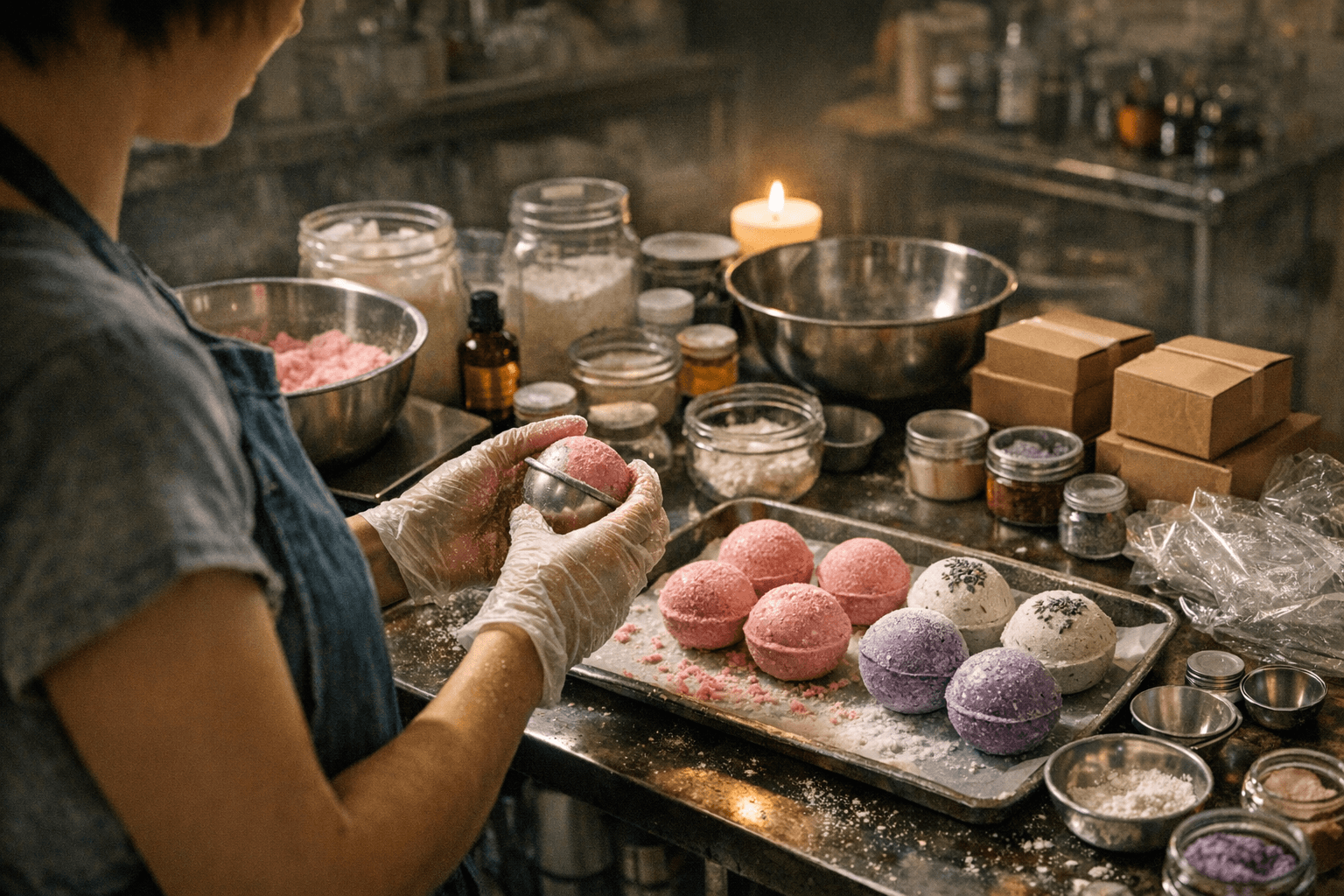
If you want fizzing, shelf-stable results without the guesswork, start with a tight supplies-and-setup checklist. Focus on the core ingredients first: baking soda and citric acid form the fizzing backbone, cornstarch or kaolin slows the reaction for a gentler dissolve, and Epsom salt adds a soothing mineral boost. Choose a carrier oil such as fractionated coconut or sweet almond for slip and skin feel. For extra moisturization, optional butters like cocoa or shea help, but expect a higher risk of white bloom in finished bombs. Keep polysorbate 80 on hand if you plan to use essential oils or colorants; it helps disperse oils and reduce oily residue in the tub. Binder liquids are minimal, witch hazel or isopropyl alcohol in a spray bottle are standard to bind the dry mix without triggering premature fizz.
Get reliable tools and a simple workspace next. A digital scale is nonnegotiable for repeatable batches, and silicone molds give consistent shape and easy release. Mixing bowls, a whisk, a scoop or press, disposable gloves, and a spray bottle finish the core kit. For small-batch runs aimed at gifts or a market stall, keep an extra set of bowls so you can prep multiple fragrances without cross-contamination.
Packaging, storage, and labeling will save headaches and sales opportunities. Store finished bombs in airtight containers with silica packets for long-term freshness. Label each batch clearly with fragrance, allergens, and a batch number. Simple labeling protects you and informs buyers about potential skin sensitivities, list nut oils, botanicals, and any added preservatives or colorants.
Expect common texture issues and learn quick fixes. If the mix is too dry and crumbly, add very small sprays of binder and mix immediately; if it slips and feels too wet, spread it thin to dry and test-pack by hand. Butter-heavy batches often show white bloom; that doesn’t mean failure, but reduce butter or use cornstarch to mask it next time. For fizz problems, check ingredient ratios and humidity in your workspace, high humidity can pre-activate the citric acid.
When you scale to small-batch production, track batch records: ingredient weights, fragrance load, and yield per mold. For pricing, total your ingredient and material costs, add labor and a modest margin, and price per piece. Always include a short skin-sensitivity disclaimer on price tags or product cards and instruct customers to patch-test if they have sensitive skin.
Start small, test one recipe across three molds, and record every variable. That habit turns hobby fizz into consistent craft and keeps your table full and your customers coming back for more.
Know something we missed? Have a correction or additional information?
Submit a Tip