Somaliland president presses recognition and investment at Davos dinner
Somaliland's president used a closed-door Davos dinner to press for international recognition and attract investors, raising diplomatic and governance implications.
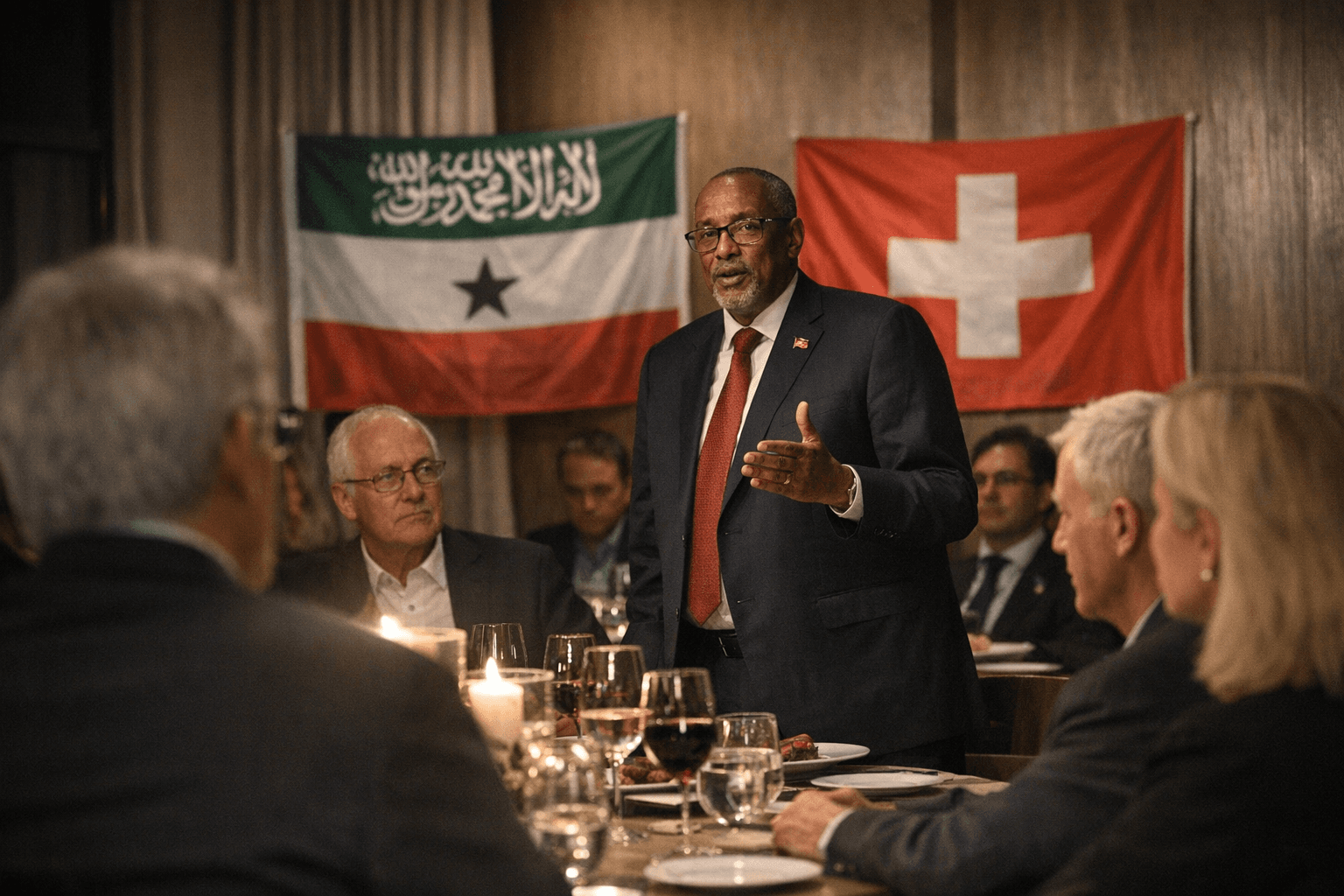
Somaliland’s president, Abdirahman Mohamed Abdullahi, used a closed-door dinner on the sidelines of the World Economic Forum in Davos to seek international recognition and pitch investment opportunities to a group of business and political figures that included Eric Trump and other private attendees. The gathering, held on Jan. 24, brought renewed attention to the long-standing question of Somaliland’s status and the diplomatic, commercial, and legal consequences of private diplomacy at elite gatherings.
Somaliland, which declared independence from Somalia in 1991 and operates its own institutions from Hargeisa, has pursued formal recognition for decades while building de facto state structures. Its leaders routinely point to sustained electoral processes, relative stability, and institutional development as grounds for recognition. The Davos meeting represented a calibrated effort to translate those claims into commercial commitments and political endorsements among influential Western networks.
The presence of high-profile U.S. political figures at a private dinner amplifies the symbolic weight of such outreach. Private meetings do not alter the legal status of a territory under international law, which normally hinges on formal recognition by states and acceptance in multilateral bodies. However, private endorsement or investment pledges can produce material effects on governance, development, and regional alignments even in the absence of de jure recognition. For Somaliland, signing investment memoranda or securing high-profile backers could strengthen its economic case and put pressure on foreign capitals weighing the diplomatic costs and benefits of engagement.
Policy implications are manifold. For governments, the episode underscores the distinction between private engagement and official recognition. Executive branches and parliaments will face pressure to clarify whether meetings between non-state or semi-state actors and private U.S. political operatives signal a shift in policy or simply reflect commercial networking. For investors, the closed-door format raises questions about due diligence, political risk, and the transparency of any financial commitments. International firms and diaspora investors may be attracted by promises of infrastructure and port access, but they will require credible legal protections and assurances about political stability.
Regionally, moves toward heightened international engagement with Somaliland risk recalibrating balances in the Horn of Africa, where neighboring states and external powers compete for influence. Any perception that recognition is being brokered through private channels could complicate coordinated diplomatic approaches and fuel local political debates about sovereignty and the responsibilities of elected leaders.
Domestically, Somaliland’s outreach strategy ties into its governance narrative. Local officials have leveraged civic participation and periodic elections to argue for statehood; how investment offers translate into improved public services, accountability, and inclusive growth will determine whether such diplomacy strengthens domestic legitimacy or deepens elite-level deals. Transparency around who attended, what commitments were made, and how proceeds are overseen will be central to civic scrutiny.
The Davos dinner highlights the porous line between commerce and diplomacy in contemporary global forums. It also raises a straightforward democratic question: when international outreach intersects with private political networks, what mechanisms exist to ensure that public interests and legal norms are protected? That question now moves from Hargeisa’s planning rooms to foreign ministries and legislative bodies tasked with setting the rules of engagement.
This article was produced by Prism’s automated news system from verified source data, official records, and press releases, then run through automated quality and moderation checks before publishing. The system is built and supervised by the people who set the standards it runs under. Read our full AI policy.
Did this article answer your question?

