Sonia Pressman Fuentes, early women’s rights lawyer and NOW founder, dies at 97
Sonia Pressman Fuentes helped turn sex discrimination complaints into federal policy and a national movement. The first woman lawyer in the EEOC’s general counsel office died at 97.
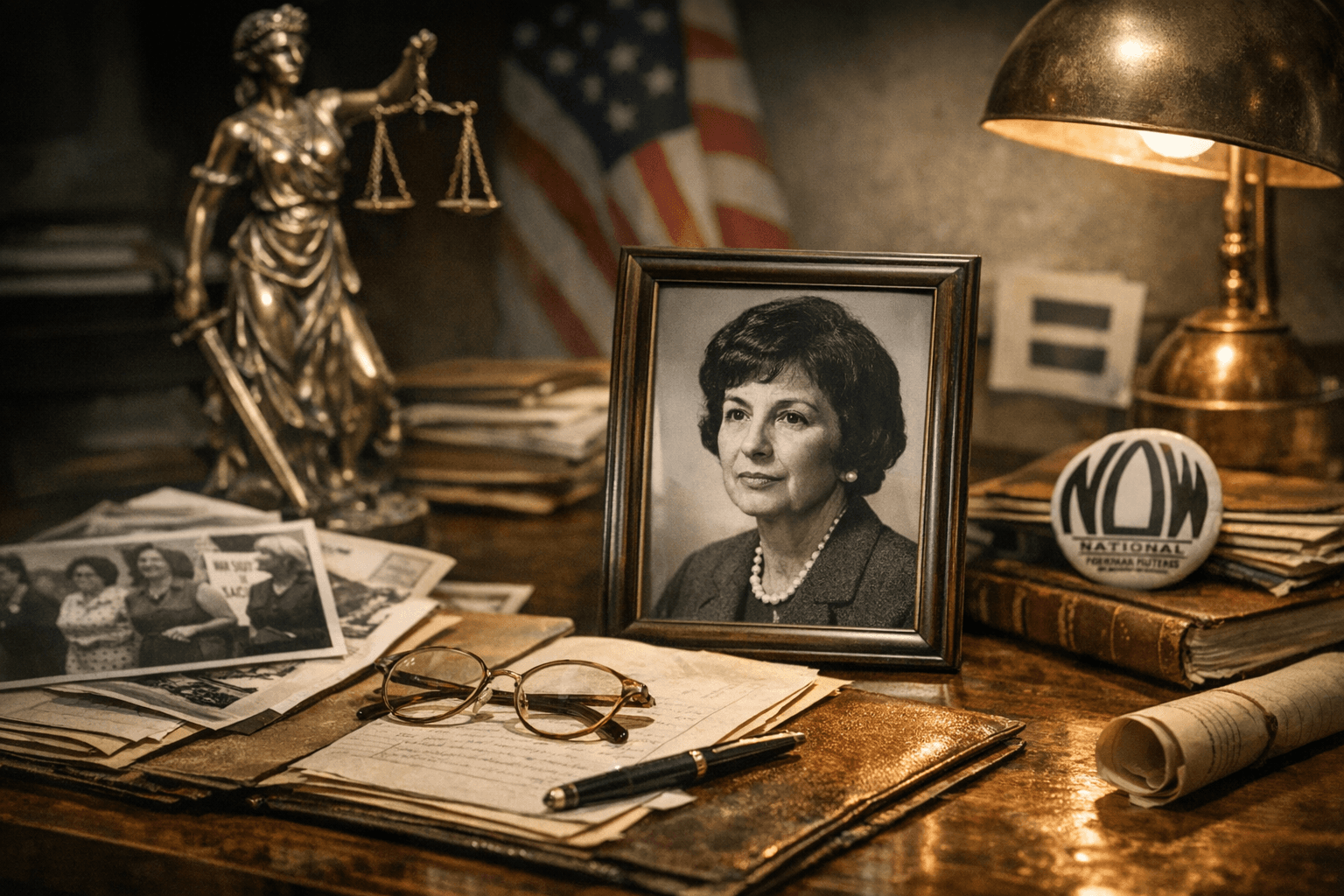
Sonia Pressman Fuentes spent her career forcing American institutions to confront what many had ignored: that workplace discrimination against women was not a private grievance but a public wrong. She died on December 20, 2025, at 97, leaving behind a legal and organizing record that helped shape both the National Organization for Women and the federal enforcement of sex-discrimination law.
Born in Berlin in May 1928, Fuentes fled Nazi Germany with her family in 1933 and settled in New York. She grew up in the Bronx and the Catskills, became valedictorian of Monticello High School, then went on to Cornell University, where she earned Phi Beta Kappa honors in 1950. She finished first in her class at the University of Miami School of Law in 1957, credentials that opened the door to a federal career in the middle of a civil rights era that still had not fully recognized women’s rights as a workplace issue.
Fuentes was involved in women’s rights by 1963, when she testified in Congress in support of the Equal Pay bill. Two years later, after the Equal Employment Opportunity Commission began operating on July 2, 1965, to enforce Title VII of the Civil Rights Act of 1964, she joined the agency’s Office of the General Counsel in October 1965 as its first woman attorney. In that office, she later said she was the staff person pushing the hardest for aggressive enforcement of sex-discrimination prohibitions. She drafted several of the commission’s first landmark guidelines and decisions, work that helped give the new law real force inside federal bureaucracy.

Her influence reached beyond formal government postures. In a conversation with Betty Friedan, Fuentes helped plant the seed that became the National Organization for Women in 1966. That link gave her a central place in the rise of second-wave feminism, because it tied legal enforcement to organized political pressure. Fuentes also helped found Federally Employed Women, extending that same insistence on equality to women working inside government itself.
Her federal service also included posts at the Department of Justice, the National Labor Relations Board and the Department of Housing and Urban Development. After more than two decades in federal service, she moved into the private sector, carrying with her a career that bridged law, policy and movement building. Fuentes showed that enforcement mattered as much as recognition, and that the fight over pay equity, harassment and reproductive freedom would depend on institutions willing to act, not just to agree.
This article was produced by Prism’s automated news system from verified source data, official records, and press releases, then run through automated quality and moderation checks before publishing. The system is built and supervised by the people who set the standards it runs under. Read our full AI policy.
Did this article answer your question?

