South Carolina opens redistricting fight as Trump pushes GOP map
South Carolina lawmakers opened debate on a Trump-backed map that could reshape Jim Clyburn’s district and leave Republicans with all seven House seats.
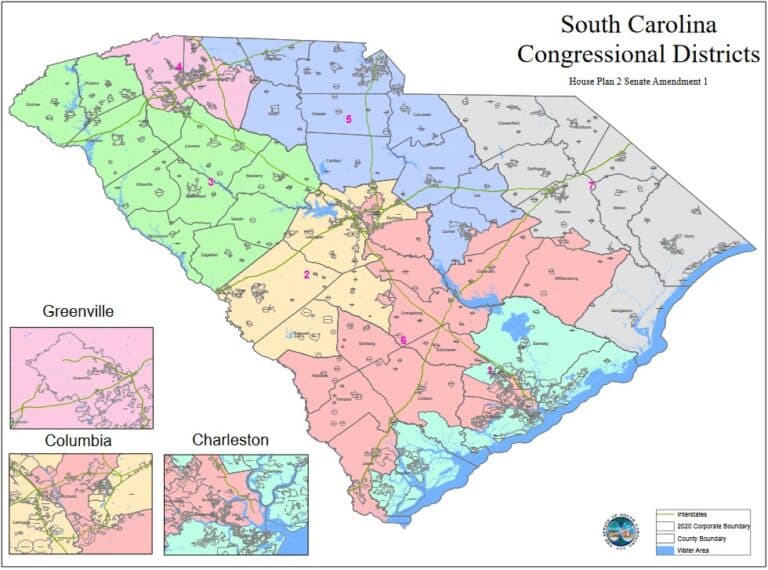
South Carolina lawmakers opened a high-stakes fight over congressional power as the state House took up a Trump-backed redistricting plan that could redraw the only Democratic-held seat in the state and help Republicans lock down all seven U.S. House districts.
The measure at the center of the debate, House Bill 5683, was introduced May 7, amended May 15 and remained in the House after a committee favorably reported it on May 13. Debate had already been interrupted once, and the full House fight gave the proposal its first major airing as Republican leaders weighed how far to go in remaking the map.

The immediate target was Jim Clyburn’s district, the lone Democratic seat in South Carolina’s congressional delegation. Clyburn has said he has no intention of retiring even if the lines change. Jordan Pace, who chairs the South Carolina Freedom Caucus, said his goal was to make the district competitive and add another Republican seat, a sign of how openly partisan the effort had become. A proposed map shared in late 2025 would shift Clyburn’s district into counties Donald Trump carried in 2024 and away from counties won by Kamala Harris.
The maneuver in Columbia was part of a larger national pattern. Republican map fights had already intensified in Tennessee, Alabama and Louisiana as party leaders looked for ways to use redistricting to their advantage before voters cast ballots in the 2026 midterms. In South Carolina, Trump’s push carried unusual weight because the state already sends a fully Republican House delegation except for Clyburn, making the map a direct test of whether the GOP could turn a 6-1 split into a clean sweep.
The legal landscape also favored hardball politics. In Alexander v. South Carolina State Conference of the NAACP, decided May 23, 2024, the U.S. Supreme Court held that partisan gerrymandering claims are not justiciable in federal court. That ruling arose from South Carolina’s post-2020-census redistricting, when Districts 1 and 6 had to be adjusted for population shifts. The decision left much of the battle over partisan line-drawing to the legislature itself.
Resistance inside the statehouse had already shown that the plan was not automatic. The South Carolina Senate rejected an earlier procedural move to advance redistricting by a 29-17 vote on May 12, with five Republicans joining all Democrats in opposition. Governor Henry McMaster then called lawmakers into a special session so the map could move forward with only a simple majority.
Opposition has also come from voting-rights groups. The Legal Defense Fund, the South Carolina State Conference of the NAACP, Black Voters Matter Capacity Building Institute and Delta Sigma Theta Sorority, Incorporated all opposed mid-decade redistricting in written testimony. Lawmakers debated the issue under extra security at the Statehouse, underscoring how quickly a map fight had turned into a contest over who gets to draw the battlefield before the next vote is cast.
This article was produced by Prism’s automated news system from verified source data, official records, and press releases, then run through automated quality and moderation checks before publishing. The system is built and supervised by the people who set the standards it runs under. Read our full AI policy.
Did this article answer your question?

