South Korea and China expand weekly flights for first time in seven years
South Korea and China added 56 weekly passenger flights, their first air-rights expansion in seven years. Regional airports from Busan to Cheongju won wider access to Chinese cities.
South Korea and China have opened the door to more planes, more passengers and more cargo, agreeing to expand weekly flight rights for the first time in seven years as the two neighbors continue a cautious diplomatic thaw.
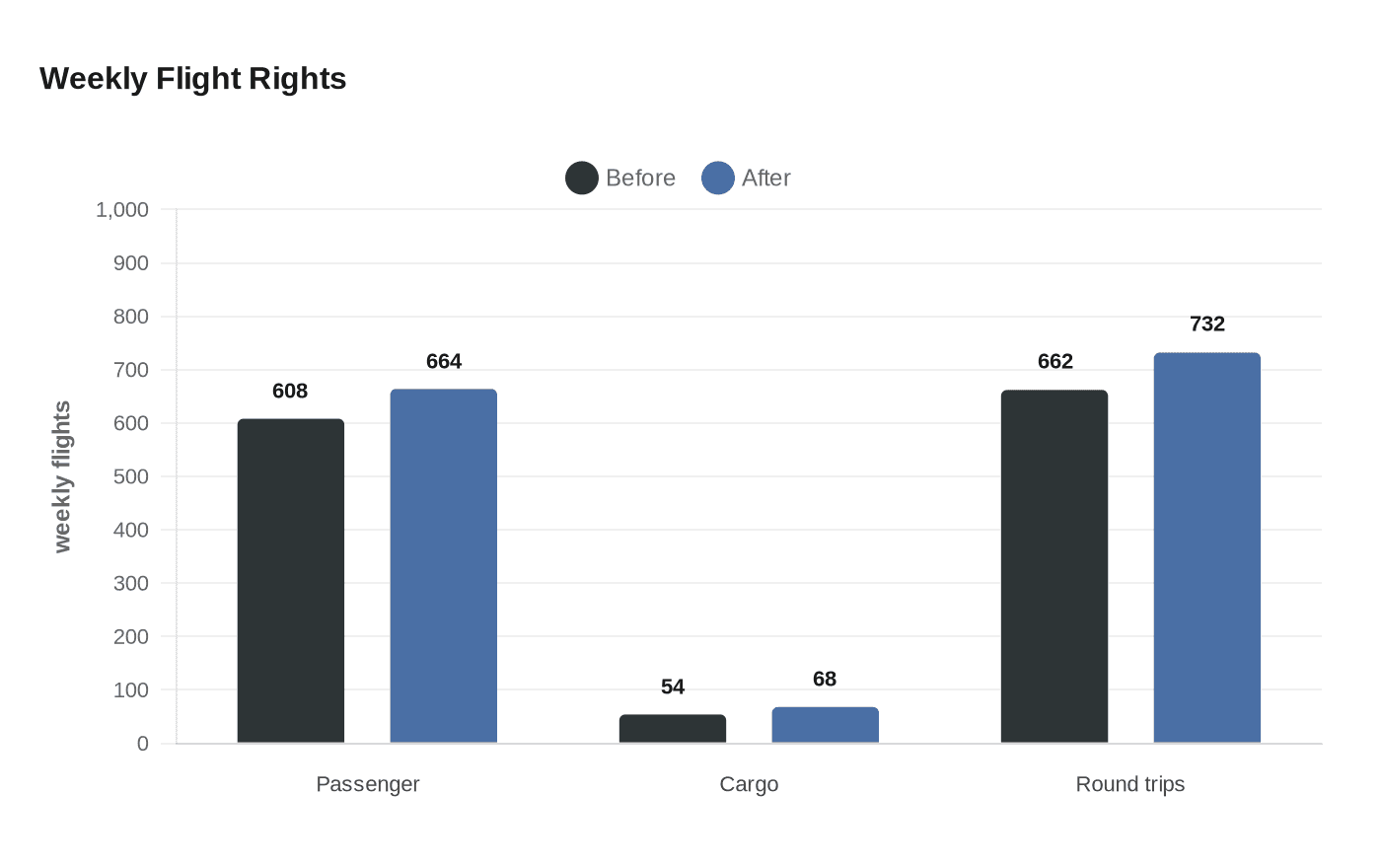
The deal, reached at bilateral aviation talks in Seoul on May 27 and 28, gives South Korea 56 additional weekly passenger flights, lifting its total to 664 from 608. Cargo rights will rise by 14 weekly flights, to 68 from 54. The Ministry of Land, Infrastructure and Transport said the broader bilateral air-traffic allocation would climb from 662 weekly round trips to 732.
The new capacity should ease pressure on routes that were already full, especially Incheon-Shanghai and Incheon-Guangzhou. It also widens access beyond the capital region, with Busan and Cheongju set to gain more service to 10 Chinese cities, including Guangzhou, Chengdu, Shenzhen, Chongqing and Xian. That shift could spread the benefits of recovery more evenly, giving regional airports a stronger role in tourism, exports and passenger travel instead of concentrating gains in Seoul and Incheon alone.
First-quarter passenger traffic between South Korea and China reached about 4.39 million, above the pre-pandemic level of 4.14 million, according to the ministry. Lee So-young, South Korea’s aviation policy chief, said the agreement should help attract Chinese tourists, make travel easier for South Koreans heading to China and support import-export companies.
The timing fits a broader effort to rebuild cross-border movement on several fronts. South Korea began a temporary visa-free program for Chinese tour groups on September 29, 2025, and it is scheduled to run through June 30, 2026. The government has also extended its K-ETA exemption period through December 31, 2026, making entry easier for many visitors while the two countries try to sustain a rebound in travel demand.
MOLIT also said on April 24, 2026, that it had allocated 35 international route rights, many of them to China, with a goal of drawing foreign visitors into regional airports. Together, the aviation changes and entry-rule adjustments point to a coordinated push to turn warmer politics into fuller planes, stronger business ties and more foot traffic in cities far beyond the capital.
This article was produced by Prism’s automated news system from verified source data, official records, and press releases, then run through automated quality and moderation checks before publishing. The system is built and supervised by the people who set the standards it runs under. Read our full AI policy.
Know something we missed? Have a correction or additional information?
Submit a Tip