South Korea arrests Shincheonji founder in election influence probe
South Korean prosecutors arrested 95-year-old Lee Man-hee, accusing Shincheonji of pushing more than 50,000 followers into the People Power Party.

A Seoul court approved the arrest of Lee Man-hee, the 95-year-old founder of Shincheonji Church of Jesus, after prosecutors said his church pressured more than 50,000 followers to join the conservative People Power Party in an effort to influence elections. Lee appeared before the Seoul Central District Court walking with a cane and assisted by a church official, and he did not answer questions from reporters as judges signed off on the warrant over concerns he might destroy evidence.
The case reaches beyond one religious leader. Prosecutors have tied the allegations to violations of South Korea’s Political Parties Act and obstruction of business, and say the recruitment effort ran from 2021 to 2024, overlapping with the years the People Power Party held national power under former President Yoon Suk Yeol. Yoon was later convicted of rebellion over his December 2024 martial law declaration, and the Shincheonji probe has landed in the middle of a wider review of links between religious groups and political actors.
Shincheonji has denied the accusations. The church says it has about 200,000 followers and was founded in 1984; its name is commonly translated as New Heaven and New Earth. The organization has long been a flashpoint in South Korean public life, and the new arrest revives memories of the 2020 coronavirus outbreak, when more than half of South Korea’s early COVID-19 cases were linked to Shincheonji followers. Lee was acquitted in 2021 of public-health-related charges stemming from that outbreak.
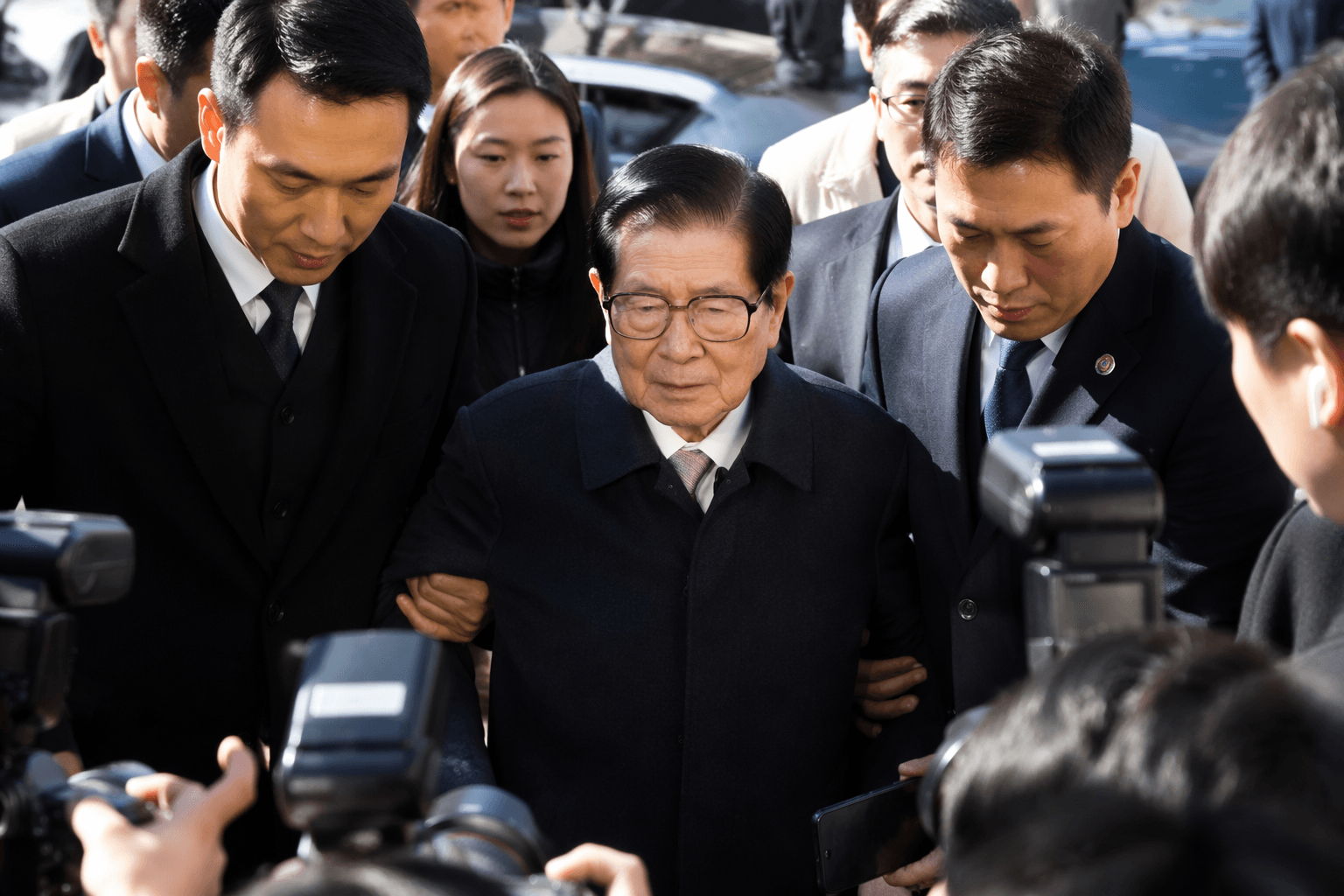
The investigation has already widened beyond Lee. Three former Shincheonji executives were arrested in connection with the same allegations, as prosecutors continue to map how the church’s internal network may have been used to deliver votes into party politics. The political pressure has also spilled into South Korea’s National Assembly, where debate has grown over a proposed bill that would sanction religious organizations accused of systematic political intervention.
For prosecutors, the issue now is not just whether Shincheonji crossed legal lines, but whether an opaque religious organization used its structure to operate as a hidden vote-delivery machine inside South Korea’s democratic system.
This article was produced by Prism’s automated news system from verified source data, official records, and press releases, then run through automated quality and moderation checks before publishing. The system is built and supervised by the people who set the standards it runs under. Read our full AI policy.
Know something we missed? Have a correction or additional information?
Submit a Tip