South Korea exports surge on AI-driven chip boom, poll shows
Chip shipments pushed South Korea toward a 61% June export jump, the fastest since 1978, with semiconductors taking 41.2% of sales.
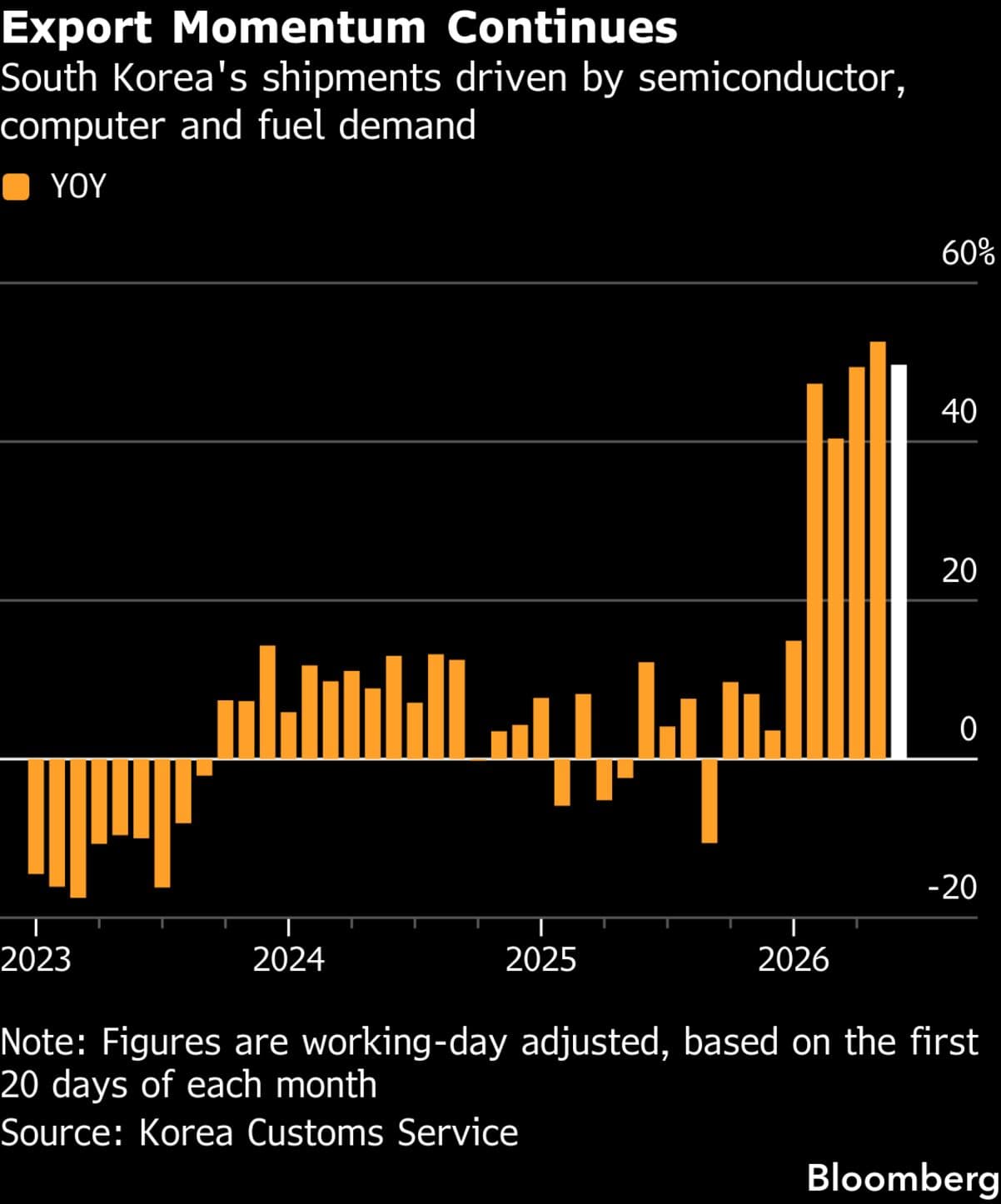
South Korea’s June exports were expected to jump 61.0% from a year earlier, the fastest pace since October 1978, as AI spending kept semiconductor orders surging for Samsung Electronics and SK Hynix, a Reuters poll of 13 economists showed. Asia’s fourth-largest economy has become one of the clearest gauges of how the global AI build-out is concentrating demand in a narrow set of chips and factories.
The same poll put June imports up 26.3% and the monthly trade surplus at a record $32.58 billion, reinforcing how sharply the external balance has swung in Seoul’s favor. South Korea is scheduled to release June trade figures on Wednesday, July 1, at 9 a.m. local time, giving markets a near-term check on whether the chip boom is still accelerating or starting to plateau.
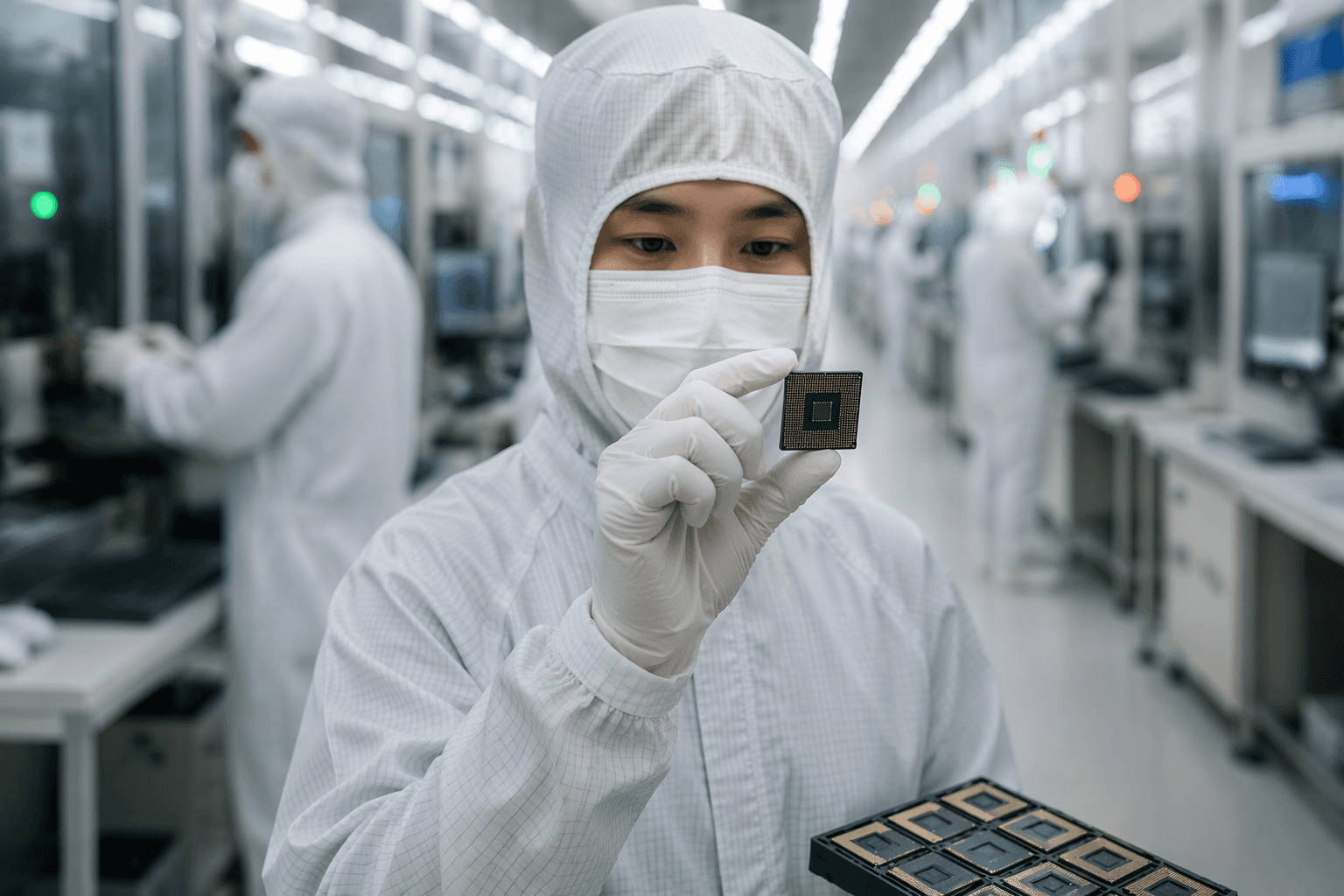
Early customs data already pointed to a historic month. In the first 20 days of June, exports rose 60.4% from a year earlier to a record $61.991 billion, while semiconductor shipments jumped 188.4% to $25.5 billion and accounted for 41.2% of all exports, according to the Korea Customs Service. That concentration shows how deeply South Korea’s trade cycle now depends on memory chips, a product tied directly to AI server investment and the higher prices that have followed it. Separate early-June customs figures showed exports rising sharply to Taiwan, China, Vietnam, the United States and the European Union, while China remained the biggest semiconductor market, with South Korean chip exports there up 243% in May.
The boom is now being folded into industrial policy. On June 29, the government unveiled three mega projects spanning semiconductors, physical AI and AI data centres, including a new semiconductor production base in southwestern South Korea. Samsung Electronics and SK Hynix are set to invest 800 trillion won, about $518 billion, and build two fabrication sites each in the region, while Gwangju and South Jeolla Province are expected to add 5 trillion to 20 trillion won. Samsung Group has separately been reported to be preparing a decade-long 1,000 trillion won investment pledge in South Korea. By implication, the same concentration that is powering record exports also leaves the economy exposed if memory-chip prices cool or AI spending slows.
This article was produced by Prism’s automated news system from verified source data, official records, and press releases, then run through automated quality and moderation checks before publishing. The system is built and supervised by the people who set the standards it runs under. Read our full AI policy.
Did this article answer your question?