South Korea’s concert hall shortage pushes top K-pop acts outside Seoul
BTS opened its first headline tour since 2021 to a stadium in Goyang, underscoring how Seoul’s venue crunch is sending K-pop’s biggest acts outside the capital.
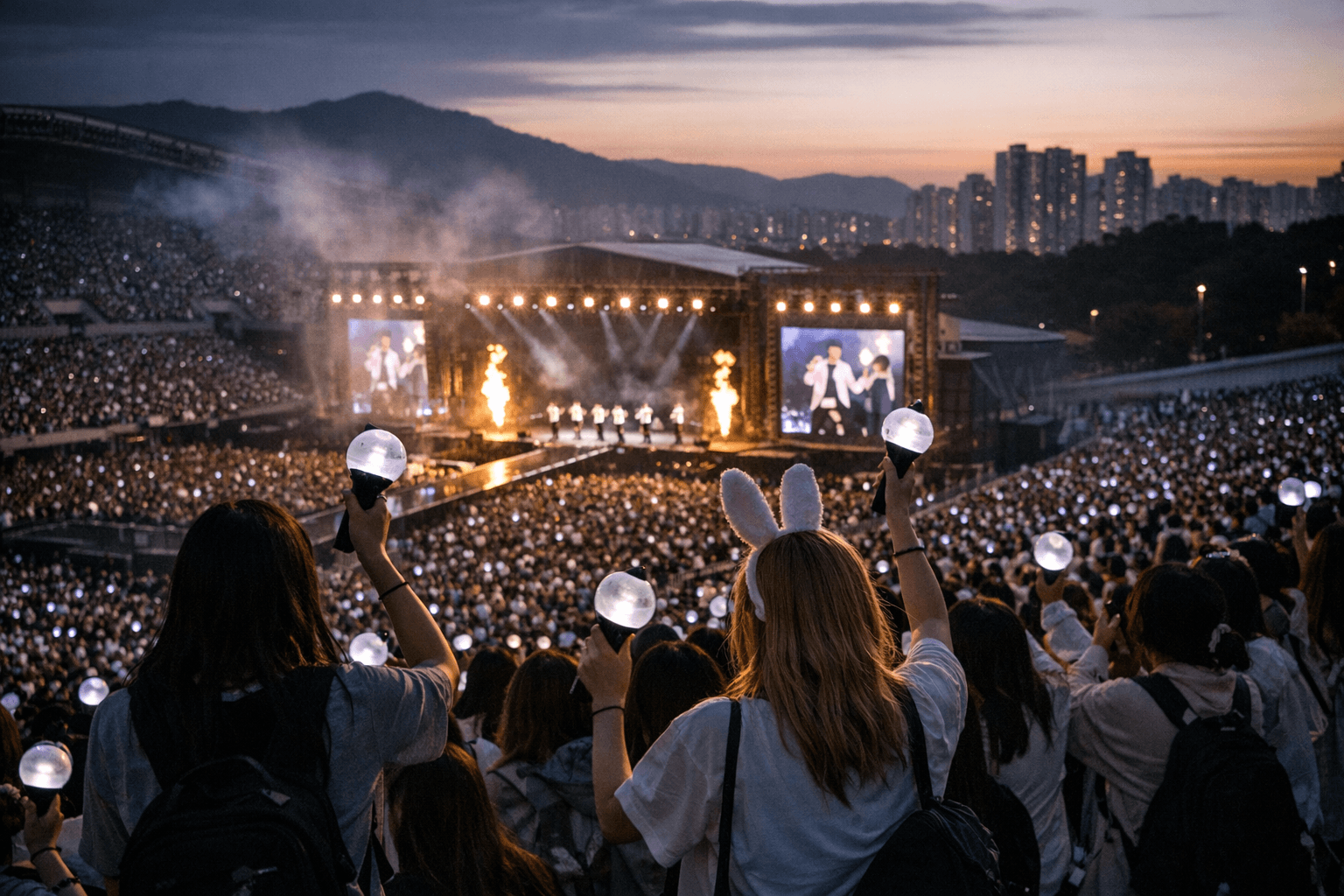
South Korea can sell K-pop to the world, but it still cannot reliably stage its biggest acts at home. BTS opened its first headline tour since 2021 in Goyang instead of Seoul, a sharp example of how the country’s venue shortage is pushing top concerts beyond the capital and into a handful of substitute stadiums.
The bottleneck is most visible in Seoul. Jamsil Sports Complex Main Stadium has been under renovation since August 2023 and is not scheduled to reopen until December 2026. Seoul World Cup Stadium, which holds roughly 60,000 to 66,000 people, is a sports venue first and a concert hall only in compromise, with acoustics and turf-protection concerns that make it a difficult fit for major shows. Across the Seoul metropolitan area, only a small number of venues can host more than 10,000 people, leaving promoters to compete for the same limited spaces.
That shortage has worsened as K-pop’s export economy has grown. The Korea Customs Service said K-pop album export sales reached $290 million in 2023, up 25.4% from 2022. Yet the physical infrastructure for that success has lagged behind, forcing organizers to move large productions to Goyang, Incheon and other nearby cities rather than Seoul itself.
The Korea Entertainment Producers’ Association has pressed the issue publicly and even floated an unconventional idea: turning the National Assembly site into a concert area if the legislature relocates to Sejong City. The proposal captures the scale of the problem. Seoul wants to position itself as a global entertainment capital, but its biggest cultural exports are often staged elsewhere because the city lacks enough modern, large-capacity halls.
Relief is coming, but not soon enough for many major tours. Seoul Arena, now under construction in Dobong-gu, is expected to open in the first half of 2027 as Seoul’s first concert hall built for K-pop-scale events. Its main arena is planned for up to 28,000 spectators, with a second hall for about 7,000, offering a purpose-built alternative that the capital has long lacked.
Until then, Goyang Sports Complex has become a workhorse. Built in 2003, it has a capacity of about 40,000 to 50,000 depending on configuration, and it reportedly hosted 18 large-scale concerts in 2025, drawing about 700,000 attendees and generating 10.9 billion won in revenue. Incheon venues are also absorbing demand, including Incheon Asiad Main Stadium, Incheon Munhak Stadium and Inspire Arena.
BTS’s Goyang run on April 9, 11 and 12 made the mismatch plain: South Korea’s most bankable cultural product still has too few stages in its own capital to hold it.
This article was produced by Prism’s automated news system from verified source data, official records, and press releases, then run through automated quality and moderation checks before publishing. The system is built and supervised by the people who set the standards it runs under. Read our full AI policy.
Did this article answer your question?