South Korea’s Danuri captures fresh crater from SpaceX Moon impact
Danuri photographed the fresh crater left when a SpaceX Falcon 9 upper stage hit the Moon at 5,400 mph. The images add a rare data point for lunar dust and debris control.
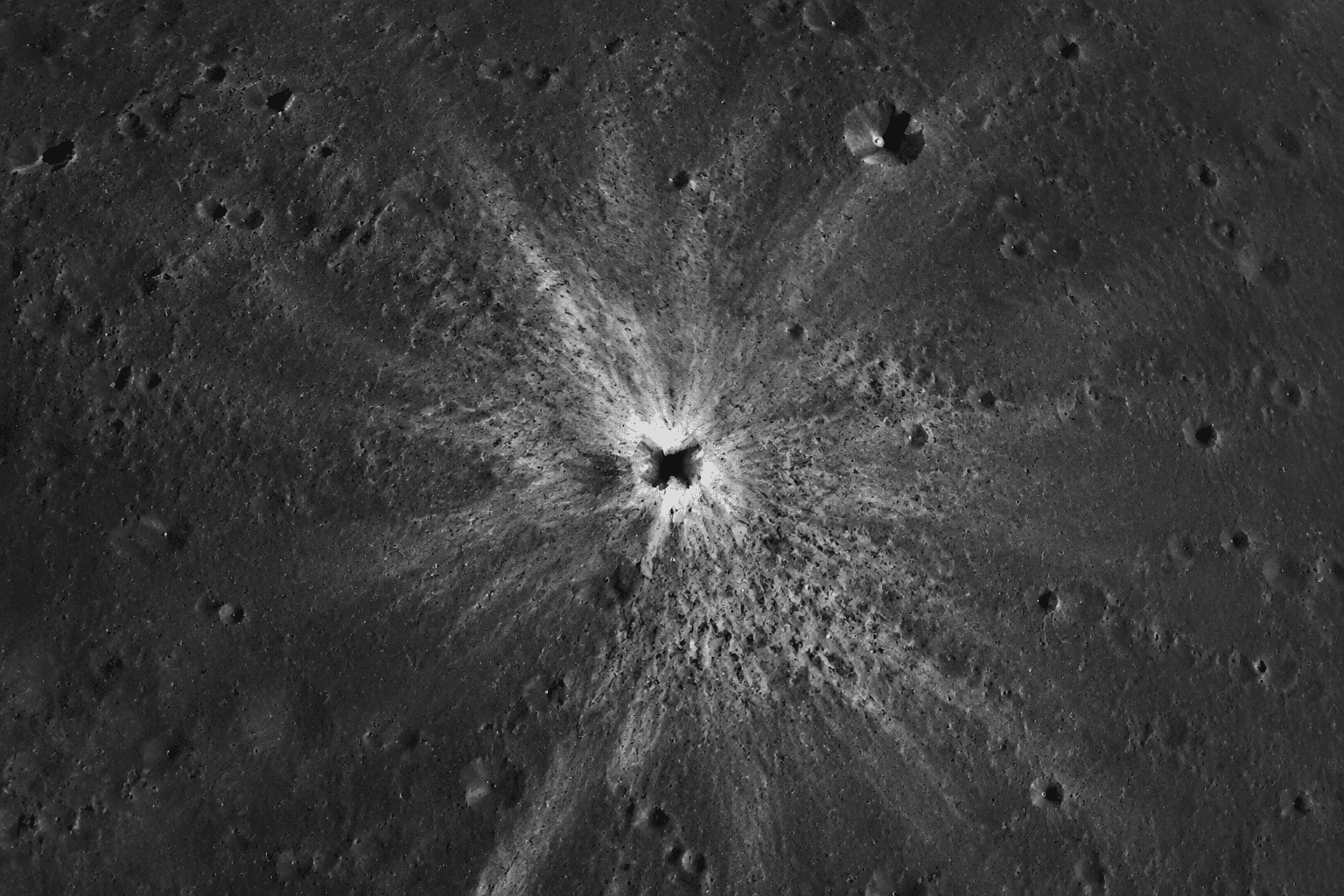
South Korea’s Danuri lunar orbiter photographed a fresh crater and debris plume after a SpaceX Falcon 9 upper stage slammed into the Moon’s Earth-facing side at about 5,400 mph, or roughly 8,700 km/h. The impact was unintentional, and the rocket hardware had been drifting through space for more than a year after a January 2025 mission that launched a pair of lunar landers.
The images from Danuri, also known as the Korea Pathfinder Lunar Orbiter, showed the impact site before and after the collision, giving scientists a close look at how high-speed strikes reshape the lunar surface. Researchers said the new crater offers a rare chance to study crater formation and lunar dust, both of which are central to understanding what happens when stray hardware hits airless worlds at extreme speed.
The object that struck the Moon was the Falcon 9 upper stage, with some descriptions calling it roughly the size of a school bus or a five-story building. Other accounts put its mass at about 4 tonnes, or 9,000 pounds. However it is described, the debris is another example of how launch hardware can remain in space long after a mission ends, then turn up far from its intended path.
The episode also raises sharper questions about responsibility in a more crowded lunar environment. Danuri itself was launched by SpaceX in 2022, and the spacecraft has already been used to capture detailed lunar imagery for South Korea’s Korea Aerospace Administration and Korea Aerospace Research Institute. In September 2024, India’s Chandrayaan-2 orbiter maneuvered to avoid a close approach with Danuri, a reminder that lunar orbit is becoming busier as governments and private companies add more missions.
NASA’s Lunar Reconnaissance Orbiter was also expected to image the same site for comparison, adding another reference point for scientists studying the aftermath. That kind of cross-checking matters as more hardware reaches lunar orbit, because the rules for tracking, preventing, and cleaning up debris beyond Earth remain thin even as activity around the Moon accelerates.
This article was produced by Prism’s automated news system from verified source data, official records, and press releases, then run through automated quality and moderation checks before publishing. The system is built and supervised by the people who set the standards it runs under. Read our full AI policy.
Did this article answer your question?