South Whidbey marks 20th MLK commemoration connecting past and present
South Whidbey held its 20th annual MLK commemoration, linking civil rights history to local racial justice work.

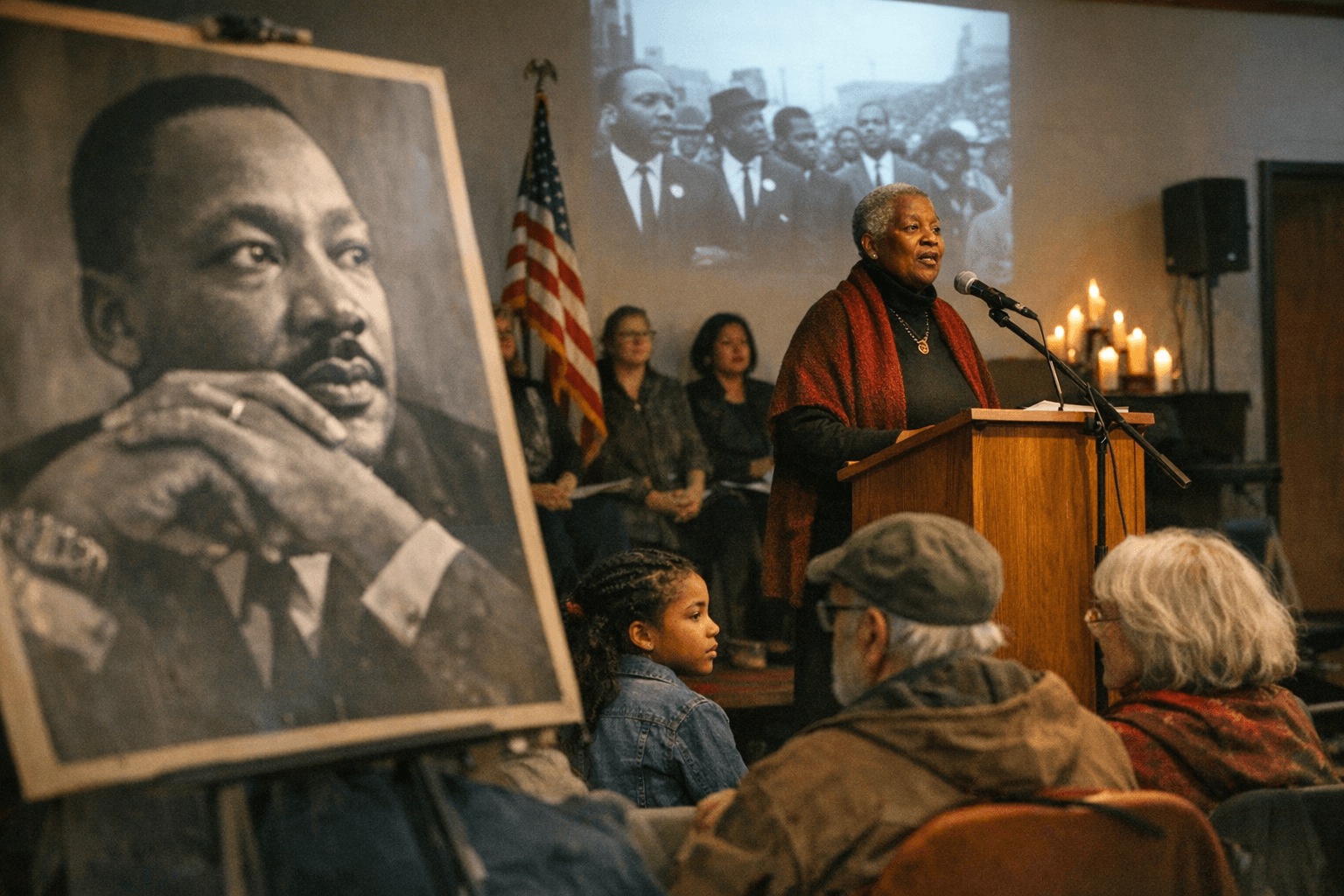
South Whidbey’s 20th annual Martin Luther King Jr. Day commemoration, Blessed are the Peacemakers, drew community members to St. Augustine’s-in-the-Woods Episcopal Church in Freeland for an afternoon program that tied the 1960s civil rights movement to contemporary racial justice efforts. The program began at 1 p.m. and combined worship elements, arts and student participation to emphasize nonviolent resistance and community responsibility.
The featured speaker was Rev. Carla Robinson, Canon for Multicultural Ministry and Community Transformation for the Diocese of Olympia. Local musician Barbara Dunne performed with Michael Laslett and choir members, and an interpretive dance by LaChresha Jones-Mayes of Pamoja Place provided a movement-based reflection on the program’s theme, Nonviolent Resistance: From Martin Luther King to 'No Kings' and Beyond. Contributions from United Student Leaders broadened the event’s intergenerational reach. Cookies and beverages were offered before and after the presentation, maintaining the informal fellowship that has become part of the commemoration’s local character.
As an institutional event hosted by a parish church with diocesan leadership involved, the commemoration underscores the role faith organizations play in shaping civic conversation on Island County. Organizers said they hope the program reaches a younger audience and highlights connections between historical movements and ongoing local efforts for racial equity. That emphasis on youth participation is significant for civic engagement in a county where voting patterns and local policy priorities can shift when new cohorts become active in community institutions.
The event’s mix of music, dance and student voices reflects a deliberate strategy to translate historical lessons into present-day civic action. For local leaders and public officials, these gatherings present an opportunity to hear community concerns and to consider how policy and services respond to racial justice aims raised by residents. Nonviolent resistance as a frame also invites a civic vocabulary beyond protest, encompassing voter registration, public comment, school and county board participation, and coalition building among local organizations.
For residents, the commemoration offered a chance to connect across generations and to witness youth engagement in matters that shape local life. The program’s organizers intend the annual observance to be more than remembrance; it is positioned as a recurring forum for dialogue and civic renewal. For Island County voters and community institutions, that sustained engagement could influence turnout, local policy debates and the priorities civic leaders choose to address in the year ahead.
Sources:
Know something we missed? Have a correction or additional information?
Submit a Tip