SpaceX Opens 2026 With Falcon 9 Launch of Italian Radar Satellite
Late on Jan. 2, SpaceX launched the first orbital mission of 2026 from Vandenberg, placing Italy’s COSMO-SkyMed Second Generation satellite into a sun-synchronous low-Earth orbit. The synthetic aperture radar sensor promises improved day and night, all-weather imaging for environmental monitoring, disaster response and military uses, underscoring the growing role of dual-use satellites in Earth observation.
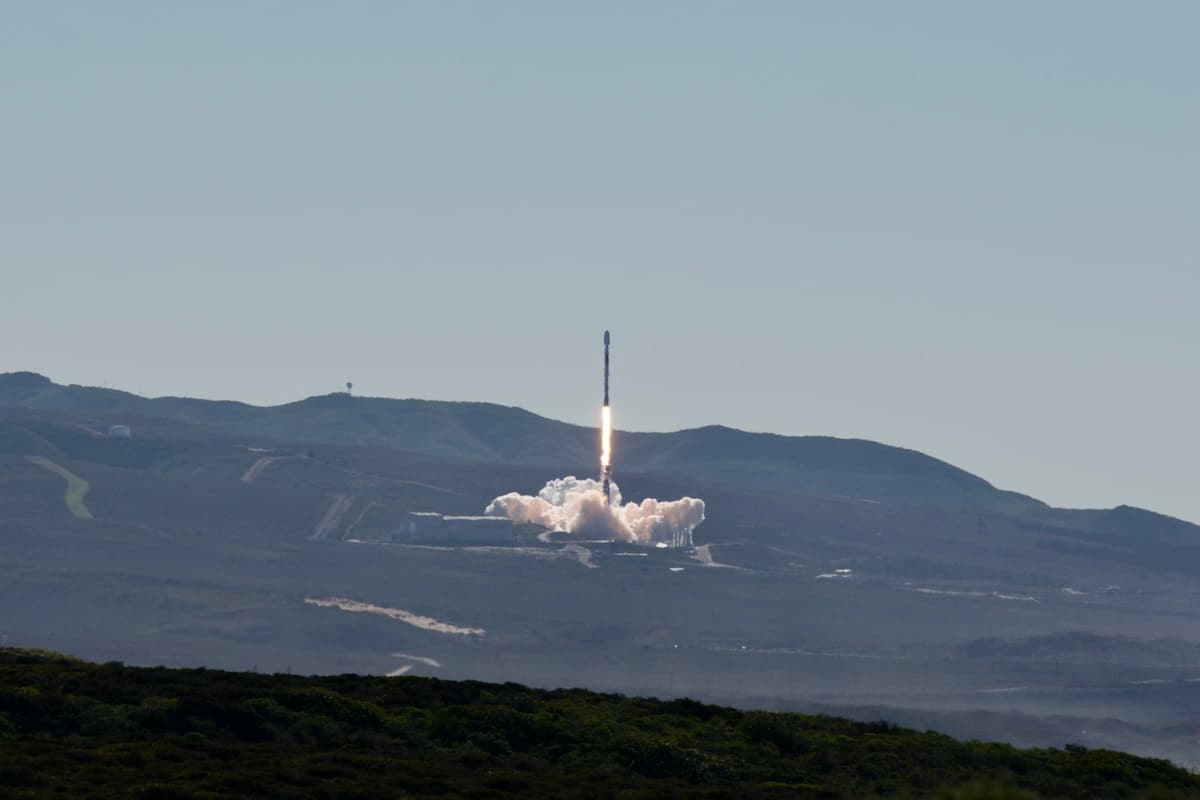
A Falcon 9 rocket lifted off from Space Launch Complex 4E at Vandenberg Space Force Base late on Jan. 2, 2026, carrying COSMO-SkyMed Second Generation Flight Model 3, known as CSG-FM3, into a sun-synchronous low-Earth orbit. Liftoff occurred at 6:09 p.m. Pacific Standard Time (9:09 p.m. Eastern, 0209 UTC), marking SpaceX’s first orbital mission of the year. Live coverage and social posts began roughly 30 minutes before the scheduled departure.
The 1,700 kilogram (about 3,748 pound) satellite, built for the Italian Space Agency and the Italian Ministry of Defence, was deployed into an orbit of roughly 385 miles, or about 620 kilometers. It carries a synthetic aperture radar, or SAR, capable of producing high-resolution imagery regardless of daylight or cloud cover. Those capabilities are central to the satellite’s stated roles in environmental monitoring, disaster response and prevention, scientific and commercial uses, strategic planning and national security operations.
CSG-FM3 is described in mission coverage as the third of four Second Generation COSMO-SkyMed satellites planned for deployment. Separately, a European Space Agency explainer characterizes the Second Generation system as a two-satellite network. Both characterizations appeared in prelaunch reporting and are noted here as presented in source material, reflecting differing programmatic descriptions in public documents and mission manifests.
The flight used Falcon 9’s first-stage booster B1081, a veteran of previous missions. Prelaunch information indicated the booster was making its 21st flight and was scheduled to return to a touchdown at Landing Zone 4 at Vandenberg after stage separation. The rocket climbed on a southerly trajectory from the Central Coast pad, following a mission profile designed to insert the radar satellite into the polar sun-synchronous orbit favored for Earth observation.

The COSMO-SkyMed program, developed by Italy, has long combined civilian and defence objectives, and the Second Generation series aims to enhance the country’s imaging cadence and responsiveness. SAR instruments give operators the ability to monitor areas of interest continuously, a feature that is especially valuable for rapid disaster assessment after earthquakes, floods or storms, and for tracking changes in land use, ice cover and maritime activity.
The mission had slipped from earlier targets after a reported launch pad issue in late December 2025, which required additional checks and a brief schedule shift. Local and international outlets framed the Jan. 2 launch as a return to the flight cadence after those delays, and SpaceX and affiliated channels promoted the mission as its first orbital sortie of 2026.
As more high-resolution, dual-use satellites enter orbit, debates over data access, commercial markets and national security use are likely to intensify. For now, Italy’s new CSG-FM3 joins a growing global fleet of SAR-equipped platforms, promising more frequent, actionable imagery for both public applications and defence planning.
Know something we missed? Have a correction or additional information?
Submit a Tip