SpaceX prepares Starfall demo for orbital cargo delivery testing
SpaceX targeted Starfall for a Falcon 9 launch of a 1,000-kilogram orbital cargo capsule, a test that could turn space into a delivery lane.
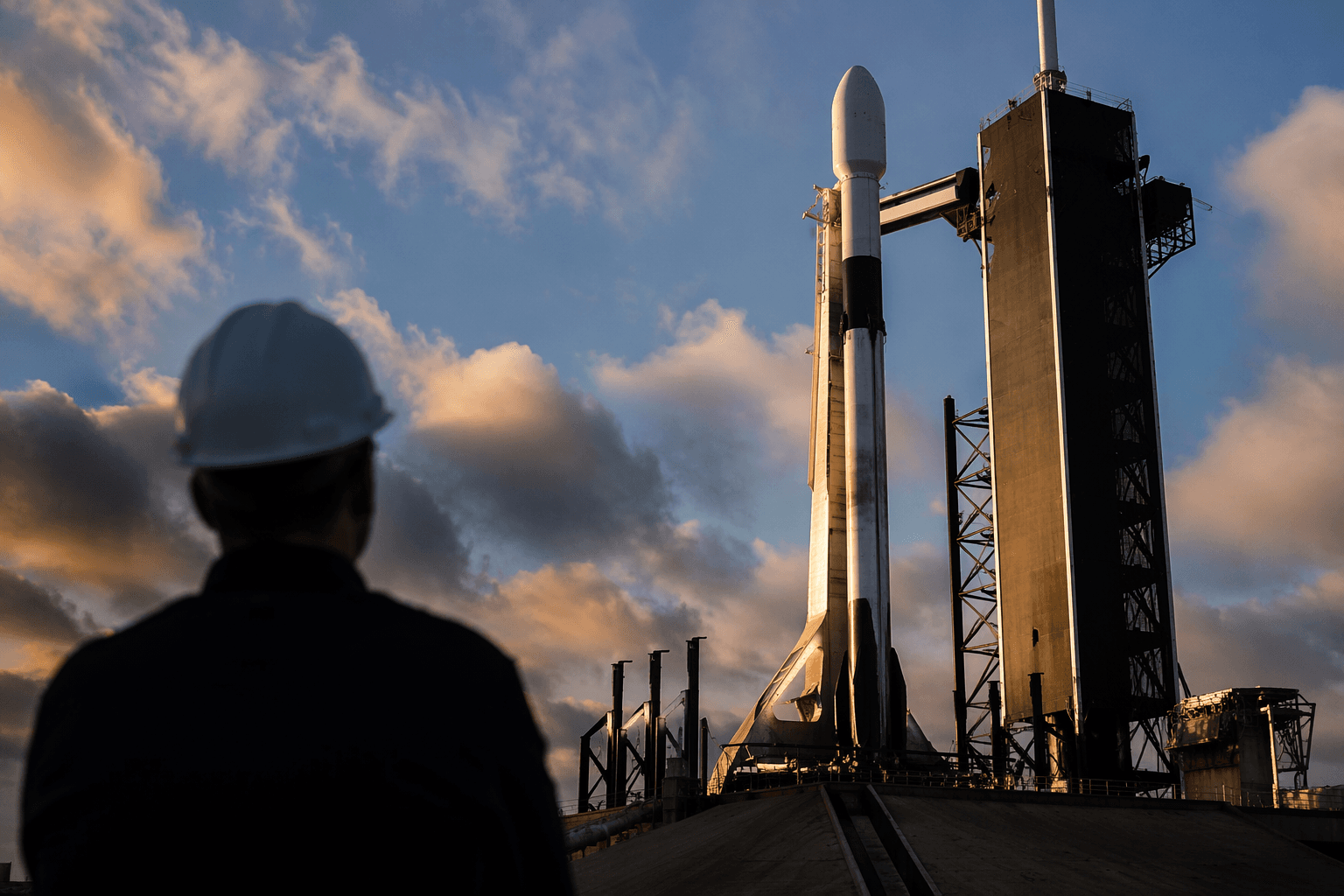
SpaceX targeted Tuesday, June 23, for a Falcon 9 launch of its Starfall Demo mission from Space Launch Complex 40 at Cape Canaveral Space Force Station in Florida, with a one-hour window opening at 6:43 a.m. ET and a backup opportunity at the same time Wednesday, June 24. The flight marks the first public look at a vehicle SpaceX has kept largely out of view, but one that could point to a new kind of logistics system: cargo moved through orbit instead of across roads, runways or cargo ships.
Federal Aviation Administration documents issued May 15 and surfaced publicly on May 29 describe Starfall as an uncrewed reentry vehicle intended to support the transport and delivery of goods through space. The agency says the capsule is not designed or intended for human spaceflight. FAA material places the vehicle at about 0.75 meters tall and 3.1 meters in diameter, with an empty weight of about 2,100 kilograms and a payload capacity of up to 1,000 kilograms. The document package also references Starfall reentry vehicle operations in the Pacific Ocean and lists vehicle operator license number VOL 26-135.
SpaceX has said little about what is riding on the mission. Spaceflight Now reported that the company has not disclosed how many spacecraft are onboard, has not revealed the payload or mission profile, and has cut off its public-facing timeline after booster landing. That limited disclosure suggests the company is still testing the fundamentals: whether a reusable capsule can be launched, brought back through reentry and recovered in a way that makes orbital freight practical rather than merely experimental.
The broader economic and strategic implications are larger than the hardware. If a return-capable orbital cargo system works, it could matter for disaster response, where critical supplies or diagnostic samples need to move quickly; for the military, where orbital depots or rapid delivery of specialized equipment could shorten supply lines; and for commercial customers chasing high-value, time-sensitive products such as pharmaceutical materials or in-space manufactured components. New Atlas has noted that the capsule could eventually serve automated orbital labs or depots for military equipment in space.
SpaceX already markets Falcon 9 as the world’s first orbital-class reusable rocket, and Starfall extends that logic beyond the booster. Reusability has already helped drive down launch costs; a cargo capsule that can survive orbit and return payloads would push the space economy one step closer to a true transport network. What is being tested now is not a branding exercise, but whether orbital logistics can become repeatable, licensed and commercially useful.
This article was produced by Prism’s automated news system from verified source data, official records, and press releases, then run through automated quality and moderation checks before publishing. The system is built and supervised by the people who set the standards it runs under. Read our full AI policy.
Know something we missed? Have a correction or additional information?
Submit a Tip