Spain’s Socialist Party searched in widening corruption probe
Police searched PSOE headquarters as a corruption probe widened, deepening pressure on Pedro Sánchez while his coalition partner warned that party financing could become a red line.

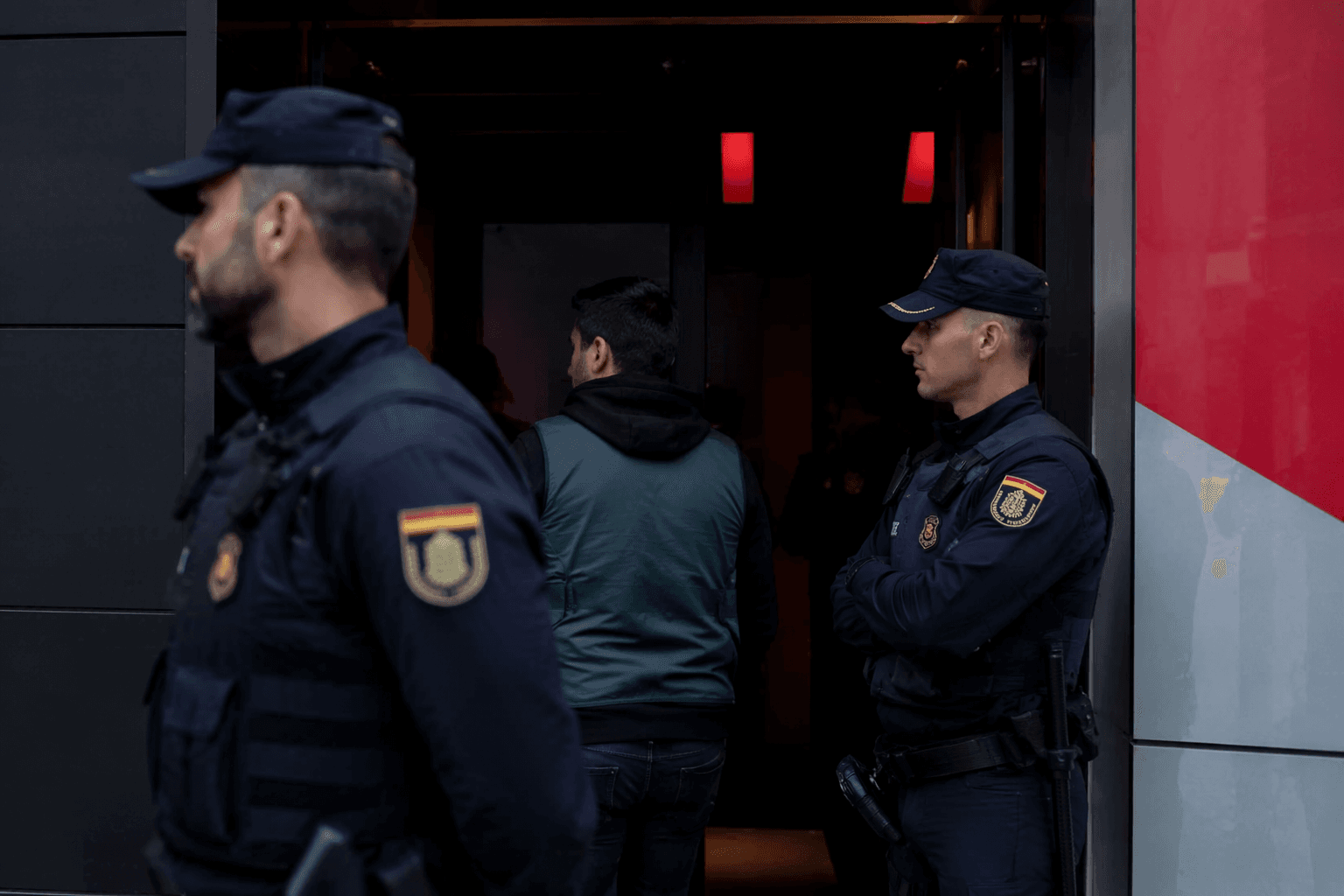
Spain’s Socialist Party was searched by anti-corruption police in central Madrid on Wednesday, sharpening a crisis that could test whether Pedro Sánchez can keep governing through the scandal storm now circling his party, his family and his cabinet. The Civil Guard’s elite Central Operative Unit entered the PSOE headquarters after Judge Santiago Pedraz ordered officers to seize documents and electronic archives tied to a National Court probe.
The case began in 2025 after audio recordings surfaced of former Socialist figure Leire Díez, who allegedly tried to discredit a Civil Guard anti-corruption officer and influence state prosecutors. Díez has denied wrongdoing and has left the party, while the PSOE says she acted on her own. The inquiry has since widened to former Socialist heavyweight Santos Cerdán and several other figures, including a former Andalusian regional official, a police officer, a businessman and two lawyers, on suspicion of bribery, false testimony, forged commercial documents, influence peddling and corruption.
Court filings cited in reporting say the alleged scheme involved fraudulent invoices and party-linked payments worth tens of thousands of euros, with the suspected fraud beginning in 2024. For Sánchez, who has led Spain since 2018, the political damage is no longer confined to one internal scandal. His wife, Begoña Gómez, has been formally charged in a separate case. His brother, David Sánchez, is due to stand trial on influence-peddling and misuse-of-public-funds allegations. Former transport minister José Luis Ábalos and an aide are also awaiting trial over alleged pandemic-era mask-contract kickbacks.
Sánchez has denied direct involvement, said he respects the justice system and insisted he will not call elections before the current legislative term ends in August 2027. But the pressure on his minority government is growing. Conservative opposition leader Alberto Núñez Feijóo has demanded that Sánchez resign and call elections, while Vox leader Santiago Abascal has piled on attacks. Feijóo said the government is in its “death throes,” a line that reflects how far the scandal has moved beyond reputational damage and into a fight over political survival.
The key question is no longer only whether the probe produces more indictments, but whether it breaks Sánchez’s governing coalition first. Junior partner Sumar has warned that irregular financing is a red line, and any further judicial escalation or proof that the party’s finances were compromised could make support inside the alliance harder to hold. That risk was already visible in Madrid on Saturday, May 23, when thousands marched against Sánchez in a protest organized by more than 150 civic groups, with organizers claiming 120,000 attendees and the central government’s delegate estimating 40,000.

If the investigation keeps moving upward, and coalition discipline keeps fraying, Sánchez may find that the cost of staying in office becomes higher than the cost of calling the election he has so far refused.
This article was produced by Prism’s automated news system from verified source data, official records, and press releases, then run through automated quality and moderation checks before publishing. The system is built and supervised by the people who set the standards it runs under. Read our full AI policy.
Did this article answer your question?

