Special trees and strong crowds highlight 100th Kokufu Bonsai Exhibition in Tokyo
Shimpaku junipers and decades-trained maples anchored a busy two-part 100th Kokufu‑ten at the Tokyo Metropolitan Art Museum this February, with unusually large crowds and strong foreign participation.
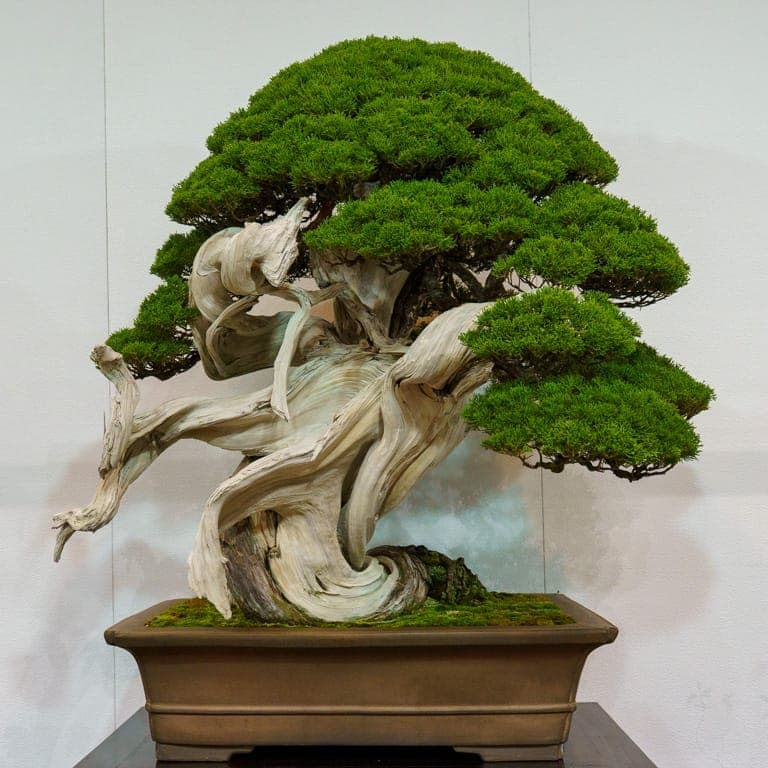
Shimpaku junipers and maples that had been worked for decades drew long looks at the 100th Kokufu‑ten, held this February at the Tokyo Metropolitan Art Museum in Ueno Park, Tokyo, where multiple bonsai outlets and photo captions reported larger crowds than in recent years. BonsaiTonight observed that “the event was busier than it has been in recent years, and a larger percentage of the visitors were foreign,” and a William N. Valavanis photo caption noted “Saturday morning visitors, larger crowds than have been seen in over 40 years.”
Organizers were identified differently across coverage: BonsaiTonight and an Original Report fragment referred to the show as organized by the “Japanese Bonsai Association,” while Wazakura Japan described it as “organised by the Nippon Bonsai Association.” Wazakura noted the exhibition’s deep roots, writing “Since its first edition in 1934, Kokufu‑ten has represented the very heart of Japanese bonsai culture,” and Magiminiland explained why the centennial show landed in 2026: “The 100th Anniversary of Kokufuten will be in 2034. In the early years there were two annual shows, one in the spring and one in the fall. This 2026 year's is the 100th show.”
The two-part format ran as Part 1 and Part 2, and Magiminiland supplied the scale: 181 display areas and 287 individual bonsai were shown, with 25 Foreign Exhibitors representing approximately 20 different countries and approximately 20% of the displayed bonsai owned by foreigners. Magiminiland added that many of the foreign exhibitors displayed “bonsai which had been trained and refined in Japan and were purchased by foreigners waiting to be imported to the owner's countries,” underlining the show’s role as both exhibition and commercial marketplace.
Judging in Part 1 produced an unusually large slate of prizes; Magiminiland reported that “For Part 1 of this 100th show, eleven (!) Kokufu Prizes were awarded to outstanding bonsai. Normally only three to six Prizes are awarded.” Photo captions preserved prize details: Tony Bebb’s caption read “Kokufu Prize, 2026, Part 1: Shimpaku Juniper (Juniperus chinensis var. shimpaku) 1st Shinji Suzuki tree, 2021 Sakufuten Prime Minister's Award for Yoshihiko Moriyama design Photo by Tony Bebb,” and another caption recorded “Kokufu Prize, 2026, Part 1: Shimpaku Juniper (Juniperus chinensis var. shimpaku) 2nd Shinji Suzuki tree, Sold to a Chinese Collector and Prominent Businessman Photo by Tony Bebb.” A Kinbon Bonsai photo caption identified a Part 2 winner: “Kokufu Prize, 2026, Part 2: Juniper (Juniperus sp.) Photo by Kinbon Bonsai.”
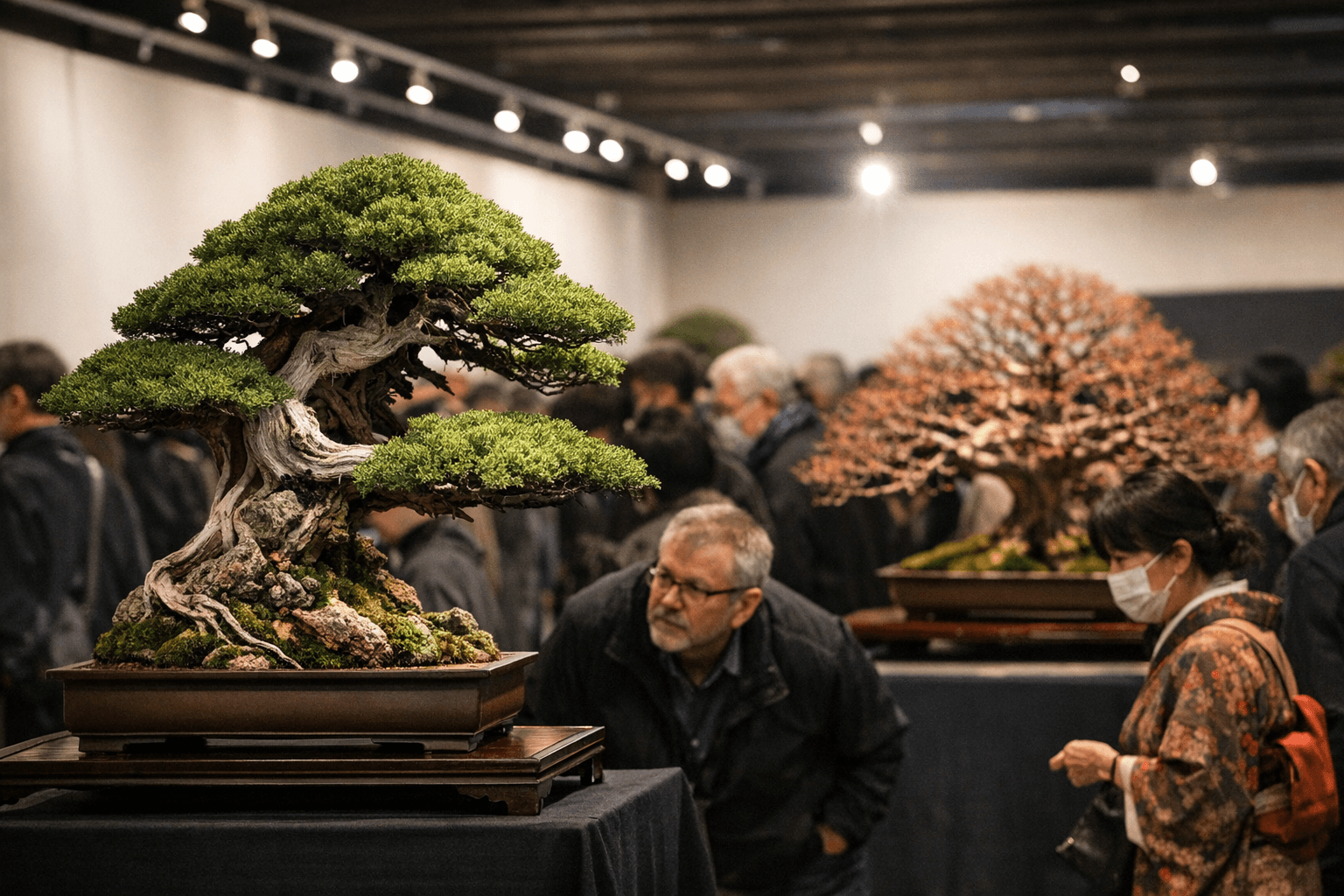
Species highlights across coverage leaned toward deciduous material and classic junipers. BonsaiTonight ran multiple photos and noted rose, black pine, Chinese quince—“so twiggy that I had to reset my thinking about what’s possible with the species”—Japanese maple, Korean hornbeam, trident maple, and repeated “Shimpaku juniper” captions. BonsaiTonight remarked, “A lot of the trees that stood out to me this year were deciduous” and that “When standing in front of these trees, it was easy to get lost following the branches as they meandered from the trunk out towards the edges of the canopy. Trees like these had been skillfully worked on for decades – and it showed.” Junipers drew praise for trunk character: “fantastic character along the trunk. Slender lifelines supported by undulating deadwood feature more delicate movement with give this old tree – and its viewers – a very different feeling.”
Club- and industry-level reaction was equally vivid. Midori Bonsai’s president wrote, “I was lucky enough to make it to Japan for the 100th Kokufu‑Ten, and wow—nothing gets the bonsai energy flowing like being surrounded by that many incredible trees,” named a red pine literati as her Part 1 favorite—“I’m a sucker for literati, so in Part One I fell for a red pine with that perfect mix of elegance and attitude”—and called a Part 2 favorite “an old Prunus mume that broke pretty much every ‘rule’ and still looked amazing,” with a Japanese white pine as runner‑up. Midori also noted club programming tied to post‑show season timing, citing an Eric Schrader talk and repotting workshops for maples.
Photographers and documentation emphasized the show’s reach: images and captions came from Kinbon Bonsai, Tony Bebb, William N. Valavanis, and Hiroyuki Suzuki, who photographed the program, visitor ballot and ticket. Magiminiland added that “Masahiko Kimura's Artistry was represented by over 40 bonsai owned by clients,” a reminder that the 100th Kokufu‑ten combined living art, competition, and international commerce while reaffirming Kokufu‑ten’s place at the center of Japanese and global bonsai practice.
Know something we missed? Have a correction or additional information?
Submit a Tip