Sperm whale carcass drifts onto Kona lava flat; sharks feeding, DLNR warns
DLNR says a sperm whale carcass pushed onto a Kona lava flat is drawing tiger sharks and oceanic whitetip sharks; remnants began washing ashore near Makalawena, photo dated Feb. 24.
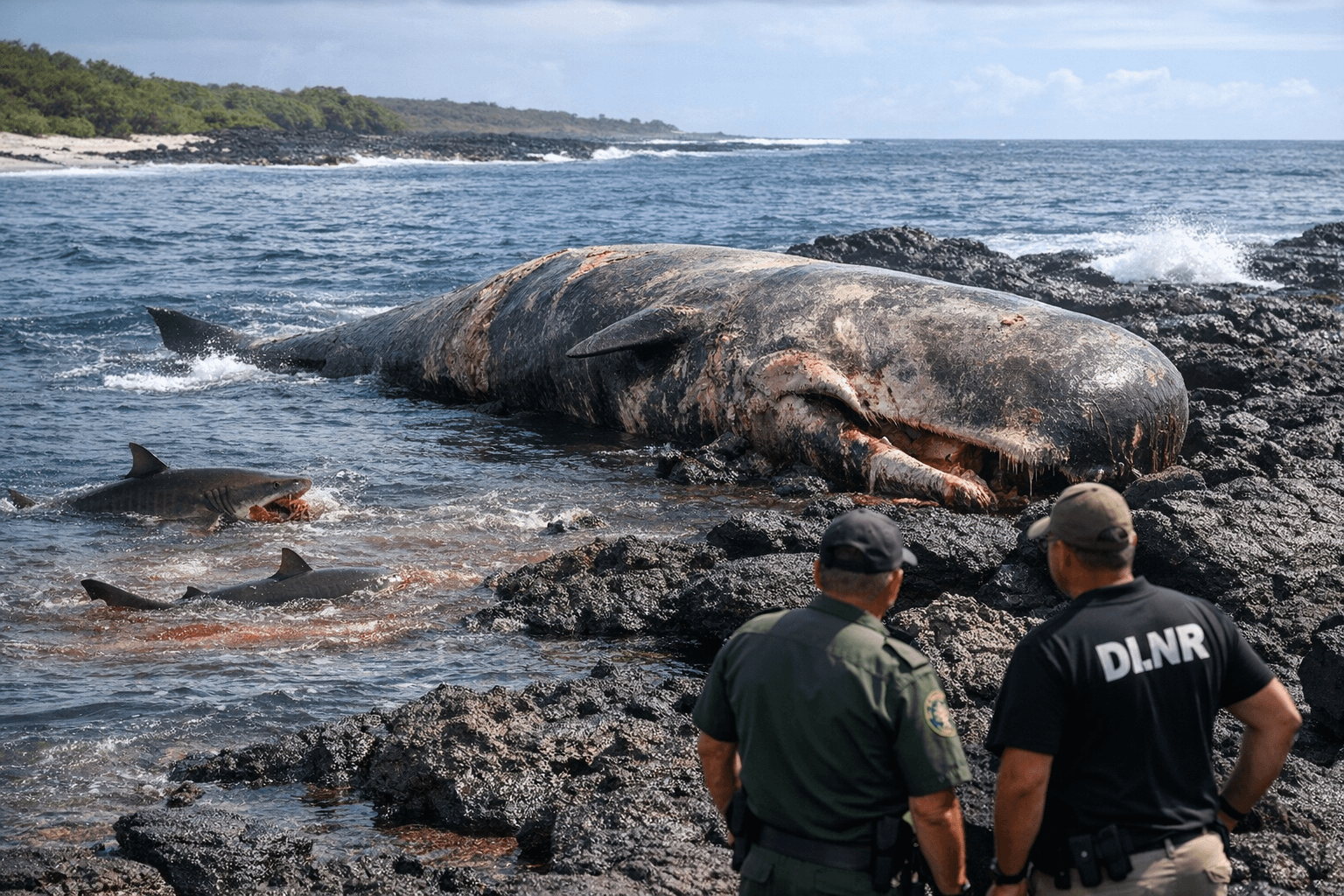
The Hawaiʻi Department of Land and Natural Resources’ Division of Aquatic Resources has been monitoring the carcass of a palaoa (sperm whale) off the Kona coast since Feb. 6, 2026, and warned Thursday that the waters from Makalawena to Honokohau are of particular concern over the next few weeks as large predators feed on the remains. DLNR advised residents and visitors to stay out of the water because, the agency said, "The presence of large predators feeding on the remains poses a significant danger to humans."
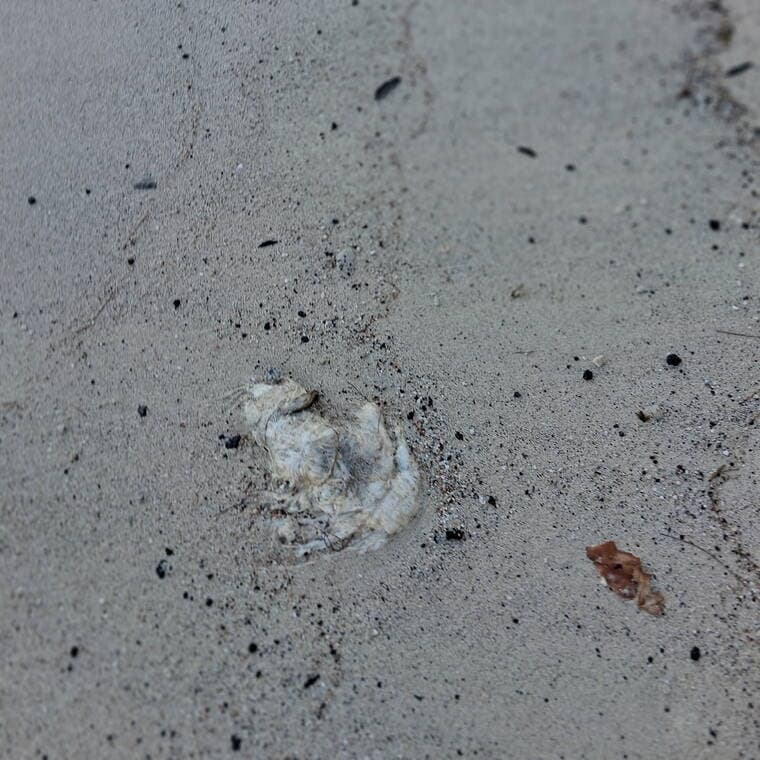
DLNR said wind and ocean conditions recently moved the whale onto a lava flat along the Kona coastline and that a public-submitted photo dated Feb. 24 shows whale remains near the Caretakers Pond at Makalawena Beach. DLNR has been coordinating its monitoring with Kia‘i Kanaloa and the National Oceanic and Atmospheric Administration as the carcass fragments and shifts with local currents; the department issued a news release on Thursday, Feb. 26, updating safety guidance.
Agency reports and eyewitness accounts list tiger sharks, oceanic whitetip sharks, mahi-mahi and visiting dolphins feeding on the carcass at the lava flat, and DLNR cautioned that "It is common in such feeding events that pieces of the whale carcass will drift." The department singled out the stretch from Makalawena to Honokohau for elevated risk and said large predators are still utilizing the whale as a food source.
As Hawaiʻi Island has experienced high winds and strong currents over the past three weeks, DLNR noted, some remnants are beginning to wash ashore. Beachgoers and shoreline users are asked to be aware of oil slicks, pieces of blubber on sand and rocks, floating pieces in the water and a strong smell of decay as signs that whale material is nearby. The release included explicit health guidance: "To prevent illness, do not swim in or near areas where remnants are found on the beach and do not touch or interact with the carcass or remains of any size that may be found on the shoreline."
Kia‘i Kanaloa Executive Director Roxane Keliʻikipikaneokolohaka, who has a doctorate in education, framed the event in cultural and ecological terms, saying, "This is nature doing what it does to recycle essential nutrients into the marine ecosystem." She urged distance and respect, adding, "It is our place as kanaka to be respectful of this natural process by maintaining our distance. We invite everyone to abide by the kanawai (edict, decree) from the Kumulipo: O ke akua ke komo, ‘a‘oe komo kanaka — The god enters, man may not enter."
DLNR’s Division of Aquatic Resources also advised, "The Division of Aquatic Resources advises that people leave any pieces of whale carcass where they find them," noting that "These remnants will naturally biodegrade back into the environment and continue to provide food for the birds, crabs, smaller fish and other wildlife who make their homes in Hawaiʻi’s ocean and coastal ecosystems." Monitoring by DLNR, Kia‘i Kanaloa and NOAA will continue as the situation evolves and as additional pieces of the carcass potentially drift toward shore over the coming weeks.
Sources:
Know something we missed? Have a correction or additional information?
Submit a Tip