Spielberg revisits Close Encounters scene as TCM spotlights his films
Spielberg broke down why Richard Dreyfuss, widescreen framing and John Williams’ score turn Close Encounters into a lesson in awe.
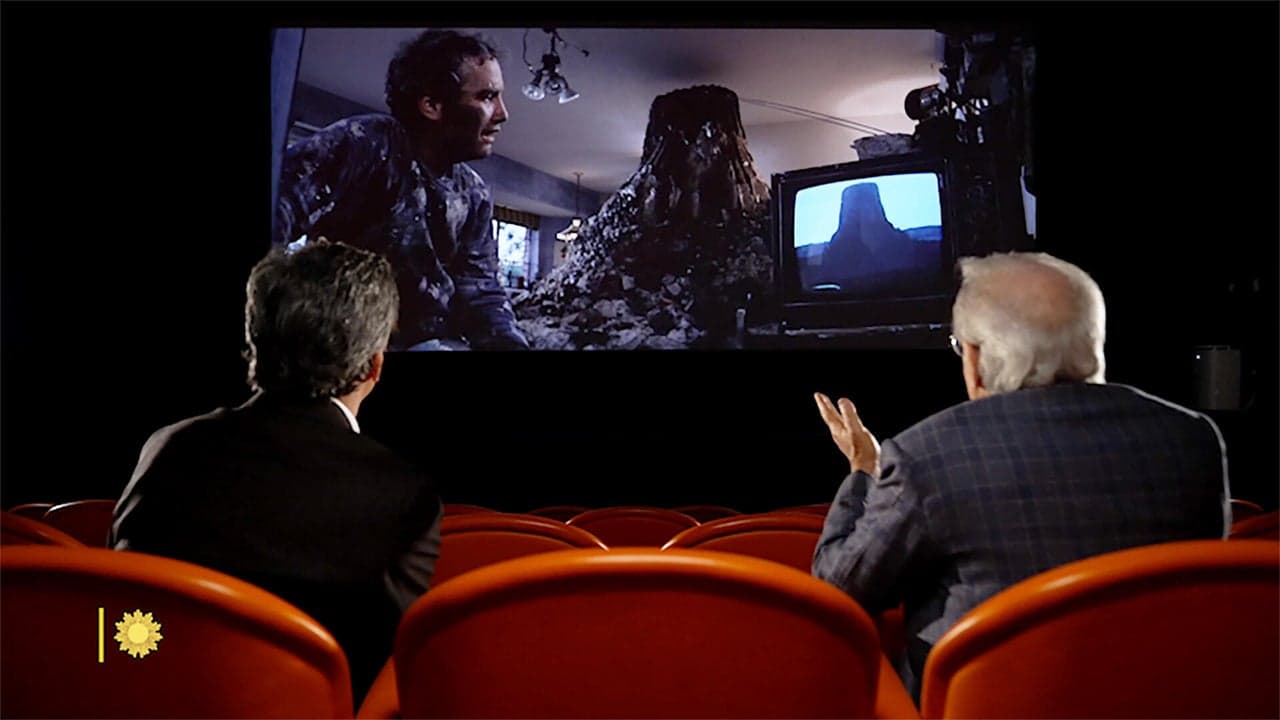
Steven Spielberg used a Turner Classic Movies conversation with Ben Mankiewicz to turn a single scene from Close Encounters of the Third Kind into a lesson in how movies manufacture wonder. Rather than revisit the film as a simple career landmark, Spielberg focused on Richard Dreyfuss’ performance, the breadth of the frame and John Williams’ music, showing how each element works together to pull the audience toward Roy Neary’s obsession and the film’s lingering sense of dread.
The appearance arrived as TCM rolled out June 2026 programming centered on Spielberg, a lineup the network said it announced on May 11. It also came as Spielberg promoted Disclosure Day, which is scheduled for U.S. theatrical release on June 12. That timing gave the conversation extra force: one of America’s most commercially influential filmmakers was using a new platform to dissect the craft of one of his defining pictures.
Released in 1977 after Jaws, Close Encounters of the Third Kind helped solidify Spielberg’s command of large-scale spectacle, but TCM has described it as a riskier and far more expensive science-fiction project than the low-budget genre fare common in the 1960s. Dreyfuss plays Roy Neary, the ordinary man drawn into contact with something vast and unknowable, and Spielberg’s comments underscored how the film’s power depends on restraint as much as scale. The director did not frame the sequence as a visual-effects showcase alone; he treated it as a study in performance inside the frame, with Williams’ score doing as much emotional work as the images.

The film’s technical presentation reinforces that lesson. The official specs list 70 mm prints framed at 2.20:1 and 35 mm anamorphic prints at 2.39:1, a reminder that Spielberg and his collaborators were building spectacle with exacting attention to how audiences would see it. The Academy of Motion Picture Arts and Sciences records that the film won the 1978 Oscar for Best Cinematography for Vilmos Zsigmond, after earning multiple nominations. TCM’s archival coverage also notes that Spielberg revisited the film again for a 1998 home-video version, and that its development grew out of his childhood fascination with the sky and UFO lore. In a 2024 TCM Film Festival conversation, Spielberg said Dreyfuss had wanted to be considered for the lead while Spielberg was making Jaws, a detail that now reads like a key to the partnership behind one of the director’s most enduring visions.
This article was produced by Prism’s automated news system from verified source data, official records, and press releases, then run through automated quality and moderation checks before publishing. The system is built and supervised by the people who set the standards it runs under. Read our full AI policy.
Did this article answer your question?