Spring yellowfin tactics for Hatteras anglers and charter captains
Spring yellowfin tactics for Hatteras waters: read sea-surface temperatures and keep a flexible spread to find and hook hungry tuna.
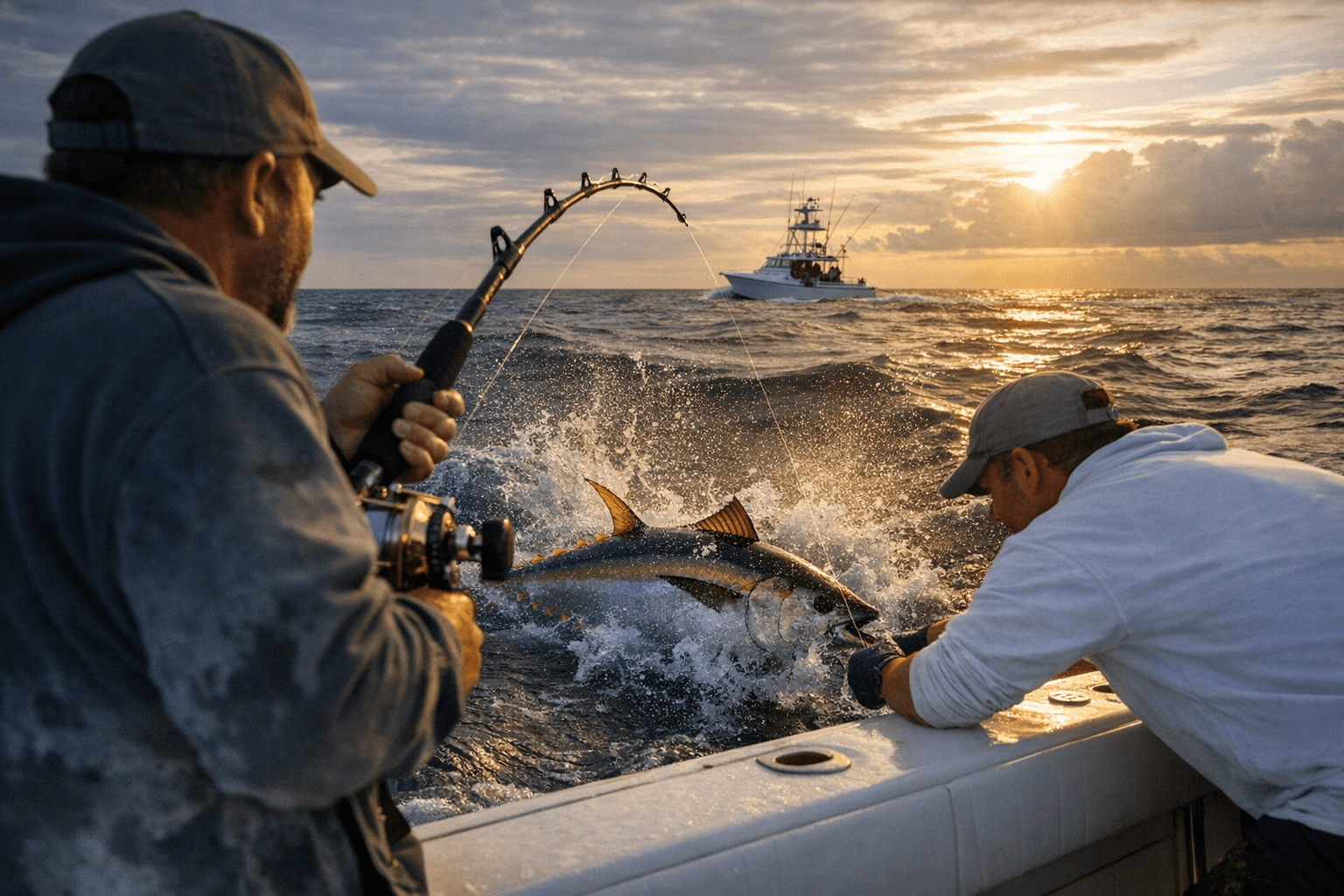
Spring yellowfin season in Hatteras rewards anglers who read the water and change tactics on the fly. Finding the seams where bait concentrates and working current breaks and canyon edges puts you where tuna stage, while a flexible spread and stout tackle gives you the tools to capitalize when fish show.
Start with sea-surface temperature charts and an eye on eddy structure. These indicators reveal the seams and fronts that trap sandeel, goggle-eye, and flying fish, creating concentrated bait patches that yellowfin hunt. Work along canyon and structure edges where current breaks create holding zones; those are the likely ambush points rather than random open-water trolling lines.
Trolling remains the baseline: a varied spread keeps options open and helps you read the school. A skirted ballyhoo run at about 6-7 knots is a staple for these grounds, but expect to swap in planers and spreader bars when tuna are deeper or more aggressive. When birds and surface activity suggest schooling on flying fish, deploy kites and flying-fish rigs to present natural-looking offerings and keep fish tight to the boat.
Be ready to change gears during a day. The usual progression goes trolling to casting to jigging as the bite develops or shifts. Bring topwater plugs and fast-action rods for breakout surface bites; long mono topshots over heavy braid backing help absorb shock and give enough play when a big yellowfin peels line. Vertical jigs shine when fish stack on structure or hold at intermediate depths; spreader bars and planers are better for wide-area coverage or when fish are pushing bait at depth.
Tackle choice matters. Prefer stout outfits with heavy braid backing and long mono topshots to handle the abrasion and shock of big fish. Use terminal gear rated for the size fish you expect and check clips and swivels often, hardware failure is the usual undoing on a classic short battle. For charters, keep a mix of rods rigged for trolling, casting, and jigging so you can pivot instantly when a school lights up.
Practical prep makes the difference on a variable day. Read the sea-surface temperature and eddy maps that morning, set up a spread centered on skirted ballyhoo, have planers and spreader bars rigged, stash a handful of topwaters and vertical jigs within reach, and be ready to fly a kite if flying fish show. Staying mobile and observant, following birds, bait, and the seams, keeps you in the game.
Our two cents? Read the water first, keep the spread honest, and don't be afraid to change tactics the moment the physics of the patch changes. That flexibility is what turns bites into good days on the Hatteras yellowfin grounds.
Know something we missed? Have a correction or additional information?
Submit a Tip