Standard Chartered weighs sale of India credit-card unit
Standard Chartered is reviewing strategic options for its India credit-card business, including a possible sale. The move could signal a wider rethink of global banks’ retail footprint in India.

Standard Chartered is conducting an internal review of its retail credit-card operations in India and is exploring strategic options that include a possible sale of the cards unit, people familiar with the matter said. The discussions are at a preliminary stage, and no formal sale process has been launched; the bank could reach a decision as early as 2026, though the exercise may be extended, scaled back or abandoned.
The review comes as part of a broader reassessment of the bank’s India retail footprint. Standard Chartered has publicly framed its wealth and retail strategy for India around multi-product relationships with a strong overlay of international banking, and it says credit cards form an integral part of that approach. At the same time, senior executives have indicated the bank is prepared to move away from credit-card customers who do not deepen their broader relationship with the franchise.
India’s consumer banking market is dominated by large domestic players such as HDFC Bank and ICICI Bank, and the betting by global banks on retail operations has shifted in recent years. Citigroup exited its Indian retail business in 2023, selling operations to Axis Bank, and Deutsche Bank has been reported to be in talks about selling its retail and wealth operations. Analysts say the Standard Chartered review will be watched as a potential test of whether international banks accelerate retrenchment from mass consumer banking in one of the world’s fastest-growing major economies.
Any sale of a credit-card unit would carry immediate competitive and regulatory consequences. For buyers, acquiring a cards portfolio offers scale in payments revenue, access to higher-margin unsecured lending and a ready base for cross-selling deposits and wealth services. For Standard Chartered, divesting a cards franchise could free capital for corporate and international banking lines where the bank has historically concentrated, but it would also remove a channel that supports multi-product customer relationships and card-linked international services.
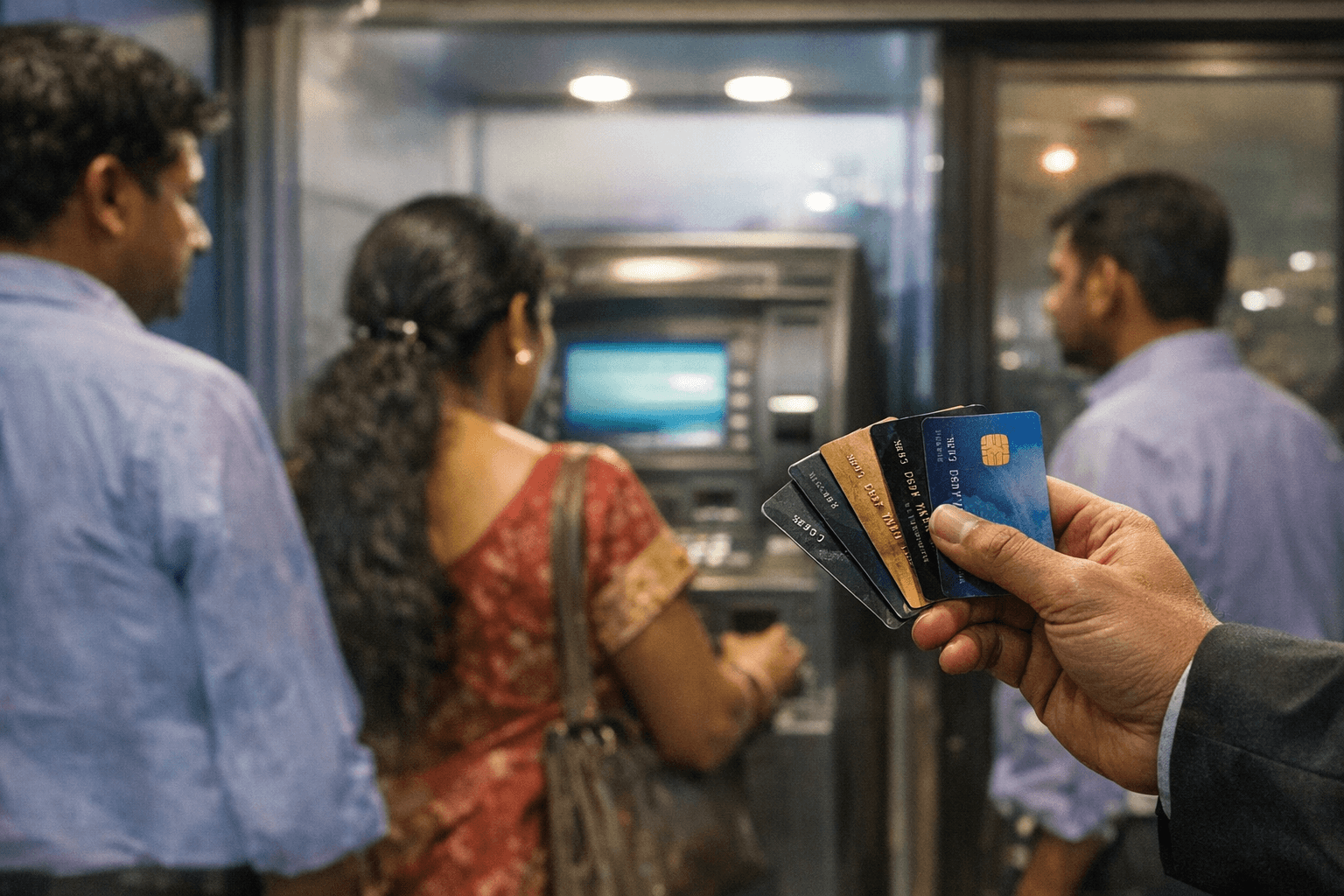
Industry participants note a range of potential acquirers if a sale is pursued, including large Indian private banks, nonbank financial companies with established cards businesses, and payments-focused fintechs seeking to expand lending. Any transaction would face regulatory scrutiny from the Reserve Bank of India and require careful integration planning given the importance of customer data, reward networks and merchant agreements to card economics.
Observers also pointed to contemporaneous actions at the bank that reflect active balance-sheet management. Separately from the cards review, the bank repurchased 549,274 shares for about GBP 10.2 million and has trimmed some retail exposure through the sale of a personal-loan portfolio, moves that market analysts describe as part of ongoing capital allocation adjustments at large international lenders.
For now, the defining features of the process are uncertainty and optionality. People familiar with the matter emphasized that talks remain informal and preliminary; no counterparties, financial advisers or valuation benchmarks have been disclosed. Should Standard Chartered decide to press ahead, a sale would be closely watched for what it reveals about the strategic calculus of global banks in India and the evolving structure of competition in the country’s consumer finance industry.
This article was produced by Prism’s automated news system from verified source data, official records, and press releases, then run through automated quality and moderation checks before publishing. The system is built and supervised by the people who set the standards it runs under. Read our full AI policy.
Did this article answer your question?
%3Amax_bytes(150000)%3Astrip_icc()%2FCertificate-of-deposit-2301f2164ceb4e91b100cb92aa6f868a.jpg&w=1920&q=75)