State Establishes Ranegras Plain Active Management Area in La Paz County
State establishes Ranegras Plain Active Management Area to curb falling groundwater after wells went dry and land subsidence was observed.
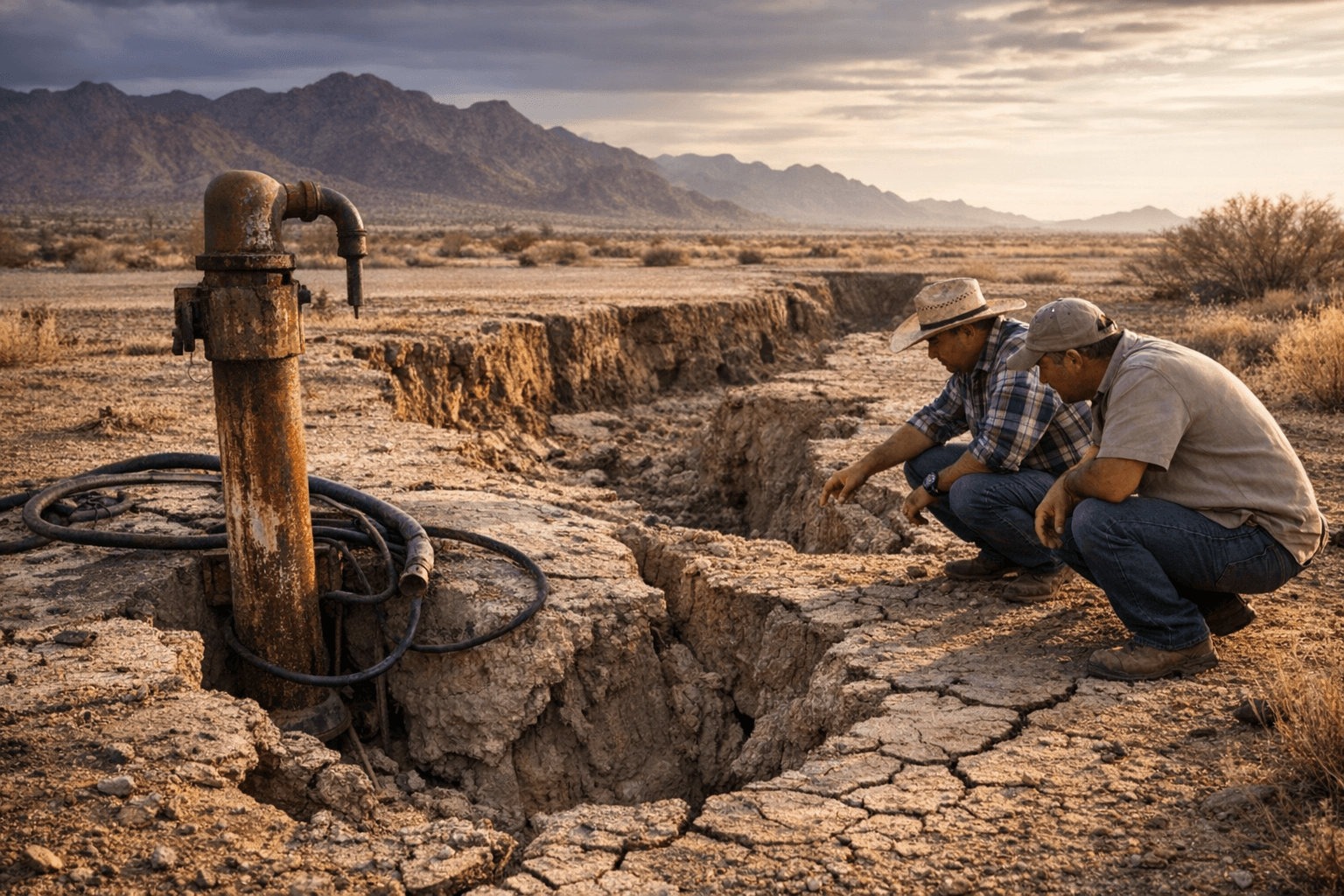
State officials moved to create the Ranegras Plain Active Management Area in La Paz County, bringing new regulatory tools to a basin where groundwater levels have fallen dramatically and homes and farms are struggling with dry wells and sinking ground. The designation, announced Jan. 21, is the eighth AMA in Arizona and gives local and state authorities the ability to limit pumping, require monitoring, and shape future irrigation in a basin that supplies small towns and rural properties.
La Paz County Supervisor Holly Irwin and other county leaders had pressed for protections after years of depletion left residents frustrated and vulnerable. Domestic wells in communities such as Bouse, Brenda, and Vicksburg have been affected by long-term overdraft, and observers documented land subsidence in parts of the Ranegras Plain Groundwater Basin. Those conditions underscored local calls for enforceable rules to preserve remaining groundwater and protect property.
An Active Management Area imposes a suite of regulatory measures aimed at stabilizing aquifer levels. Under the new designation, high-capacity wells will face tracking and reporting requirements, operators may encounter restrictions on pumping volumes, and limits can be placed on the expansion of irrigation footprints. The AMA also provides for formation of local advisory planning groups that will work with state water regulators to tailor management to on-the-ground conditions.
For La Paz County residents, the immediate impacts will center on monitoring and enforcement changes. Well owners who depend on private domestic wells should expect increased oversight of nearby agricultural pumping and potential limits on new or expanded irrigated acreage. Farmers and ranchers who rely on high-capacity wells may need to adopt more efficient irrigation practices or alter cropping decisions as local plans are developed and implemented.
The decision reflects a broader state conversation about how to balance conservation and agricultural use in rural Arizona. Policymakers are confronting trade-offs familiar across arid regions worldwide: protecting finite groundwater supplies for long-term community resilience while recognizing agriculture’s economic role. In the Ranegras Plain, the new AMA signals a shift from voluntary conservation toward enforceable management where overdraft and subsidence have created urgent risk.
What comes next for La Paz County is the detailed work of the local advisory planning and state regulators to establish measurement, reporting, and allocation rules, and to phase in restrictions in ways that address community needs. For residents of Bouse, Brenda, Vicksburg and outlying ranches, the designation offers both the promise of safeguarding neighborhood wells and the prospect of short-term adjustments to irrigation and pumping practices as the basin seeks a more sustainable future.
Sources:
Know something we missed? Have a correction or additional information?
Submit a Tip