State launches 2026 New Mexico Big Year birding challenge
New Mexico launched a statewide birding challenge; more than 300 people signed up and can log sightings via eBird.
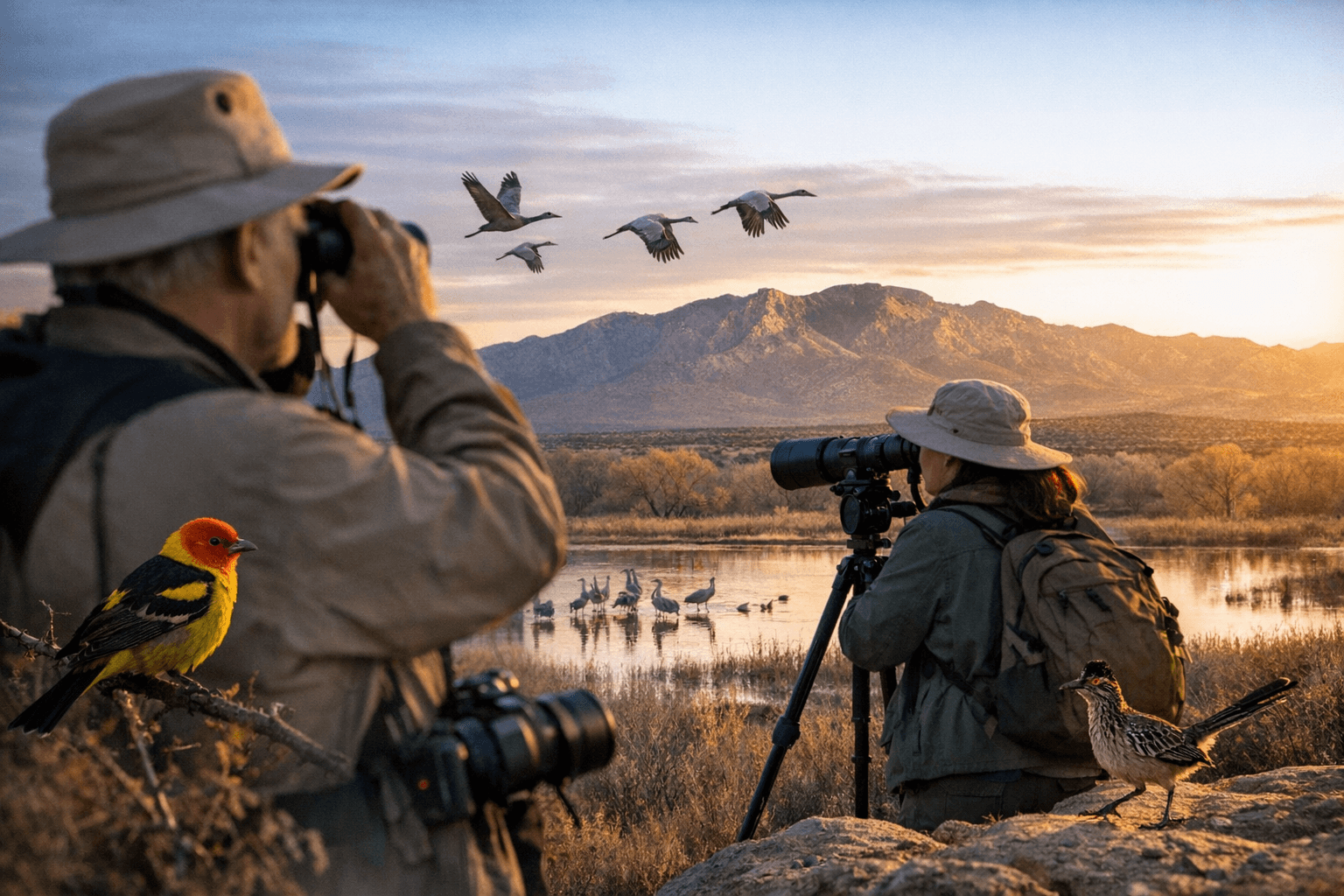
The New Mexico Department of Wildlife launched a statewide New Mexico Big Year birding challenge on January 15, 2026, aiming to boost birdwatching participation and expand citizen science data across the state. Organizers reported robust early interest, with participants spanning teenagers to retirees and sightings tracked through the eBird platform.
“There are more than 300 people signed up for the big year, ages 13 to 80.” That mix of ages and skill levels reflects a widening audience for wildlife observation and a potential new influx of recreational activity around established birding hotspots. Participants are asked to log observations in eBird, contributing to a central database wildlife managers use to monitor species distributions and seasonal movements.
Locally in San Juan County, birding groups have already been active. Riverside Nature Center’s Brown Bag Birders and the Tuesday Birders meet regularly at Berg Park along the Animas River, offering low-barrier entry points for newcomers and social routes for veteran birders to record their sightings. The challenge intentionally links statewide interest to community-level activity, encouraging Farmington residents to use familiar river corridors and parks as counting grounds.
The campaign highlights major New Mexico birding sites that draw statewide attention and tourism: Bosque del Apache, Bitter Lakes, and Carlsbad Caverns. Those areas see concentrated visitor traffic during migration peaks, and an organized Big Year increases the likelihood of cross-regional travel by participants trying to add species to their lists. Economically, sustained growth in birding participation tends to lift demand for lodging, guiding services, and local retail in gateway communities; tracking participation this year will give planners better signals of seasonal visitation patterns.
Beyond tourism, the substantive policy implication is improved data density for the Department of Wildlife. More eBird submissions help refine population trend estimates and can inform habitat management priorities without costly targeted surveys. For San Juan County managers, denser citizen observations along the Animas River and nearby wetlands could sharpen local conservation responses.
Beginning birders can get started with a smartphone and the eBird app, local park walks with Riverside Nature Center groups, and simple printed or digital checklists for New Mexico species. The project is intended to be inclusive; the age range among signups demonstrates that the challenge is not limited to experts.
For readers, the Big Year is both a civic science opportunity and a reason to spend more time outdoors this year. Expect increased group outings at Berg Park and more eBird activity from San Juan County this season, with practical benefits for local wildlife monitoring and modest boosts to outdoor recreation economy as the challenge unfolds.
Sources:
Know something we missed? Have a correction or additional information?
Submit a Tip