State Lawmakers Grill Buncombe County Officials Over DEI Initiatives
Amanda Edwards told state lawmakers Buncombe County never used race-based criteria as critics pointed to the Racial Equity Action Plan and Isaac Coleman Grants.

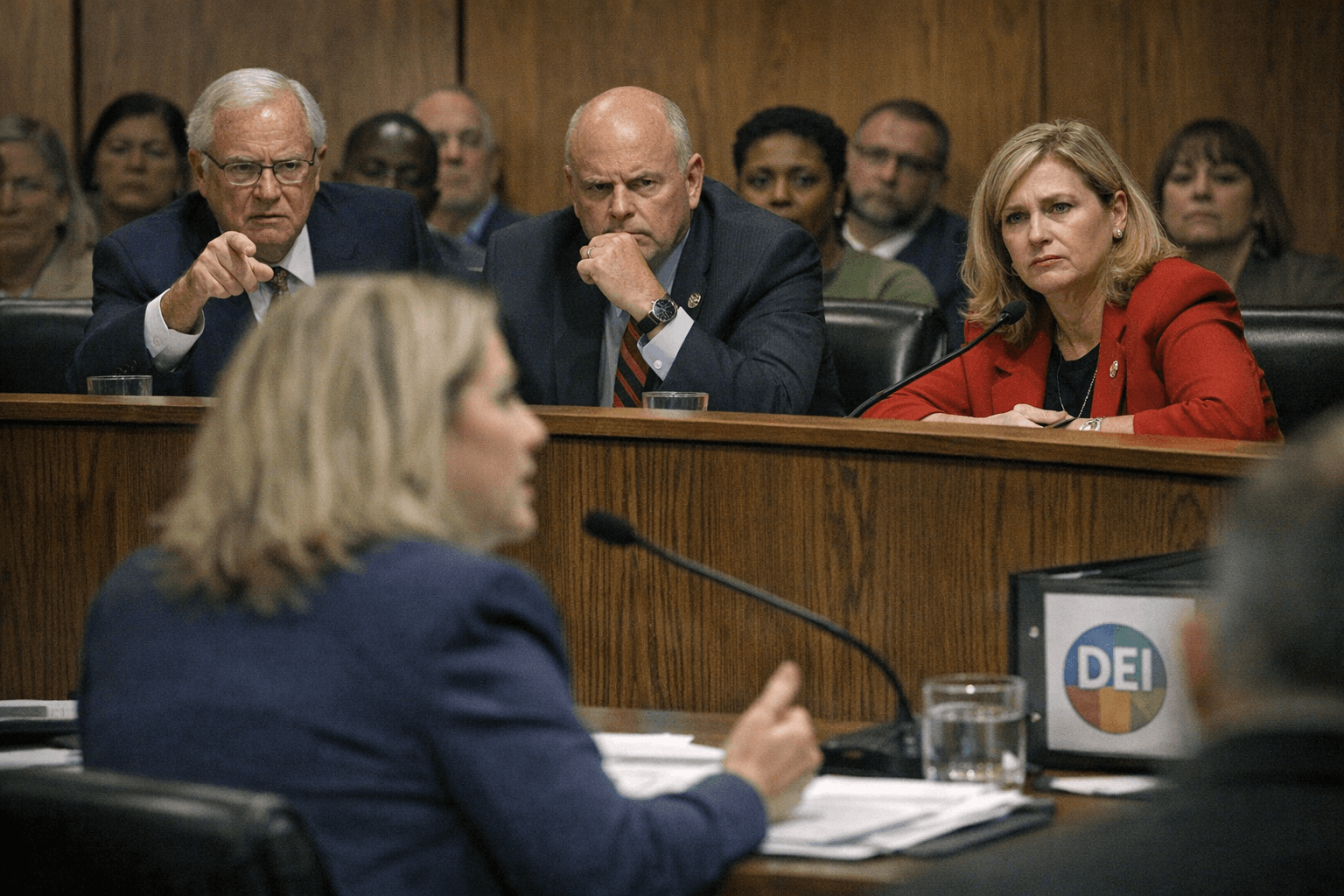
Amanda Edwards, chairwoman of the Buncombe County Commission, told a North Carolina House Select Committee that “There have been no instances where race-based criteria or other protected characteristics have been used in any of our work, including hiring contracts or allocations of revenue.” Edwards and county attorney Kurt Euler went to Raleigh as the county’s response to allegations that the Racial Equity Action Plan and related programs steered resources by race.
The allegations trace to testimony on January 7 by Asheville lawyer Ruth Smith, who asserted that REAP “unfairly allocated resources based on race, when it was meant to help rural residents.” Smith also testified that the county engaged in “discrimination by proxy” through programs such as the Isaac Coleman Grants and small business relief grants, claims that prompted the committee to summon local officials for answers.
Buncombe’s appearance unfolded at a Feb. 11 committee session led by Rep. John Torbett, where Republican members pressed county leaders on equity initiatives. Rep. Brian Echevarria told Edwards, “Go ahead and confess your faults.” Edwards replied that the county did not have any. Rep. Keith Kidwell said he “didn’t like the word ‘equity,’” adding, “The moment you inject equity, you lose equality, because equity is going to give you the outcome that is desired by whatever group is setting the equity tolerance.” Rep. Phil Rubin countered with local disparities, saying the poverty rate is 2 ½ times higher for Black Buncombe residents versus white residents and that the infant mortality rate for Black infants in Buncombe is also 2 ½ times that of white infants.
The dispute centers on work by Buncombe’s Community Relations Commission, which issued a 2025 report containing 39 policy recommendations. Those recommendations, as described in county materials, included an economic development center for blacks in Asheville, a black wealth-building fund, grants to black-owned businesses and legacy neighborhoods, and direct cash payments to individuals harmed by racism. County officials said those proposals are policy recommendations and not race-based eligibility criteria in county hiring, contracting, or revenue allocation.
The controversy drew federal attention last fall when a letter arrived in September from a Department of Justice official identified by county reporting as Harmeet Dhillon, described as “assist attorney general for the civil rights division at the US Department of Justice,” warning the Board of Commissioners about the CRC recommendations. At the same time, state lawmakers have moved to limit DEI programs statewide; the General Assembly passed a bill banning DEI initiatives for state and local government and allowing employees to sue, a measure Gov. Josh Stein vetoed and which remains subject to further legislative action.
Locally, the debate intersects with recent Asheville decisions and finances. Asheville City Council voted in August 2025 to eliminate race-based preferences for commission appointments and was later ordered to pay more than $81,000 in legal fees. The Asheville-Buncombe Community Reparations Commission received $7.7 million and spent nearly $5 million on consultants, outreach and media efforts, while council documents flagged an estimated $30 million budget gap for the coming fiscal year.
Accounts differ on whether Buncombe officials physically testified at the Feb. 11 meeting; some reports describe Edwards and Euler speaking to the committee, while others say no representatives testified at that particular session. County communications and committee records could clarify the attendance record and the next steps as lawmakers weigh oversight and possible further action.
Sources:
Know something we missed? Have a correction or additional information?
Submit a Tip