State-Owned Investors Reach $60 Trillion, Pour Record Capital into United States
Global SWF's annual review shows sovereign wealth funds, public pension funds and central banks reached a combined $60 trillion in assets and diverted an unusually large share of 2025 allocations to the United States. The concentration, $132 billion flowing to U.S. assets and roughly 48% of state-owned investment, has material implications for global markets, emerging economies and policy debates over foreign capital.
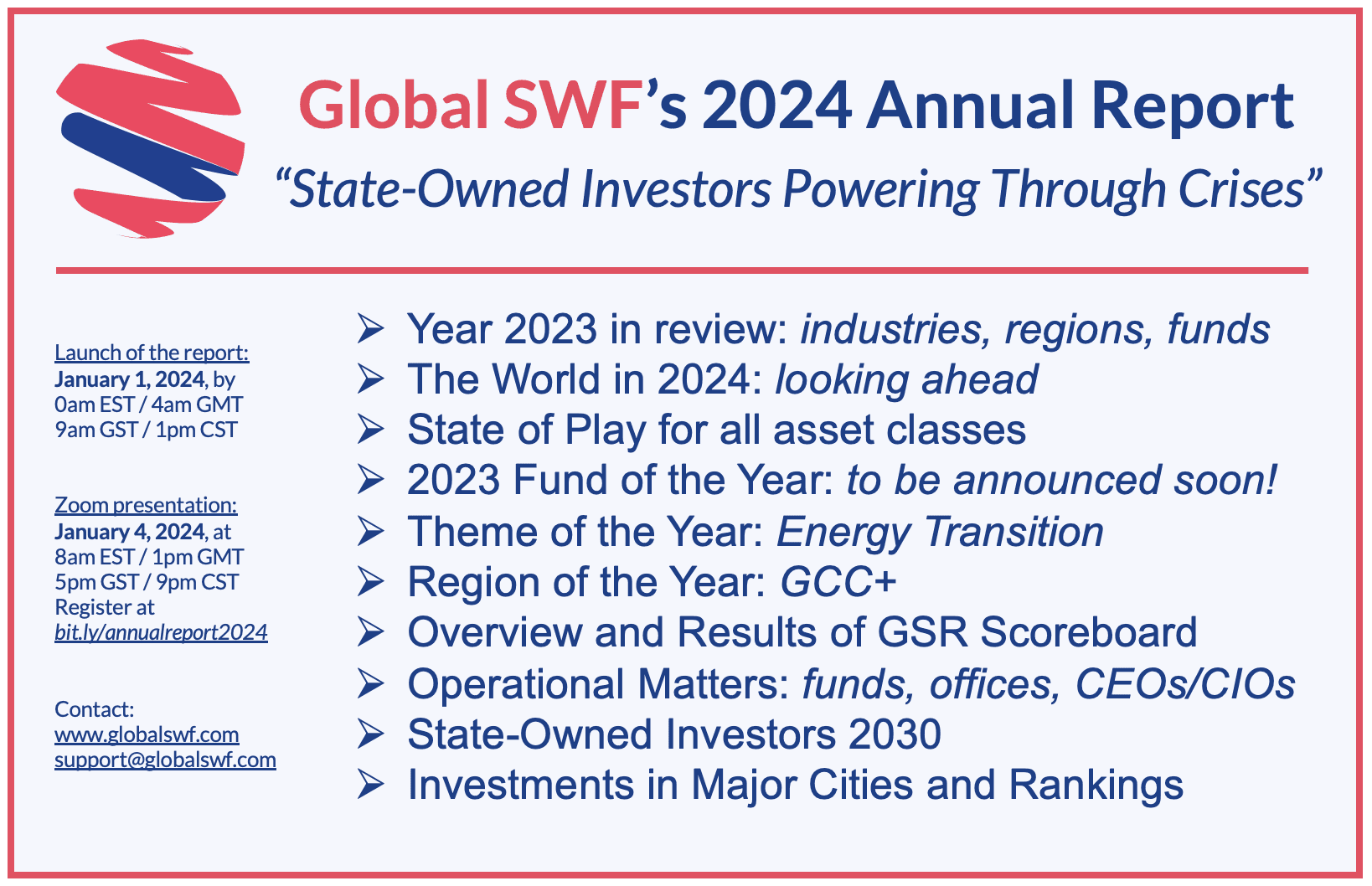
Global SWF's annual report released today shows state-owned investors reached a combined $60 trillion in assets under management in 2025, with sovereign wealth funds alone accounting for a record $15 trillion. The dataset, compiled from public data and official fund reports, also records a sharp acceleration in activity: sovereign wealth fund investments rose 35 percent year-on-year to $179.3 billion.
The most striking pattern in the report is geographic concentration. Sovereign wealth funds, public pension funds and central banks directed about $132 billion to U.S. assets in 2025, a sum that amounted to roughly half of their aggregate deployments for the year. Global SWF's figures show the United States captured about 48 percent of state-owned investor flows in 2025, and sovereign wealth funds provided roughly two-thirds of the money that went into U.S. markets. Several fund disclosures and country pledges from Gulf states contributed an additional stream of "billions" earmarked for U.S. investment, according to the report.
Market ramifications were immediate. Heavy inflows of long-term, state-backed capital can support valuations in real estate, infrastructure and private equity, deepen local markets and compress risk premia. For U.S. borrowers and asset managers, that translates into more patient capital at scale and potentially lower financing costs for large projects. For domestic policymakers the dynamic raises familiar tradeoffs: the benefits of abundant foreign savings against concerns over strategic exposure in sensitive industries.
The report also documents a pronounced pullback from many emerging markets. Inflows to major emerging economies declined by nearly a third from 2024 levels, with one summary of the data quantifying the drop at 28 percent to the lowest level in at least five years. That decline occurred even as several emerging market benchmarks delivered strong returns in 2025, underscoring a disconnect between performance and the allocation choices of state-owned investors.

Taken together, the figures point to structural shifts in global capital allocation. The expansion to $60 trillion in combined AUM highlights the growing market influence of state-owned investors as demographic pressures, pension obligations and search-for-yield dynamics push public funds to deploy capital internationally. At the same time, the tilt toward U.S. assets suggests a flight to scale, liquidity and regulatory certainty in a complex geopolitical environment.
The findings leave clear questions for further reporting and policy debate: how much of the $132 billion was sourced from sovereign wealth funds versus public pensions and central banks, which sectors in the United States attracted Gulf and other pledges, and what governance or national security reviews might follow as state-owned capital deepens its footprint. For emerging markets, the urgent task will be to identify policy levers, deeper domestic markets, risk-mitigation instruments or targeted reforms, to recapture a share of patient, long-term capital increasingly concentrated in the United States.
This article was produced by Prism’s automated news system from verified source data, official records, and press releases, then run through automated quality and moderation checks before publishing. The system is built and supervised by the people who set the standards it runs under. Read our full AI policy.
Did this article answer your question?