State/Lake 'L' Station Closes Today for Multi-Year Demolition and Rebuild
The Chicago Transit Authority and city officials close the elevated State/Lake 'L' station Monday, Jan. 5, 2026, beginning demolition on a project expected to last about three years and reopen in 2029. The shutdown will force trains on several Loop lines to bypass a critical downtown stop, reshaping daily commutes and raising concerns about accessibility, crowding and equitable access to jobs and services.

The Chicago Transit Authority and city officials closed the elevated State/Lake 'L' station today, Jan. 5, 2026, commencing demolition of what officials and local accounts describe as one of the transit system’s oldest stations. The work is expected to transform the century-old structure into a modern, fully accessible rail hub over roughly three years, with passenger service at a rebuilt station targeted for 2029.
Train service on the Brown, Green, Orange and Pink lines, along with the Purple Line Express, will continue to move through the Loop but will not stop at the State/Lake elevated platforms for the duration of construction. Riders who normally use State/Lake are being directed to nearby elevated stations at Clark/Lake and Washington/Wabash; the underground Red Line Lake station will remain open. Bus stops along State Street will remain in place, though CTA officials warn temporary reroutes may be necessary at times during the project.
The closure affects one of the system’s busiest stops, commonly identified as among the top five for ridership, and will alter daily patterns for thousands of commuters, downtown workers and visitors. A commuter interviewed in local coverage summed up the disruption bluntly as a "big bummer," reflecting frustration among people who depend on the stop for short, direct access to the Loop.
Officials and project designers say the rebuild aims to address long-standing safety and accessibility problems. Plans include full ADA accessibility with new elevators and lifts, wider platforms to ease circulation, a glass canopy and more enclosed, weather-protective passenger spaces, and upgraded lighting to improve visibility. Architects working on the design have emphasized that current platforms are narrow and exposed to severe winter weather, and that the new configuration will prioritize passenger comfort and safety.
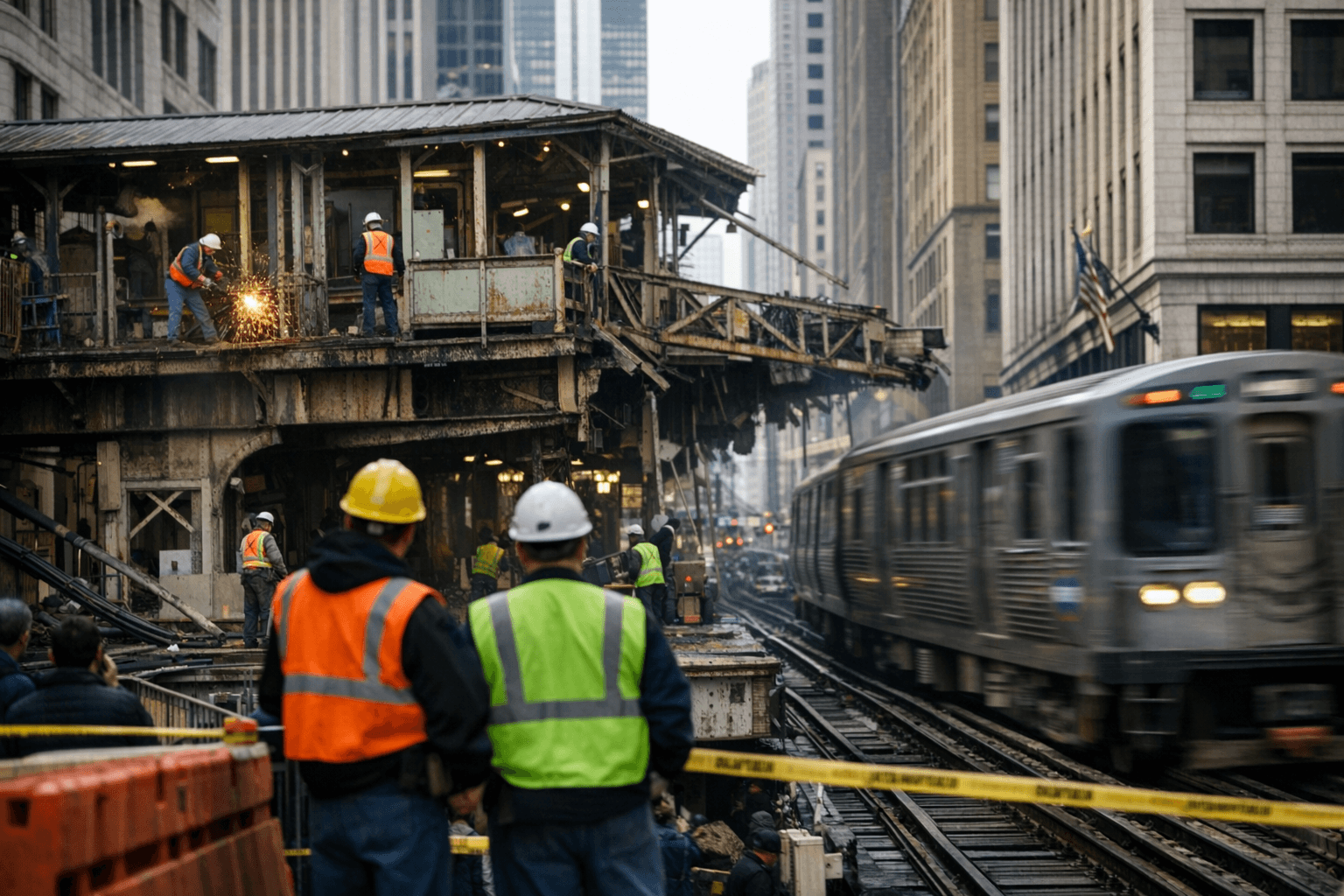
From a public health and equity perspective, the project presents both benefits and short-term risks. The rebuilt station's accessibility features are likely to broaden mobility for people with disabilities, older adults and parents with strollers, aligning with long-standing civil rights goals for transit equity. However, the closure imposes immediate burdens: longer walks or transfers for riders with limited mobility, increased crowding at adjacent stations that may challenge physical distancing and trip reliability, and potential delays for shift workers and others with time-sensitive commutes. CTA guidance and detour maps issued ahead of the closure aim to mitigate impacts, but advocates and transit planners say clear, frequent communication and interim accommodations will be essential.
Renderings of the proposed remodel, circulated by city agencies, show a more enclosed station footprint and expanded platform space. Questions remain about the precise historical age of the existing elevated structure, with published accounts varying between roughly 100 and 130 years, and about final contract terms and project budget details, which city officials have not fully disclosed. Demolition will proceed through 2026 and 2028, with construction milestones to be released as the work advances and crews establish traffic and pedestrian controls around the Loop.
This article was produced by Prism’s automated news system from verified source data, official records, and press releases, then run through automated quality and moderation checks before publishing. The system is built and supervised by the people who set the standards it runs under. Read our full AI policy.
Did this article answer your question?