States and District of Columbia Sue Transportation Department Over EV Grants
Sixteen states and the District of Columbia filed suit accusing the U S Department of Transportation of unlawfully suspending multiyear electric vehicle charging grant programs, a move that plaintiffs say has frozen approvals and imperiled billions in projects and jobs. The lawsuit raises questions about federal administrative practice, state planning, and the pace of nationwide charging buildout ahead of rising electric vehicle adoption.
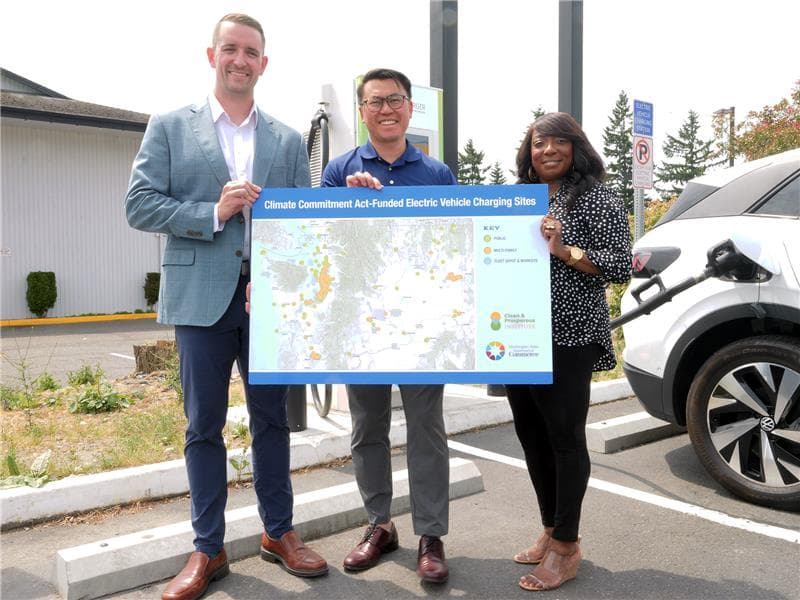
On December 16, 2025, a coalition of 16 states and the District of Columbia filed a federal complaint in Washington state challenging the U S Department of Transportation suspension of two bipartisan electric vehicle charging grant programs created under the Infrastructure Investment and Jobs Act. The plaintiffs say the suspension has effectively stopped approvals and obligations under the Charging and Fueling Infrastructure Program and the Electric Vehicle Charger Reliability and Accessibility Accelerator Program since spring 2025, leaving projects and planned work in limbo.
The suit was led by Washington Attorney General Nick Brown, California Attorney General Rob Bonta and Colorado Attorney General Phil Weiser. California Governor Gavin Newsom, the California Department of Transportation and the California Energy Commission are named plaintiffs, and Pennsylvania is participating through Governor Josh Shapiro. Attorneys general from Arizona, Delaware, the District of Columbia, Illinois, Maryland, Massachusetts, Michigan, New Jersey, New York, Oregon, Rhode Island, Vermont and Wisconsin are also listed in the filings.
Plaintiffs assert that the Department of Transportation and the Federal Highway Administration have quietly refused to approve or to obligate new funds under the two programs without notice or explanation. The complaint says roughly 1.8 billion dollars in federal awards to dozens of state and local governments are now in jeopardy and that the vast majority of those funds have been made unavailable. The filings also note one of the programs channels about 2.5 billion dollars to states and cities for electric vehicle charging and hydrogen fueling infrastructure.
The complaint details concrete impacts. Washington state warns it could lose about 19 million dollars in previously authorized funding and that planned spending of roughly 21 million dollars to build two medium and heavy duty truck fast charging stations and one hydrogen fueling station along the Interstate 5 corridor has stalled, with only 3 million dollars received to date. The University of Washington Bothell campus had been slated to receive 1.1 million dollars for a direct current fast charging station. California identifies a 59.3 million dollar award to Caltrans to build a freight corridor for medium and heavy duty electric vehicles and a 55.9 million dollar award to the California Energy Commission for zero emission freight transportation as imperiled by the suspension.

The plaintiffs seek judicial relief to restore funding approval and obligations under the statute, arguing that the agency lacks authority to suspend these congressionally created programs and that the action undermines state planning and private sector contracting. The filings reference prior litigation in June 2025 in which a federal judge blocked an administration effort to withhold funds awarded to 14 states under a separate five billion dollar electric charger infrastructure fund created in 2022, underscoring ongoing legal disputes over federal control of electric vehicle grant dollars.
California Attorney General Rob Bonta said the administration action was "just another reckless attempt that will stall the fight against air pollution and climate change, slow innovation, thwart green job creation, and leave communities without access to clean, affordable transportation."
The complaint was filed in U S district court in Washington state and was made available by the Washington Attorney General's office. The Department of Transportation did not immediately respond to requests for comment. The case pits a group of states and state agencies against federal officials and is likely to test the boundaries of administrative discretion, the enforceability of multiyear grant programs, and the political stakes of the national transition to electric vehicle infrastructure.
This article was produced by Prism’s automated news system from verified source data, official records, and press releases, then run through automated quality and moderation checks before publishing. The system is built and supervised by the people who set the standards it runs under. Read our full AI policy.
Did this article answer your question?