Step-by-step pumping progression to master surf foil flight
Practical progression to learn pumping a surf foil with gear checklists, drills, on-water sequence, and safety tips. Use alongside hands-on coaching and follow local rules.

Getting up on a surf foil using pumping is all about controlled speed, small rhythmic body movement, and a smart progression through gear, drills, and on-water practice. Pumping converts paddling or wave energy into lift through short, surf-style compressions and extensions of the legs and hips. Start conservative and build confidence, lift is earned, not forced.
Begin with the right platform: a larger, high-volume beginner board, roughly 100–140+ liters for SUP or prone depending on rider weight, paired with a mid-size front wing that has more surface area and a lower aspect ratio for early lift. Use a stable fuselage and a mast that gives clearance: 75–95 cm for SUP work and 40–60 cm for prone or wave setups. Avoid high-aspect race wings until you can hold trim and height consistently.
Do key shore drills before getting wet. Simulate mounting and balance on a foam block or stable surface, dial in feet placement and rehearse the low, quick pop-up. Practice a 2–3 beat pump standing: small knee compressions and extensions that start from the hips and finish through the heels. Run a final equipment check onshore, tight bolts to manufacturer torque, no play at wing or mast joiners, battery seated for e-foils, leash and padding in place.
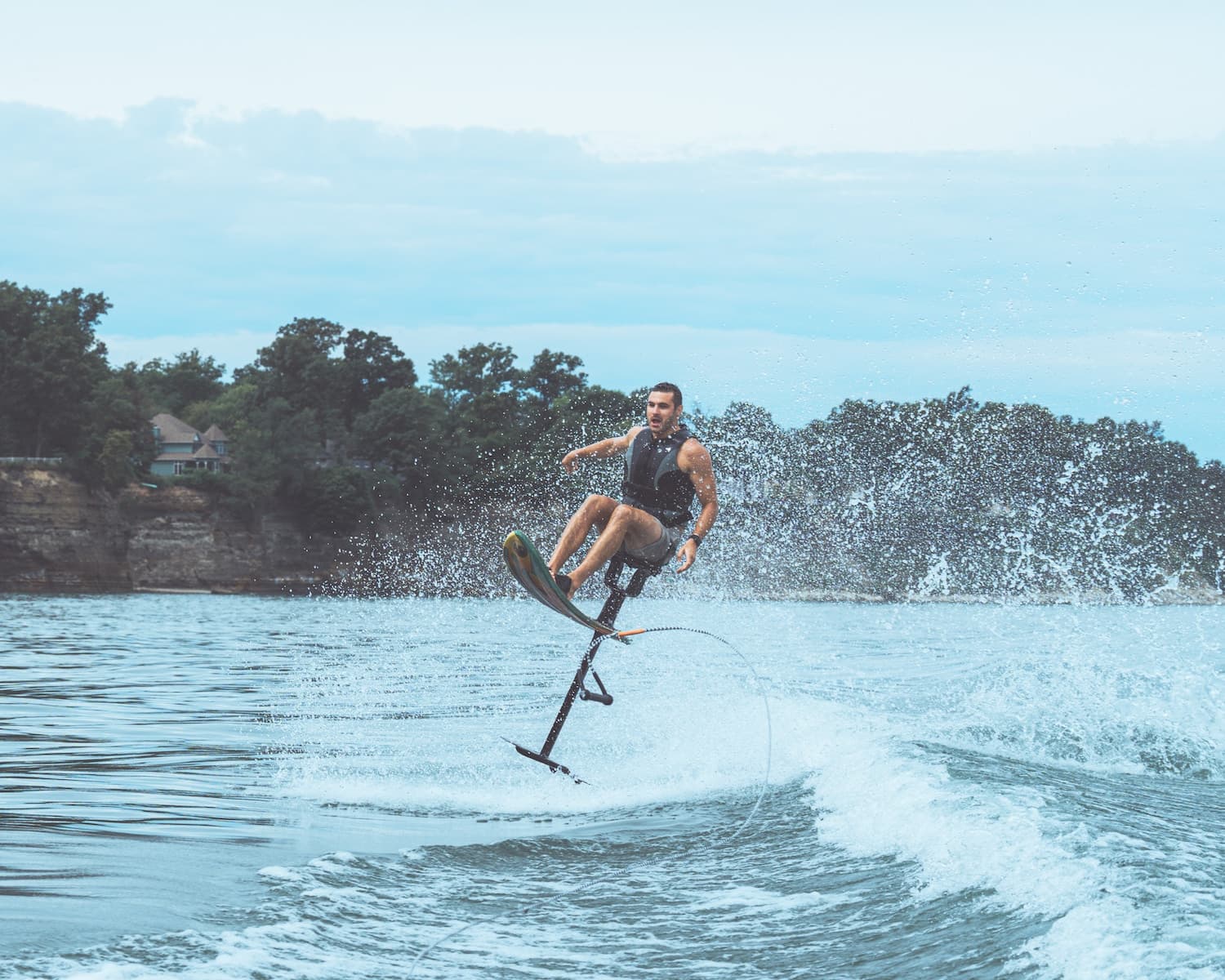
On-water progression should follow a predictable sequence. First, familiarize yourself on a large board: paddle, feel tracking, and get comfortable. Use tow or assisted starts in calm water to feel lift without having to generate all the speed. Work toward small skips, short lifts where the nose rises briefly, then controlled pump bursts of two to four small pumps timed with bumps. Once airborne, practice trim: small fore/aft foot pressure changes to gain speed or to lower the nose. Keep pulses small, knees soft, eyes forward, and shoulders over the front foot as lift arrives. For landing, shift weight slightly forward, reduce pump frequency, and recover with knees absorbing impact.

Common problems have practical fixes. If you get no lift, try a larger front wing, more speed before pumping, or a slight reduction in mast angle; always check alignment and bolt tightness. If the foil noses dives as it rises, move weight rearward, reduce front-foot pressure, or consider a shorter mast. Porpoising usually signals over-aggressive pumping, smooth and reduce amplitude, and verify mast and fuselage alignment. Flat-water struggle? A longer mast or larger wing helps, or use assisted tows and small tide runs to learn timing.
Safety is non-negotiable: ride uncrowded water, avoid shallow zones, wear a helmet and buoyancy aid, use a discipline-appropriate leash, and carry a kill-switch and battery check on e-foils. Never train alone, have a shore spotter or partner craft nearby. Aim for controlled five-to-ten second flights, consistent trim control, confident untowed starts in light bumps, and clean recoveries after falls. If controlled lift remains elusive after several supervised sessions, sign up for professional coaching to accelerate progress and reduce risk.
Practice the shore drills, check gear and torque specs, and plan short, focused water sessions. With patience, correct gear, and the rhythm dialed in, you’ll start catching repeatable lift and spend more time above the water than fighting for it.
Know something we missed? Have a correction or additional information?
Submit a Tip