Stratasys F900 Reliability Up 22% Year‑Over‑Year After Customer Advisory Board Changes
Stratasys reported a 22% year-over-year rise in F900 system reliability after targeted 2025 manufacturing improvements developed with its industrial Customer Advisory Board.
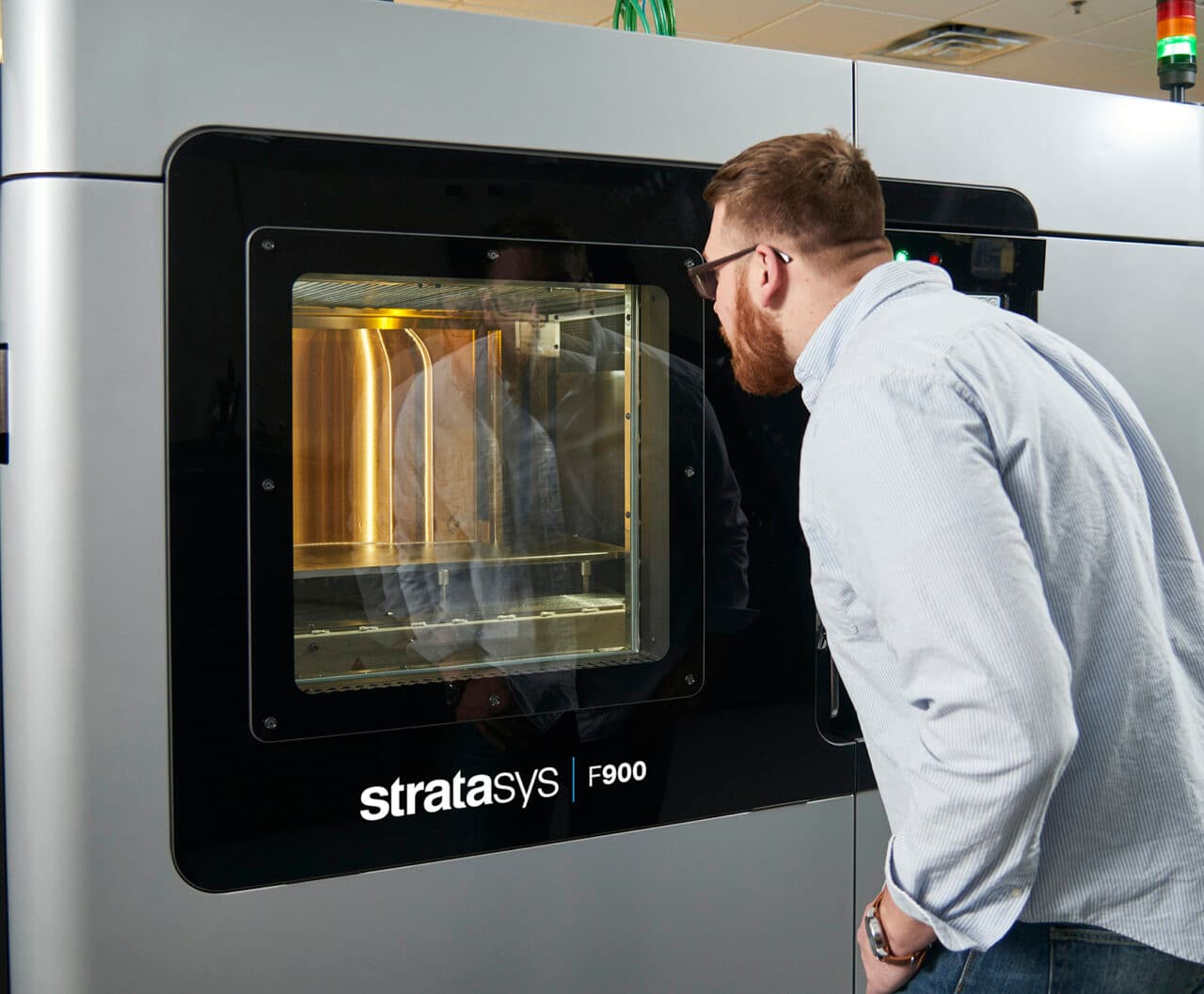
Stratasys Ltd. said its F900 industrial 3D printer achieved a 22% year-over-year increase in system reliability, a gain the company attributes to targeted 2025 manufacturing improvements developed in conjunction with its industrial Customer Advisory Board. The company announced the result on Feb 25, 2026 from Minnetonka, Minn. and Rehovot, Israel, and tied the improvement to higher overall equipment effectiveness, improved quality reporting, greater process repeatability, fewer production disruptions, more predictable uptime, and improved cost-per-part performance.
The announcement frames the change as production-ready: Stratasys said the manufacturing improvements addressed production-scale challenges and positioned customers to expand additive manufacturing for end-use parts and tooling in aerospace, automotive and other industries. TCT Magazine reported that the CAB has formalized three strategic execution pillars to build on the 2025 work, listing validated production data, credible material standards and performance benchmarking, along with integrated end-to-end workflows, automation and multi-site fleet management.
Foster Ferguson, Vice President, Industrial Business Unit at Stratasys, emphasized the CAB’s operational role in TCT’s coverage: “The Customer Advisory Board ensures our strategy is grounded in the operational realities of industrial manufacturing. Their input directly shapes our priorities, from validated material performance and reliability metrics to integrated digital workflows and automation frameworks that enable repeatable, scalable production.” That quote appears in TCT’s report of the company announcement and aligns with the CAB-driven framing in the company’s materials.
One nuance in the reporting is data provenance. An original report supplied with the announcement described the 22% improvement as “based on factory-floor data”; Stratasys’ press release attributes the gain to the CAB-guided 2025 manufacturing improvements but does not use the specific phrase “factory-floor data.” Stratasys did not publish baseline reliability percentages, the sample size of F900 systems measured, geographic distribution of the data, or raw charts alongside the announcement.
The company also did not name CAB member firms or provide third-party verification in the release. Key follow-up questions remain unanswered in the announcement: how Stratasys defined “system reliability” (uptime percentage, mean time between failures or another metric), which specific 2025 manufacturing changes were implemented at the factory level, and whether independent audits or customer case studies exist to corroborate the 22% figure.
Stratasys’ corporate copy reiterates its broader positioning: the company supplies smart and connected 3D printers, polymer materials, a software ecosystem and parts-on-demand across markets including aerospace, automotive, consumer products and healthcare. TCT explicitly categorizes the F900 as an FDM 3D printing system. If Stratasys follows with method details, named CAB case studies and verifiable factory-floor logs, the claimed reliability gain could substantively affect how aerospace and automotive customers calculate fleet utilization and cost-per-part for industrial additive production.
Know something we missed? Have a correction or additional information?
Submit a Tip