Students return to class as protests flare across Iranian universities
Universities reopened on Feb. 21 and students staged protests in multiple cities, sparking clashes, official warnings and renewed international solidarity.
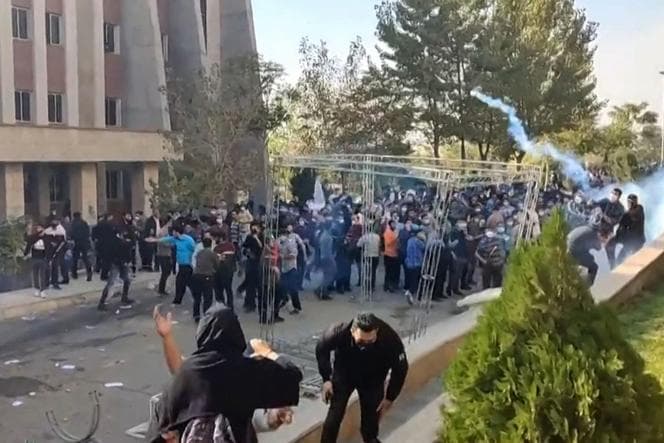
As universities reopened in Iran for a new term on Feb. 21, students in multiple cities staged protests that in some places turned into clashes with pro-government groups, local media and social posts reported. Local accounts said the demonstrations coincided with 40-day mourning ceremonies for people killed, though one original account’s wording on that link was incomplete.
The unrest has gathered at campuses long associated with political activity. At Tehran’s Sharif University of Technology, protesters have chanted slogans including “Javed Shah,” “Until the mullah is shrouded, this homeland will not become a homeland” and “Death to the dictator,” the Guardian reported. Videos geolocated by AFP and cited by FairfieldSuntimes show crowds clashing and people shouting “bi sharaf,” translated as “disgraceful.” The Los Angeles Times said protests at Sharif have flared nearly every day for a month and escalated after a violent security crackdown on Oct. 2 that led to an hours-long standoff between students and police.
Officials have responded with warnings and direct intervention. The Sharif University president urged students to stop chanting and warned that authorities could force classes back online, the Guardian reported. The Los Angeles Times described a visit to the campus by higher education minister Mohammad Ali Zolfigol in which he accused students of “lawlessness” and warned they would be held responsible, a characterization drawn from students and online videos. One professor who witnessed confrontations at Sharif told the Los Angeles Times, “It was brutal.”
Not all protests stem from the same grievance. Ncr-iran reported that on Sept. 30 students at Semnan University of Medical Sciences took to the streets after two female classmates were killed in a bus crash that students blamed on a dilapidated vehicle and a driver “with a known poor record.” Students called for prosecution of university officials; Ncr-iran said the university head, Ali Rashidipour, “arrogantly refused to attend a crisis meeting, stating the students’ ‘tone’ was not to his liking.” At Khajeh Nasir Toosi University, nightly dormitory rallies continued, with students chanting “The university is our stronghold, expulsions have no effect” and “No cafeteria, no dorm, but the theft continues,” Ncr-iran and a PMOI/MEK social post reported.
The scale of the national crackdown remains contested. FairfieldSuntimes quoted clerical authorities as acknowledging more than 3,000 deaths while citing the US-based Human Rights Activists News Agency as recording more than 7,000 killings; the two tallies are not reconciled in the available reports. Those discrepancies underline wider uncertainty about the human cost of the unrest and the government’s response.

International solidarity has amplified pressure. Thousands marched in downtown Los Angeles in support of regime change, the Los Angeles Times reported, and about 1,500 people demonstrated in London calling on the UK to close Iran’s embassy, according to the Guardian. Some London protesters held photos of Reza Pahlavi and called him an alternative leader.
Analysts trace the current campus wave to a wider movement that research outlets say began in Tehran’s Grand Bazaar in December 2025 and spread to universities. The Conversation noted that Iran has 316 accredited universities, making repeated campus disruptions a significant risk to the country’s talent pipeline and longer-term economic prospects. Mohammad Ali Kadivar of Boston College told the Los Angeles Times that students “have come to the realization they will not achieve their rights in this framework” and “They are demanding the end of the Islamic Republic.”
Verification of incidents cited videos posted online, AFP-geolocated footage and material posted by Iran International and opposition accounts. Reporting drew on local outlets and diaspora media including Ncr-iran, the Los Angeles Times, the Guardian, FairfieldSuntimes and The Conversation.
This article was produced by Prism’s automated news system from verified source data, official records, and press releases, then run through automated quality and moderation checks before publishing. The system is built and supervised by the people who set the standards it runs under. Read our full AI policy.
Did this article answer your question?