Study Finds $143 Million in Suspected Insider Trading on Polymarket
On-chain forensics found traders with near-perfect win rates on Iran war bets netted $143M on Polymarket, raising urgent questions about who accessed U.S. military secrets first.

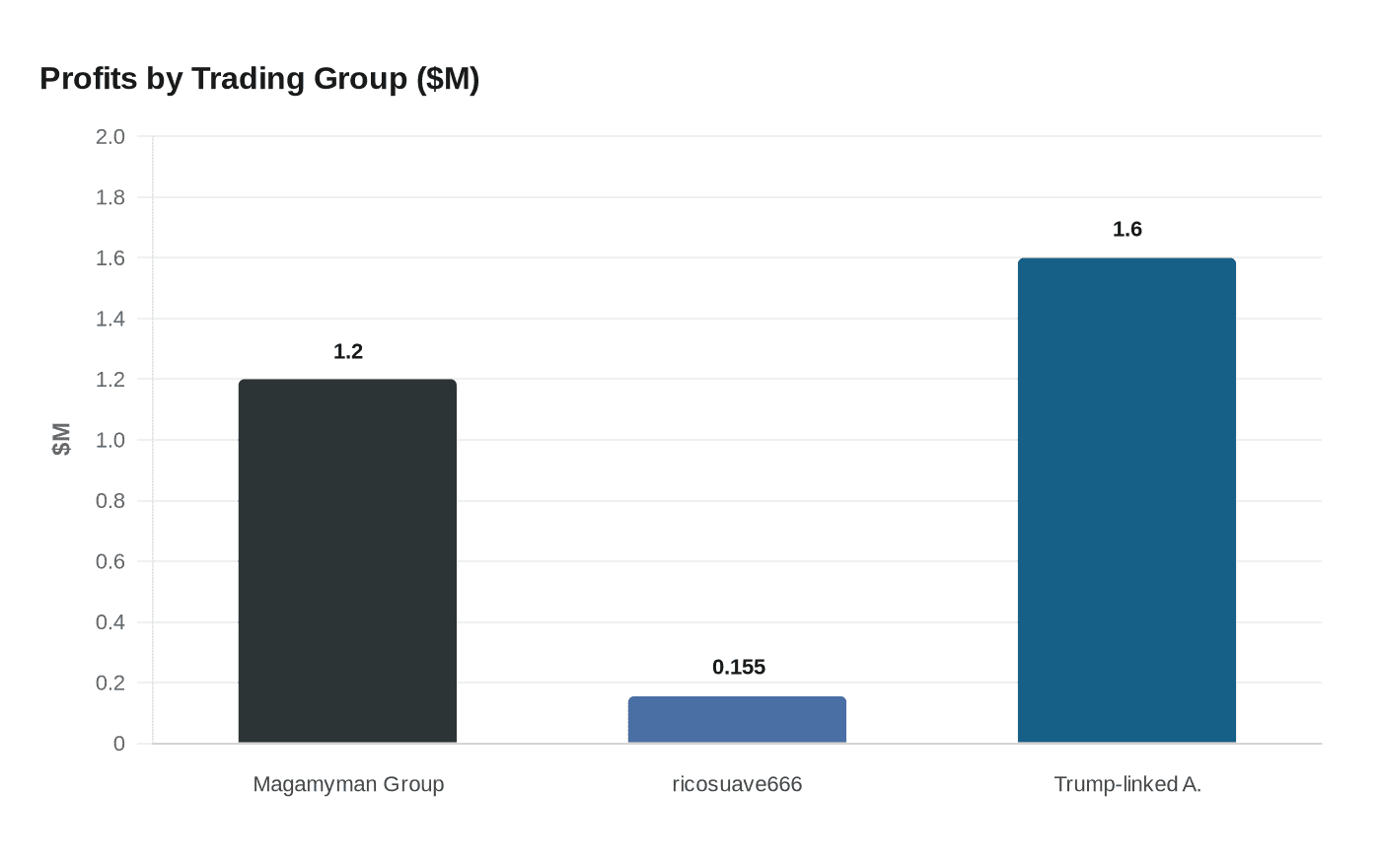
Seventy-one minutes before the U.S.-Israeli strike on Iran became public knowledge on February 28, a Polymarket account called "Magamyman" purchased shares in the "US strikes Iran by February 28?" contract at odds implying only a 17 percent chance of success. When the military operation was confirmed, Magamyman pocketed roughly $553,000. Five other freshly created wallets placed nearly identical trades in the same narrow window. The group collectively cleared $1.2 million.
That trade is a single data point inside a pattern now formally documented by Joshua Mitts, the David J. Greenwald Professor of Law at Columbia University, and Moran Ofir, a professor of law and finance at the University of Haifa. Together they screened more than 93,000 Polymarket markets and nearly 50,000 unique wallet addresses spanning February 2024 through February 2026. Their conservative estimate of profits generated by what they call "informed" trading: $143 million in two years.
The statistical signature is not subtle. The flagged accounts posted a 69.9 percent win rate, a figure that exceeds the range attributable to random chance by more than 60 standard deviations. Mitts described the stakes in stark terms. "The idea that someone would trade on national security information or information about upcoming terrorist activity," he said, "people thought that's not even possible. Today what we're seeing in these prediction markets is that actually it is quite possible."
The blockchain infrastructure that makes Polymarket function also makes the forensics unusually traceable. On-chain researcher Andrew 10 GWEI first flagged a cluster of wallets that exclusively bet on Iran-related markets and posted perfect win records. Bubblemaps subsequently confirmed the findings independently, identifying dozens of such wallets that ultimately cashed out to a single Coinbase address. Nicolas Vaiman, Bubblemaps CEO, said the constellation of markers "exhibit all the potential signs of insider trading."

Among the wallets Bubblemaps mapped, two accounts — one identified by a Bitcoin wallet address and one operating under the username "Flipfloppity" — withdrew a combined $176,000 to the same Coinbase deposit address in a single day, after beginning their cryptocurrency transfers on February 22, five days before placing their bets. A separate account named "ricosuave666" had already worked the same playbook in June 2025, betting on Israeli strikes on Iran, collecting approximately $155,000, and then going dormant for seven months before reappearing. Another linked set of Polymarket accounts turned $1.6 million in profits from bets tied specifically to President Donald Trump's decisions regarding Iran and Venezuela.
The pattern raises a question that prediction markets have not historically needed to answer: who, specifically, possessed information about a classified military strike before a single public signal appeared? Todd Phillips, a Georgia State University finance professor and former CFTC advisory board member, examined the Iran trade data and was direct. "Having win rates in the 80 to 90 percent range is just too good to be true," Phillips said. "I look at this, and I think something fishy is going on."
The political context adds another layer of friction. Donald Trump Jr., whose venture capital firm 1789 Capital has invested millions in Polymarket, serves as an adviser to the platform. The Trump administration has since dropped two federal investigations into Polymarket that were opened under President Biden.
Regulators and lawmakers are nonetheless moving, however haltingly. The CFTC issued an advisory in February 2026 affirming its authority to police illegal prediction market trading, including insider trading through misappropriation. Senators Adam Schiff and John Curtis, Democrat and Republican respectively, introduced legislation that would restrict or ban certain event market contracts, and both said they would not drop the push despite Polymarket and Kalshi announcing updated market integrity rules. Polymarket's new rules clarify that users cannot trade on stolen confidential information or illegal tips, though critics have called the self-imposed restrictions aspirational at best.
The harder fix is structural. Mitts and Ofir wrote that "prediction markets have outpaced the legal frameworks designed to govern them," and positioned their empirical study as the groundwork for closing that gap. For now, the $143 million question is whether anyone with jurisdiction over national security secrets and trading profits decides to pursue it.
This article was produced by Prism’s automated news system from verified source data, official records, and press releases, then run through automated quality and moderation checks before publishing. The system is built and supervised by the people who set the standards it runs under. Read our full AI policy.
Did this article answer your question?

