Study Finds Closing Bering Strait Could Help Stabilize Atlantic Currents
Closing the 80-kilometer Bering Strait could buy the Atlantic a bigger carbon margin, but only if the AMOC is still strong enough first.
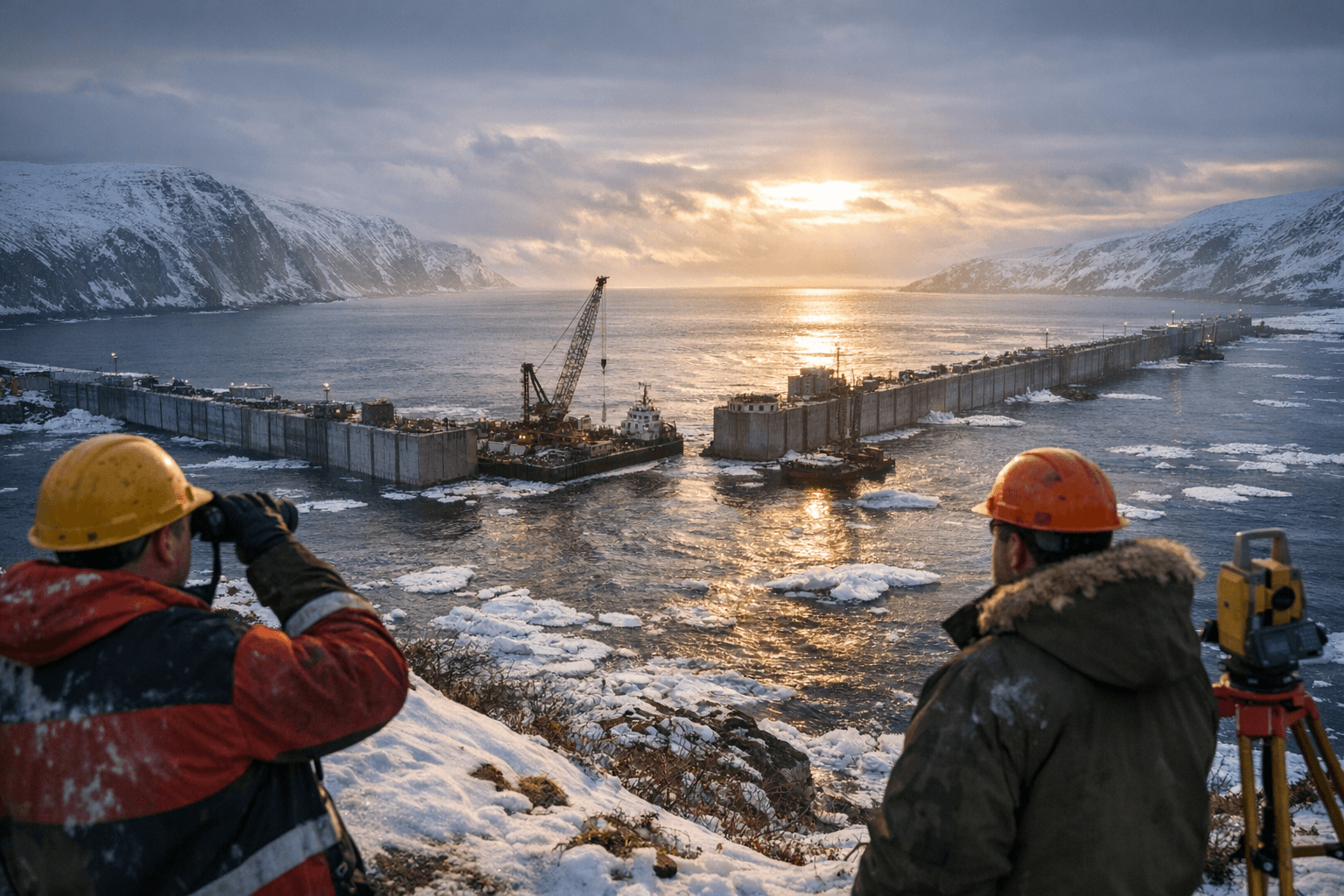
A narrow gap between Alaska and Siberia could, in theory, be turned into a planetary-scale climate lever. In a study published April 24, 2026, Jelle Soons and Henk A. Dijkstra of Utrecht University found that an artificial closure of the Bering Strait could extend the Atlantic Meridional Overturning Circulation’s safe carbon budget, but only if the circulation is still strong when the barrier goes up.
The finding cuts both ways. The study says a closure can help only under the right starting conditions; if the AMOC is already weaker, sealing the strait can reduce that safety margin instead. That makes the proposal less a ready-made fix than a high-stakes gamble on timing, because the circulation is already one of the climate system’s most vulnerable tipping elements and a major reason Europe has a relatively mild climate.
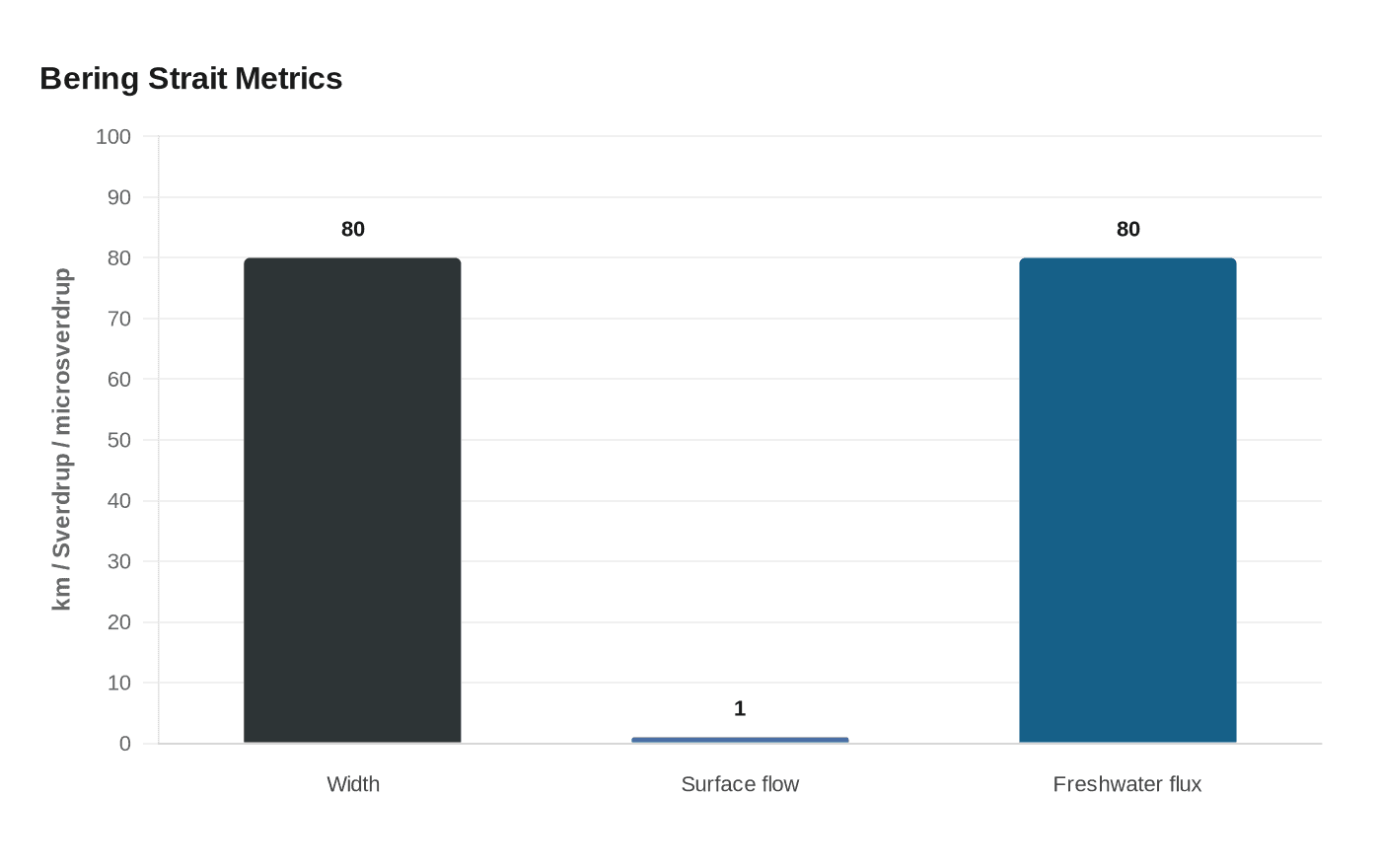
The physics behind the idea starts with the strait itself. The passage between Russia and Alaska is only about 80 kilometers wide, yet it carries roughly 1 Sverdrup of North Pacific surface water northward. The net northward freshwater transport is about 80 microsverdrup. That fresher water ultimately reaches the Labrador Sea, Greenland Sea and wider Nordic Seas, where it can inhibit deep-water formation and weaken the AMOC. In the model used by Soons and Dijkstra, closing the strait reduced that freshwater influence enough to extend the AMOC’s safe carbon budget, provided the circulation had not already slipped too far.
Even the authors’ own university stressed how speculative the idea remains. Utrecht University said the uncertainties are large and it is unclear whether such an intervention would work in practice. The paper also places the concept in a colder historical light: in the 1960s, Soviet engineer Petr Mikhailovich Borisov proposed a Bering Strait dam for a very different purpose, including altering Arctic sea ice and climate. Earlier research suggests the AMOC was stronger during the Pliocene, when the Bering Strait was closed and North America and Asia were still connected.
That history matters because the Bering Strait is not just a climate valve. It is an ecological and cultural corridor for marine mammals, seabirds and other species, and Indigenous communities in the region depend on marine resources and Arctic ecosystems. It is also central to Arctic shipping and trade. Any effort to block it would therefore touch U.S.-Russia Arctic relations, international shipping routes, wildlife protections and Indigenous livelihoods all at once. For now, the study reads less like an engineering blueprint than a warning about how far climate intervention ideas have moved from theory toward the edge of geopolitics.
This article was produced by Prism’s automated news system from verified source data, official records, and press releases, then run through automated quality and moderation checks before publishing. The system is built and supervised by the people who set the standards it runs under. Read our full AI policy.
Did this article answer your question?