Study finds honeybee queens need a royal chamber, not just jelly
Honeybee queens are shaped by a custom wax chamber, not just royal jelly. Larvae raised in worker cells were smaller and died more often.
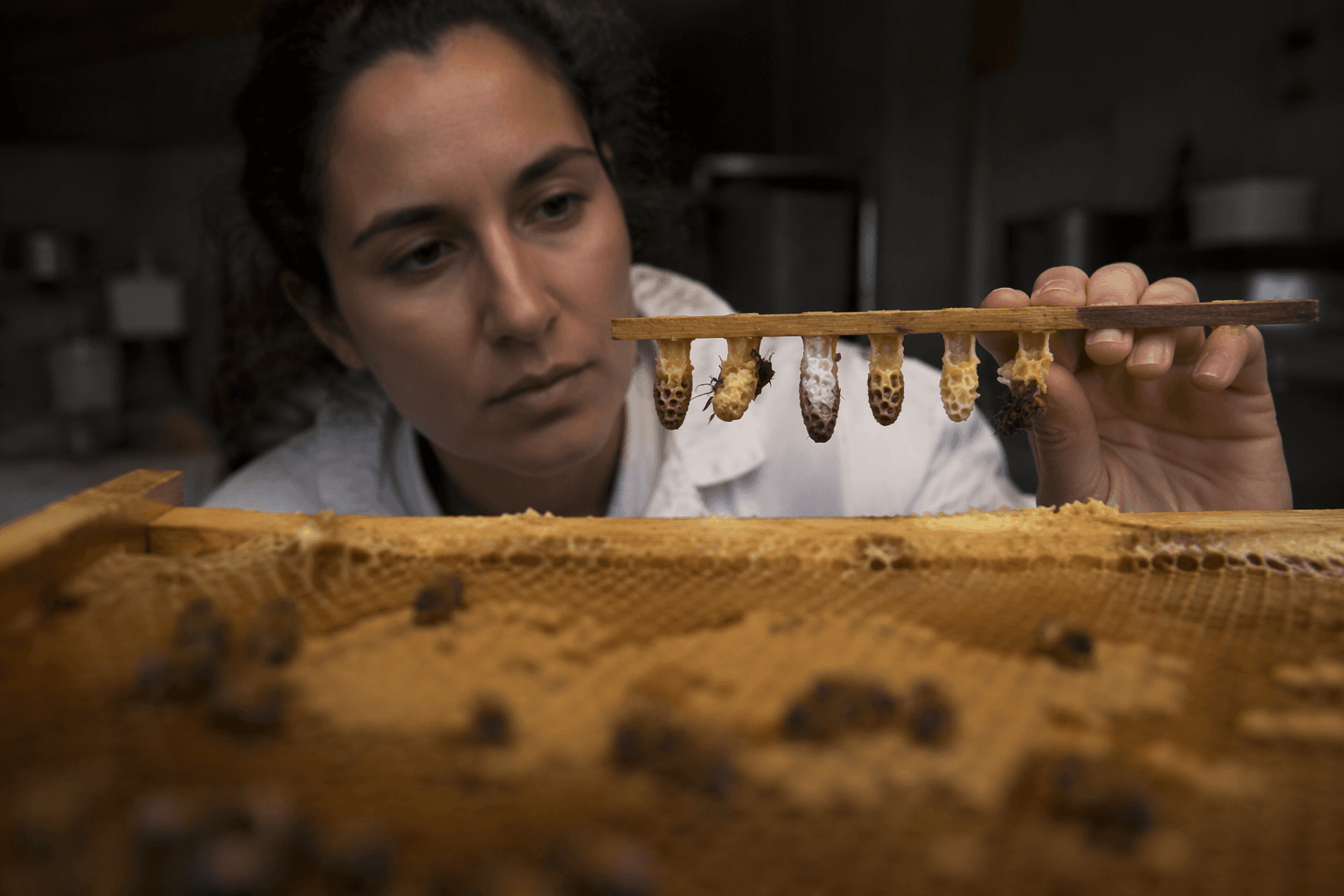
Honeybee queens are not made by royal jelly alone. A new study found that worker bees also build a custom wax chamber with physical and chemical traits that push a larva toward queen development, turning architecture into part of the caste system. Kai Wang, one of the lead researchers, said that “a royal diet means nothing without a royal palace.”
The paper, published in Nature on June 3, 2026, tested queen larvae in 172 capped cells for seven days, using cells lined with either queen wax or worker wax. Larvae raised in worker-wax cells had higher mortality and emerged smaller even when they were fed the same diet, a result that points to the chamber itself as a critical part of development. The queen-cell wax was less dense, more pliable and had a higher melting point than worker-cell wax, and it carried different fatty acids and chemical signals that appear to help shape a royal outcome.
The chamber itself is striking. It hangs from the comb like a peanut shell, and the scientists describe it as an active, highly engineered incubator rather than a passive container. The study identified a previously unrecognized type of worker bee, called queen cell builders, that appears specialized for raising queens. Compared with ordinary worker-cell builders, these bees were younger, had higher thoracic temperatures and showed distinct metabolic activity. Behavioral tracking showed they did not simply recycle existing wax. They actively modified, enriched and diluted queen-cell wax as they built.
The findings were consistent in both Asian and European honeybees, underscoring that the biology of queen-making is not confined to one species or one region. Beekeepers have long treated queen cells as signs of swarming or queen replacement, but the study suggests they are more than a signal of colony change. They are part of the mechanism that produces it.
The broader stakes reach well beyond apiculture. Honeybees are essential pollinators in agriculture and food production, so understanding how queens are produced could inform breeding, swarm management and colony health. The work also sharpens a larger lesson in biology: development is often switched on or off by environment, architecture, chemistry and care, not by diet alone. Boris Baer of the University of California, Riverside said the process is much more sophisticated than scientists had imagined, a judgment this study now backs with wax, warmth and chemistry.
This article was produced by Prism’s automated news system from verified source data, official records, and press releases, then run through automated quality and moderation checks before publishing. The system is built and supervised by the people who set the standards it runs under. Read our full AI policy.
Did this article answer your question?