Study Finds Organic Coffee Farming Restores Soil Health After India’s Green Revolution
Organic arabica soils in Kodagu scored an SQI of 0.98 versus 0.87 on conventional farms, with higher organic carbon, nitrogen, exchangeable calcium and stronger enzyme activity.
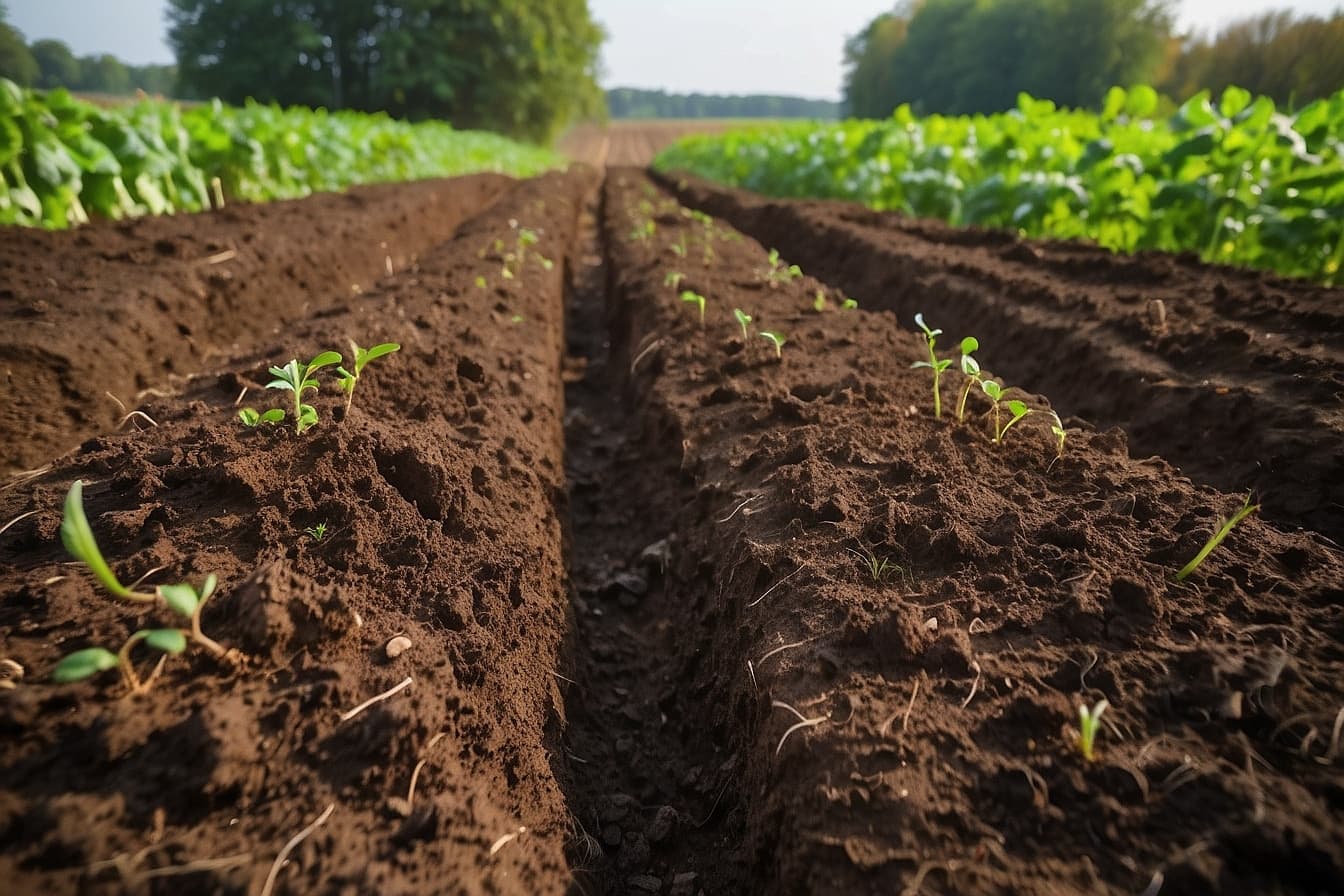
Soils sampled from organic arabica plantations in Ponnampet, Kodagu district, recorded a Soil Quality Index of 0.98, compared with 0.87 on nearby conventional coffee farms, according to a study published in Scientific Reports by researchers affiliated with the University of Agricultural Sciences, Bangalore and the College of Forestry at KSNUAHS in Ponnampet/Ponnampete. The study compared physical, chemical and biological indicators across organic and conventional systems in the Western Ghats, a major arabica-growing region.
Investigators collected soil samples from organic and conventional coffee farms in Ponnampet/Ponnampete and calculated an SQI using four indicators: organic carbon, electrical conductivity and two enzyme activity measures. The authors report that organic sites outperformed conventional sites on the composite SQI and on individual indicators tied to nutrient cycling and biological function.
On physical and chemical measurements the organic soils registered lower bulk density and lower particle density, suggesting improved soil structure and porosity, while chemical testing showed higher organic carbon, higher nitrogen and greater exchangeable calcium and magnesium in organic systems. The study team also reports stronger performance across multiple biological measures, including the two enzyme activity measures used in the SQI calculation.
The study’s findings are reinforced by separate soil-research comparisons in other Indian contexts. An Indian Institute of Soil Science comparison of long-term rice–wheat rotations found microbial biomass carbon 45 percent higher in organic plots, a change that the IISS linked to improved nitrogen mineralisation and improved crop nutrition. Regional commentary on intensive Green Revolution-era management notes real-world problems such as hardpan formation in Punjab at 10–15 cm depth tied to excessive urea and pesticide use, with documented effects on water infiltration and waterlogging in paddy fields.
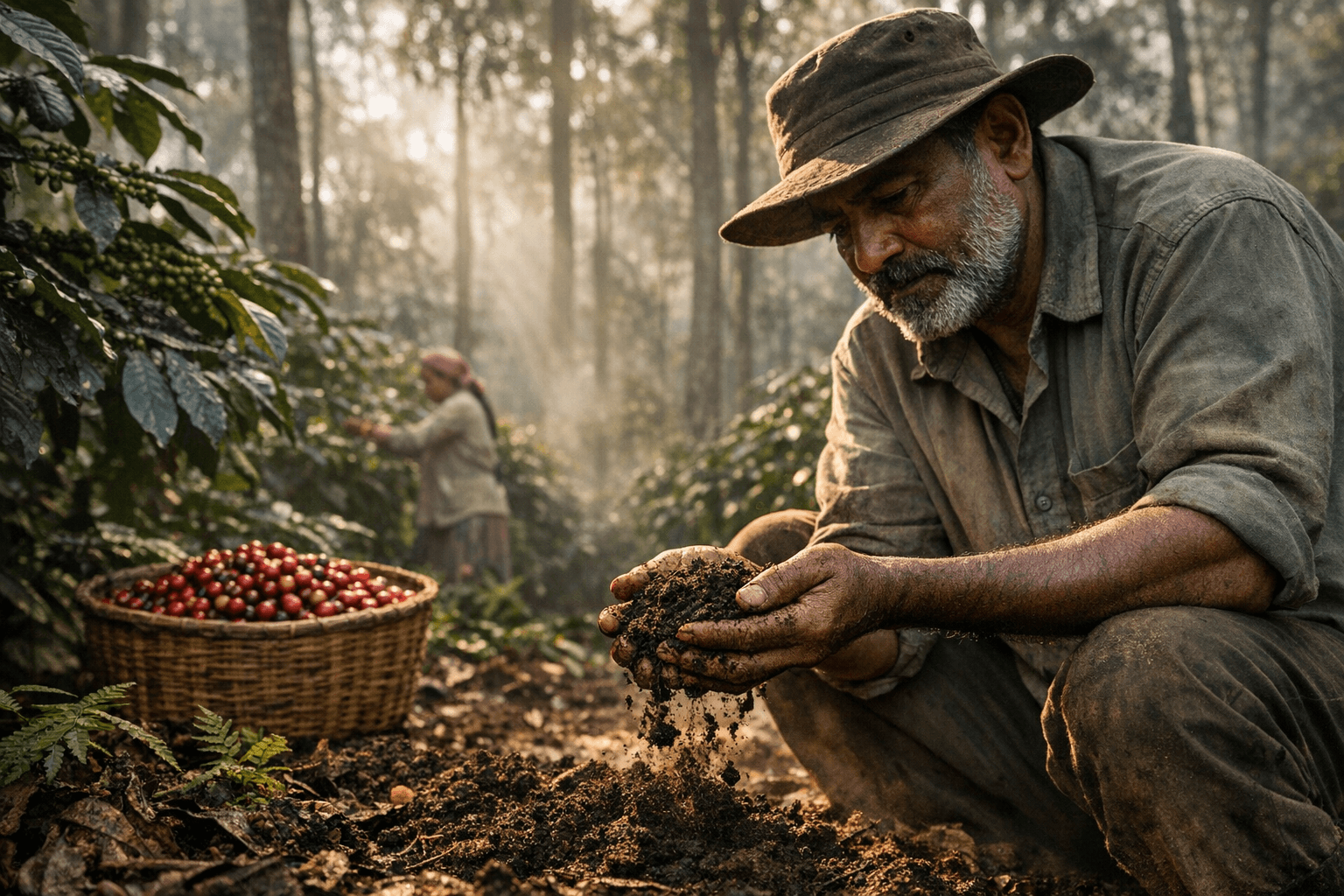
The research team framed the Kodagu results in broader sustainability terms, writing: “These findings underscore the potential of organic coffee farming for sustainable agriculture in the Western Ghats, particularly in terms of enhancing soil health, promoting microbial diversity and improving long-term soil quality compared to conventional practices.” The authors also situated their work amid literature showing organic management benefits for microbial diversity and soil quality in other crops, citing studies by Paudel et al., Singh et al., and Lori et al. as part of the wider context.
Important methodological details were not supplied in the materials accompanying the release: the Scientific Reports article’s DOI and full author list were not provided, and the report did not include sample sizes, exact enzyme identities, the SQI weighting protocol or whether organic sites were certified. Those gaps leave open questions about replication, the length of time sites had been managed under organic or conventional regimes, and potential yield or economic implications for growers in Kodagu.
For coffee producers in the Western Ghats the core takeaway is concrete: soils managed under organic or low-input systems in the Kodagu sampling showed measurably better soil quality on key physical, chemical and biological indicators, with SQI values of 0.98 versus 0.87 on conventional sites. Obtaining the full Scientific Reports paper and the study’s raw data will be essential to confirm sample scope, certification status and management histories that matter to farm-level decisions.
Know something we missed? Have a correction or additional information?
Submit a Tip