Study finds self gifts vary by mood, comfort versus celebration
A Frontiers in Psychology study by Harvey and Forwood finds people choose food and alcohol differently on good versus bad days, and prefer experiential self‑gifts when consoling themselves.
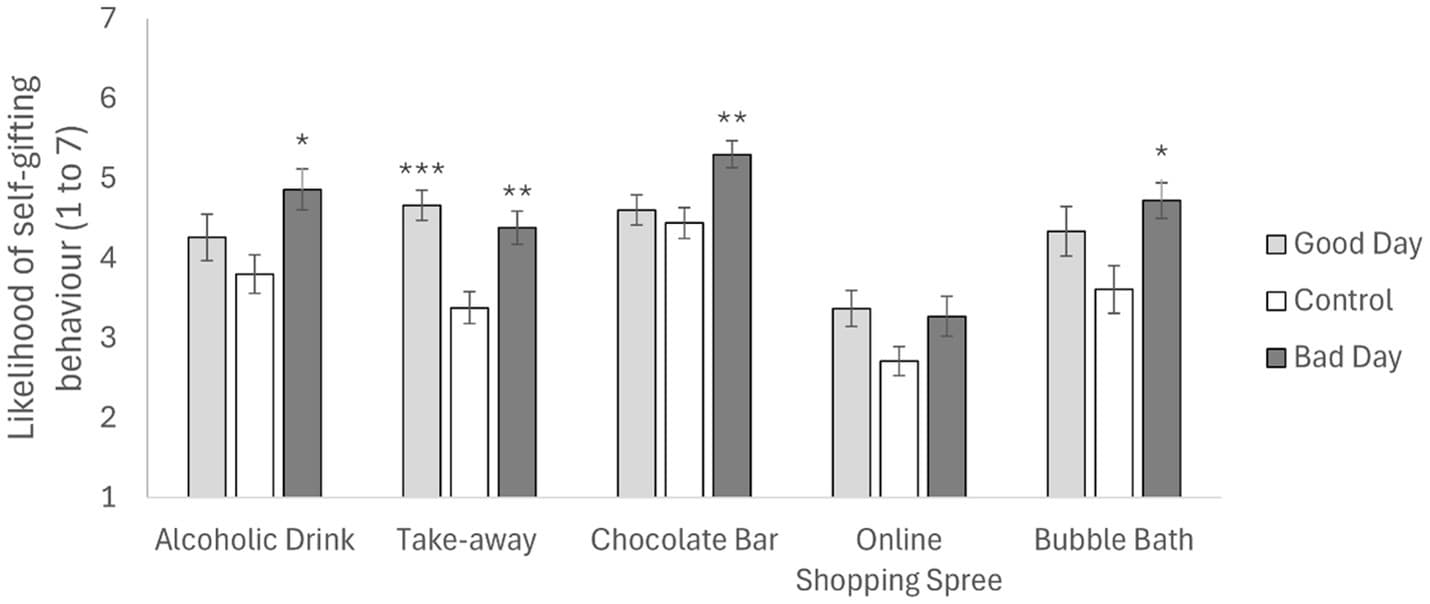
Harvey AJ and Forwood SE examined motivations and item choices for self‑gifting in an article published 21 January 2026 in Frontiers in Psychology, Volume 16, article 1685756 (DOI 10.3389/fpsyg.2025.1685756). The paper foregrounds a simple, actionable distinction: food and alcohol often play a dual role in self‑gifting, alternately marking celebration and providing consolation, while experiential gifts emerge as a distinct option when people seek emotional repair.
The section titled "Self‑gifting food and alcohol" spells this out with concrete language. The authors note that celebrating success invites "raising a glass" of champagne to "give a toast," and that delicacies can be framed as a celebratory "treat," citing steak and oysters as examples. By contrast, identical items can be repurposed for solace, cast as "comfort food" or used to "drown your sorrows." That linguistic pairing—treat versus comfort, toast versus drown—captures the study’s central behavioral contrast.
Harvey and Forwood also argue that the category of experiential gifts carries a different psychological charge: experiential options can "enhance and serve as a reminder of the success, whereas a product would serve as an unwanted reminder for those in the failure, hence experiential options are more desirable when one is motivated to console oneself through self-gifting." In practice, this suggests that when someone needs consolation they may prefer a shared class, a weekend away, or a memory‑forging outing that affirms competence without producing an object that later recalls disappointment.

The Frontiers record provides full editorial and peer‑review metadata: the manuscript was received 14 August 2025, revised and accepted on 16 December 2025, and lists Anoushiravan Zahedi as editor, with reviewers Ștefania Polzin and Anna Kristina Zinn; the page includes a Crossmark indicator and the copyright line "© 2026 Harvey and Forwood." Important methodological details are not present in the supplied excerpts: sample sizes, participant demographics, country of data collection, experimental manipulations, statistical results, and ethical approvals are not reported here and warrant review of the full paper via the DOI and any supplementary materials.
For gift‑giving practice grounded in these documented findings, match the mood. For moments of success, select food and drink that read as a public or private "treat"—the paper’s own examples include champagne for a toast and steak or oysters as celebratory indulgence. For consoling self‑care, prioritize experiential options that build memory rather than objects that might later feel like unwanted reminders. The study’s publication timeline and peer reviewers confirm its placement in the scholarly record; once the full methods and results are reviewed, retailers and givers can apply these distinctions with greater precision.
Know something we missed? Have a correction or additional information?
Submit a Tip