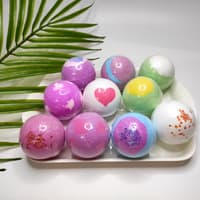
Study Offers Lab-Style Insights for Chamomile Goat Milk Bath Bombs
An academic paper details formulation trials for bath bombs that combine chamomile essential oil and goat milk, varying citric acid and sodium bicarbonate ratios to tune effervescence, hardness, and dissolution time. The findings give small-scale makers evidence-backed evaluation methods and ingredient rationale to improve skin feel and user experience.
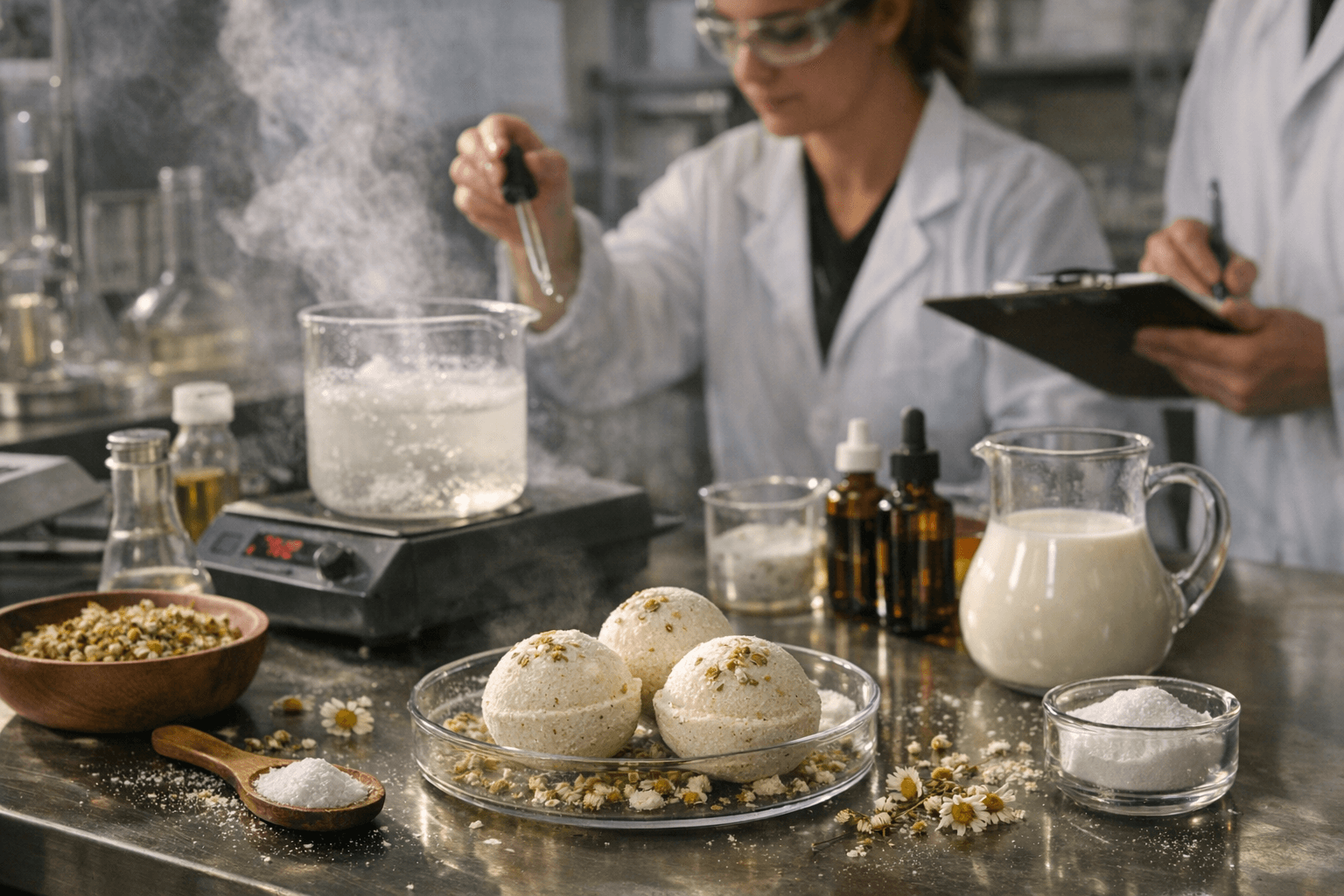
A recent academic article lays out controlled formulation experiments for bath bombs made with chamomile essential oil and goat milk, and it presents practical measurements makers can use when developing or refining products. Researchers varied the ratios of citric acid and sodium bicarbonate to optimize key performance traits, effervescence, hardness and dissolution time, while assessing basic physical properties and potential skin-soothing benefits from chamomile and goat-milk components.
The report explains why chamomile and goat milk were chosen. Chamomile is noted for anti-inflammatory properties and a calming scent profile that can enhance the bathing experience. Goat milk contributes lipids and vitamins that may improve moisturization and skin feel. Together these ingredients are tested not only for sensory appeal but also for how they interact with effervescent chemistry and physical integrity of molded bath bombs.
Evaluation parameters in the trials include pH, friability, effervescence duration and visual or aesthetic qualities. Monitoring pH helps ensure formulations remain comfortable on skin. Measuring friability indicates how well a bomb will survive handling and shipping. Timing effervescence and observing dissolution give direct feedback on the user experience in the tub. Visual assessments cover color stability, surface texture and whether milk solids or botanicals affect appearance.
For makers, the practical takeaway is to treat formulation as a set of controllable variables. Test small batches while varying the citric acid to sodium bicarbonate balance to reach the combination of fizz, hardness and dissolve time you prefer. Include objective checks such as a pH strip, a simple drop or shake test for friability, and a timed soak to record effervescence duration. Note visual changes when adding botanical extracts or milk solids, and allow extra drying time if moisture content increases.
The article is especially useful for hobbyists and small-scale producers who want lab-style insight without full industrial equipment. It supports substituting botanical extracts and milk-based ingredients intentionally, with guidance on which physical properties to monitor and how those properties affect product performance and customer satisfaction. Applying these evaluation methods can reduce guesswork, speed troubleshooting and improve consistency for handmade bath bombs that prioritize both skin comfort and a pleasing tubside show.
Know something we missed? Have a correction or additional information?
Submit a Tip