Study says Tyrannosaurus rex grew to full size by age 40
T. rex may have taken 40 years to reach full size, a finding that could force scientists to rethink growth, hunting and even which fossils are truly T. rex.
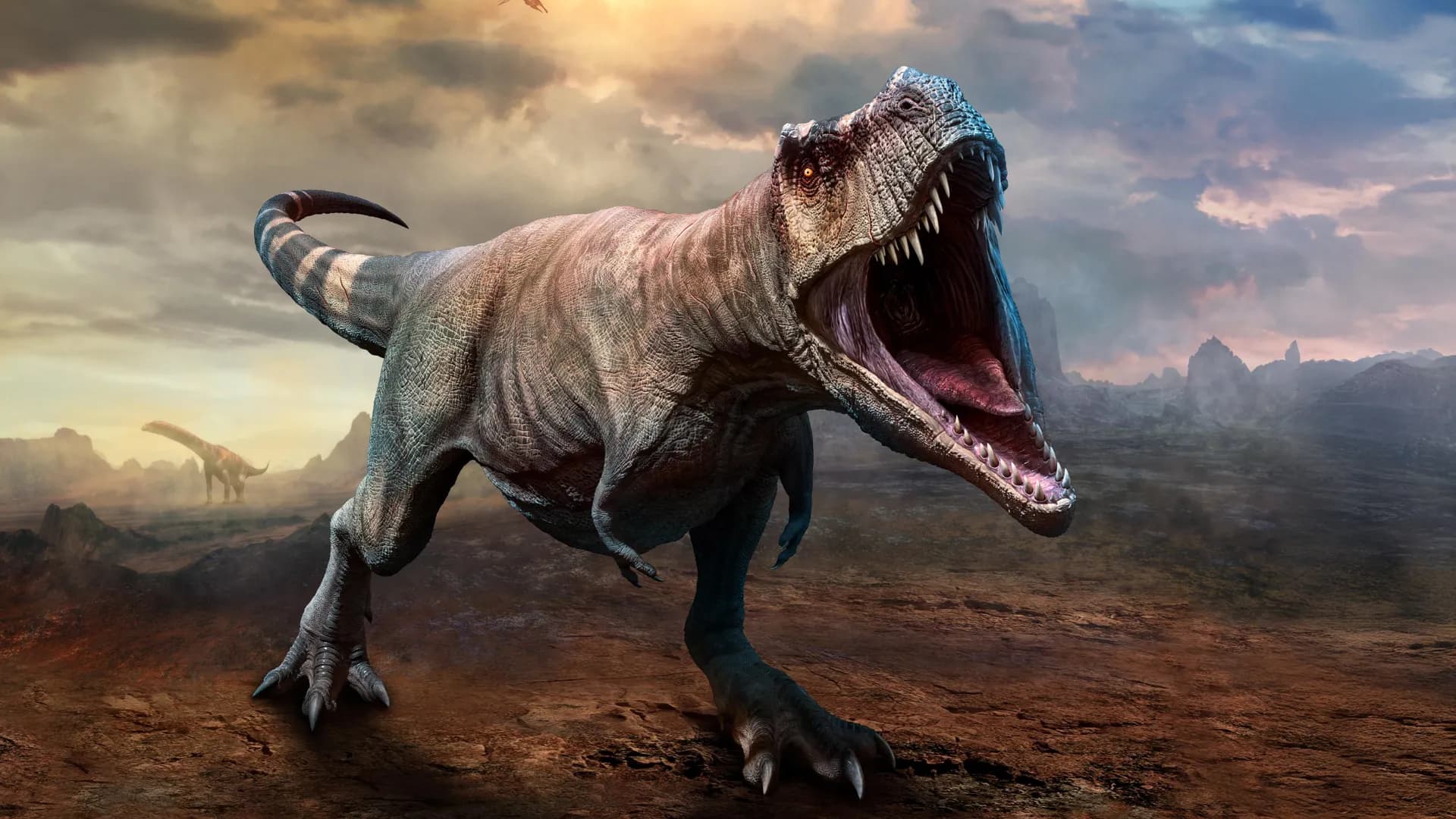
Tyrannosaurus rex may have grown far more slowly than scientists once thought, taking about 40 years to reach its full size of roughly eight tons. That shift pushes the species’ life history into a very different frame, with major implications for how the predator fed, competed and dominated the Late Cretaceous.
The study, published Jan. 14, 2026 in PeerJ, examined 17 tyrannosaur specimens spanning juveniles to adults. Holly N. Woodward of Oklahoma State University Center for Health Sciences, Nathan P. Myhrvold of Intellectual Ventures and John R. Horner were among the researchers behind the analysis, which they described as the largest data set ever assembled for Tyrannosaurus rex.
For decades, paleontologists have used growth rings in fossilized leg bones to estimate age, much as tree rings record a plant’s history. The new work combined expanded histological sampling with statistical modeling and special lighting that exposed growth rings earlier studies had missed. Because a cross-section of a T. rex bone preserves only the last 10 to 20 years of the animal’s life, the team stitched together evidence from multiple fossils to extend the growth curve and refine the species’ development.

That reanalysis changed the timeline dramatically. Earlier work had generally placed the end of growth around age 25, and some models suggested T. rex could exceed 8,000 kg within two decades and live nearly 30 years. The new paper instead argues that the animal’s growth stretched much longer, with full size arriving around age 40. The researchers say the difference is not a small correction but a major revision of one of the most familiar life histories in paleontology.
The findings also sharpen a long-running debate over tyrannosaur classification. The new analysis suggests that some specimens previously identified as T. rex may belong to other species, especially because two immature fossils in the Tyrannosaurus rex species complex did not fit statistically within the main growth series. That possibility could force scientists to revisit how the genus is defined and how smaller or unusual fossils are assigned.

The work builds on earlier Oklahoma State research on the juvenile fossils Jane and Petey, which in 2020 were identified as 13 and 15 years old when they died. Together, those studies show that T. rex was not simply a fast-growing monster that quickly reached dominance. It may instead have spent decades in an extended subadult phase before becoming the apex predator that still defines dinosaur science today.
This article was produced by Prism’s automated news system from verified source data, official records, and press releases, then run through automated quality and moderation checks before publishing. The system is built and supervised by the people who set the standards it runs under. Read our full AI policy.
Did this article answer your question?