Study suggests forests may store less carbon than climate models assume
Oak forests kept pulling carbon from the air after wood growth stopped, raising doubts about how much climate plans can bank on trees.
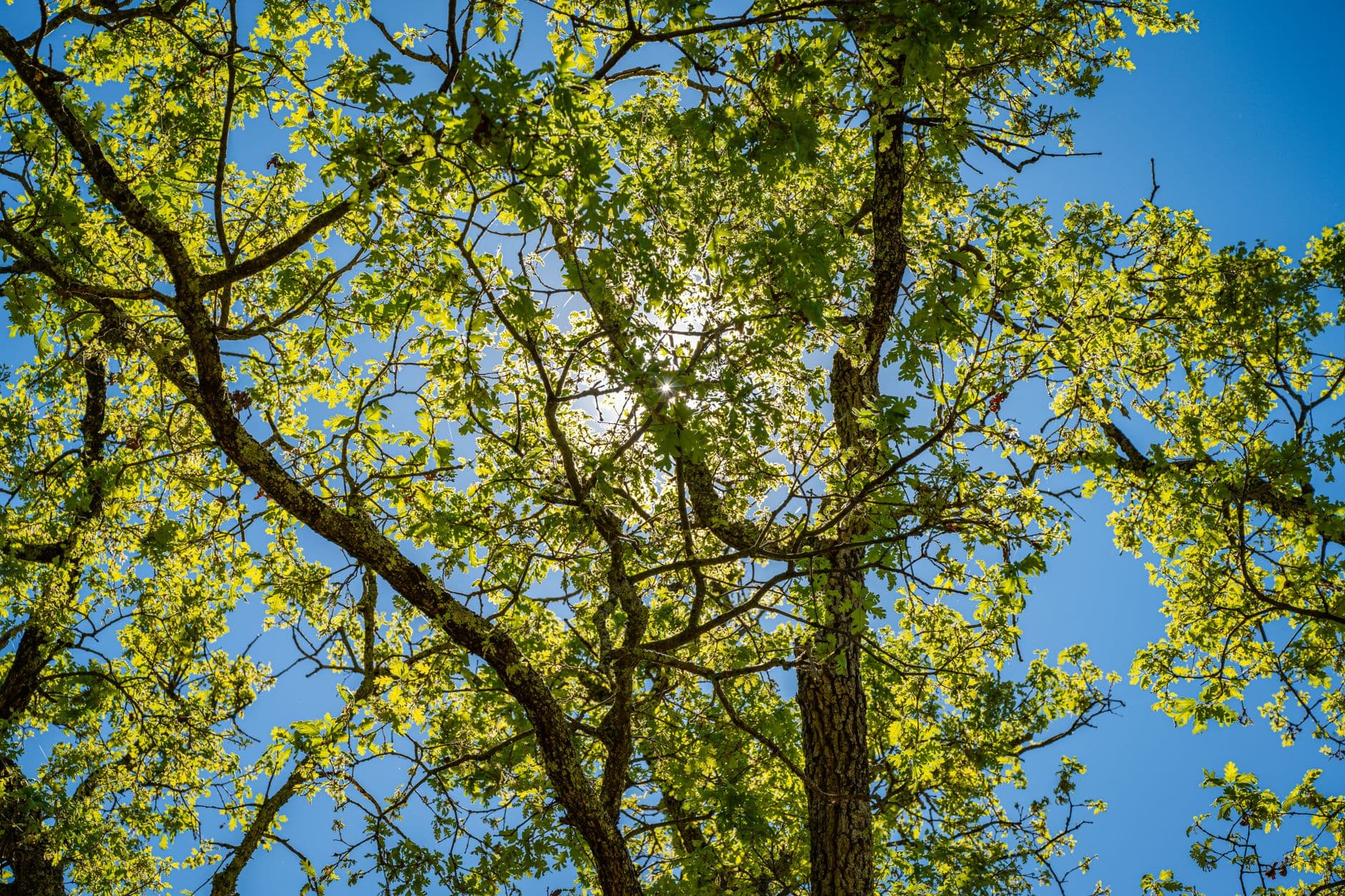
Forests may be absorbing more carbon from the atmosphere than climate models once expected, but a new oak-tree study suggests they may be storing less of it in long-lived wood. That matters for U.S. climate planning, where net-zero targets, carbon offsets and reforestation campaigns increasingly count on forests to act as durable carbon sinks.
The study, published in Science Advances and highlighted in a June 12, 2026 release from Columbia Climate School and Lamont-Doherty Earth Observatory, found that oak forests kept taking up carbon after their seasonal wood growth had ended. Tree growth stopped by mid-summer, yet photosynthesis continued late into the year, a decoupling that lead author Mukund Palat Rao described as evidence that photosynthesis does not necessarily mean growth.
The finding undercuts a basic assumption built into many climate models: that more carbon uptake should translate into more carbon locked away in trunks, branches and roots. Instead, some of that carbon can be diverted into foliage, fruits, short-lived metabolic processes or compounds released into the soil. Columbia’s release said aridity and heat limit tree growth more strongly than photosynthesis, which means warming could allow forests to keep drawing in carbon without storing as much of it in woody biomass.
That distinction is critical because woody biomass can hold carbon for decades, centuries or even millennia, depending on conditions. If forests are less reliable at turning carbon uptake into durable storage, then their role in long-term climate accounting is weaker than many policy road maps assume. For officials leaning on forest expansion to help meet emissions goals, the result is a warning that the gap may have to be filled with deeper cuts in fossil fuel emissions, more durable removals or both.
The study also fits into a growing body of recent work suggesting that drought, heat and the coupling of carbon and water constrain tree growth more than earlier models allowed. Researchers have increasingly warned that rising atmospheric carbon dioxide does not guarantee proportionate gains in forest biomass, even when growing seasons lengthen.
For climate policy, the message is not that forests stop mattering. It is that counting on them as a stable, large-scale fix may overstate how much warming they can offset over the long run, especially as heat and aridity intensify across the United States and beyond.
This article was produced by Prism’s automated news system from verified source data, official records, and press releases, then run through automated quality and moderation checks before publishing. The system is built and supervised by the people who set the standards it runs under. Read our full AI policy.
Know something we missed? Have a correction or additional information?
Submit a Tip