Stylist Rules for Layering Necklaces: Build Around a Clear Focal Piece
Start with a single clear focal necklace—then use measured lengths, textures, and a dominant metal to build two to three harmonious layers.
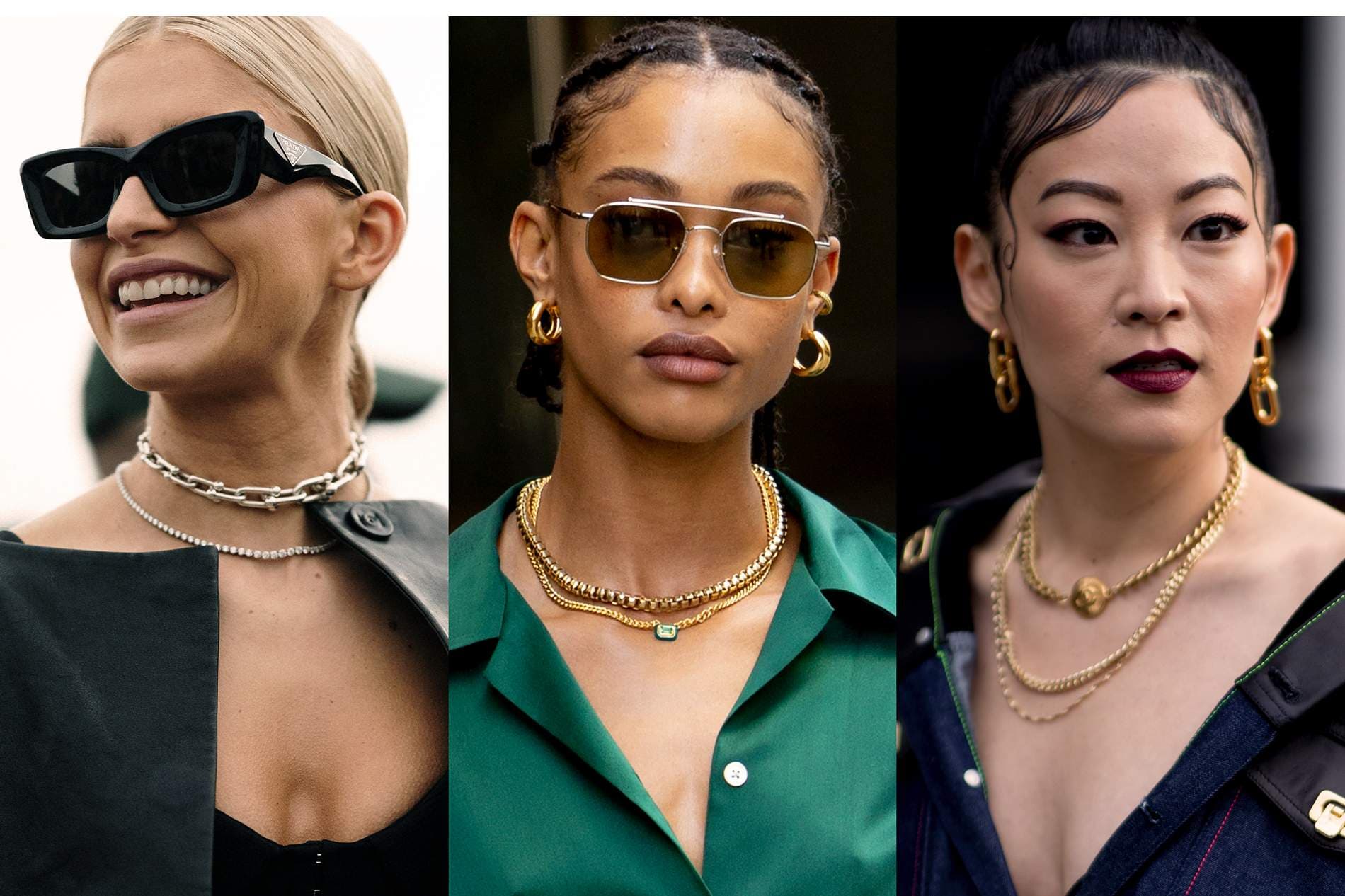
Start by choosing a focal necklace that draws the eye: a pendant, charm, locket, or a slightly chunkier chain. This anchor establishes the metal tone, the neckline placement, and the scale for every additional piece you add. Embrace a stylist’s approach of practical, wearable rules rather than maximalist excess: harmony, not clutter.
1. Choose a clear focal piece
Pick one necklace that will read as the anchor—commonly a pendant, locket, charm, or a chunkier chain that “draws attention first.” Use that piece to set the metal, color tone, and where necklaces should sit on the chest; for example, a diamond solitaire in yellow gold can determine whether you repeat gold or introduce white metal for contrast. If the focal is bold, keep the rest minimal; if it’s delicate, you can afford a slightly stronger centerpiece nearby.
2. Limit the number of necklaces (the rule of two-to-three)
Two to three necklaces are usually enough for a balanced look—this is the practical rule repeated across stylist notes and FAQs. Hurdle’s Jewelry calls it the “rule of three”: a choker, a medium-length chain, and a long pendant create depth without chaos. For daytime or the office, Sylviejewelry recommends keeping it to two layers to maintain professionalism and avoid visual noise.
3. Vary lengths and leave breathing room (at least ~2 inches)
Create separation by using three distinct length buckets: short (about 14–16 inches), mid (around 16–18 or commonly 18 inches), and long (20–24 inches or 20 inches and up). Blog Bluestone’s FAQ endorses the 14–16 / 18 / 20–24 pattern and stresses you should “always leave at least 2 inches between each piece.” This spacing prevents overlap, reduces tangling, and ensures each necklace has its own place to be seen.
4. Use extenders to fine-tune spacing
Carry extenders or adjustable chains so you can nudge a necklace 1–3 inches to create the recommended breathing room. Sources advise adjusting the spacing with extenders for a balanced look—especially useful when mixing store-bought lengths that don’t naturally sit as you want. Small adjustments matter: a pendant sitting directly on top of another pendant ruins the hierarchy; an extender lets you correct that without swapping pieces.
5. Anchor mixed-metal looks with one dominant tone
Mixing metals works when it’s intentional: choose a dominant metal (for example, two gold pieces) and introduce a second metal (platinum or white gold) as contrast. Blog Bluestone summarizes this simply: “Balance is what makes mixed-metal layering look intentional rather than accidental.” Another tactic is to use a bi-metal pendant that already combines tones to “naturally tie the look together.”
6. Vary texture and weight for visual interest
Contrast chunky and delicate chains—Monishamelwani’s advice: “Thick and thin chains – A chunky chain next to a delicate one creates contrast.” Mix rope, snake, cable, and paperclip chains so each layer reads differently; add one chain with a little sparkle (gemstones or beads) to give the stack depth without competing. The objective is textured cohesion: mix textures with purpose, not chaos.
7. Control bold pieces and maintain proportion
Limit the number of bold elements—if you wear an oversized pendant or a chunky chain as your focal piece, make supporting chains pared-back. Blog Bluestone warns against overloading heavy pieces and ignoring proportion; multiple large pendants will fight for attention and can look crowded. If you want drama, concentrate it in a single centerpiece and let supporting layers be lighter in weight and detail.

8. Mind the situation: everyday, workday, evening
Styling differs by context. For everyday wear, Sylviejewelry suggests starting with a simple pendant near the collarbone and adding a shorter necklace with subtle detailing like a petite bezel-set diamond or paperclip links for dimension. For work, keep to two layers: collarbone-length chain plus a shorter linear pendant that sits above fabric and avoids catching on buttons or lapels. For evening, allow a slightly stronger centerpiece and two complementary layers—still obeying spacing and proportion—to create a polished, elevated look.
9. Avoid common mistakes and how to fix them
Common missteps include choosing similar lengths (which causes overlap and tangling), overloading heavy pieces, and ignoring proportion. Fixes are concrete: leave at least ~2 inches between layers, use extenders to separate pendants, repeat a metal to create cohesion, and swap one bold piece for a delicate alternative if the stack becomes top-heavy. These practical corrections keep your stack readable and wearable.
10. Practice in front of the mirror and edit ruthlessly
Hurdle’s Jewelry’s practical advice: “Try two or three pieces in front of a mirror and study how they fall.” Put on a proposed stack, move your chin and shoulders, and see how pieces shift; adjust with extenders until each necklace sits where intended. Iteration matters—attention, not excess, makes the best layered looks.
11. Use specific pieces for inspiration, not imitation
Think of stacked combinations rather than buying indiscriminately: a “Pearl Strand Necklace in Sterling Silver with Pearls and Diamonds” can work as a mid-length anchor, a “White Gold Round Diamond Choker Necklace” suits the short slot, and a “Modern Talisman Turquoise Pendant” can serve as a colorful long focal. Sources used these product examples to illustrate possibilities; apply them as templates—note metal, weight, and stone when translating to what you own.
12. Keep your stack elegant and low-maintenance
Maintenance is part of intentional layering. Finks summed it up: “With these simple techniques, your necklace stack will remain elegant, untangled, and effortlessly luxurious, allowing you to focus on style rather than maintenance.” Store chains flat or clasped together to reduce tangles, avoid overly long chains that snag on buttons or lapels (a specific workday warning from Sylviejewelry), and choose secure clasps when you know you’ll be wearing multiple layers often.
- Choose a focal piece (pendant, locket, or chunkier chain).
- Anchor the palette with one dominant metal or a bi-metal pendant.
- Select 2–3 lengths: short ~14–16 in, mid ~16–18/18 in, long ~20–24 in; aim for ~2 inches between layers.
- Mix textures—rope, snake, cable, paperclip; pair thick + thin.
- Limit bold pieces to one; use extenders to fine-tune spacing.
- For work, keep to two layers; for evening, allow a stronger centerpiece.
- Try combinations in front of a mirror and edit until cohesive.
Quick actionable checklist
“The trick is cohesion.” Let that be your guiding rule: layering should create relationships between length, weight, tone, and meaning—not a jumble of things you own. Done well, a layered necklace becomes a small archive of craftsmanship and memory, visually curated and responsibly worn.
Know something we missed? Have a correction or additional information?
Submit a Tip