Subversive files ETFs that exclude Tesla and SpaceX over Elon Musk
Subversive has filed ETFs that screen out Elon Musk-linked companies, putting Tesla and SpaceX at the center of a new values-based investing test.

Subversive has filed two exchange-traded funds that would exclude companies founded, controlled or led by Elon Musk, taking values-based investing to a single-person screen. The Nasdaq-100 Ex-Elon Enterprises ETF, ticker QQNE, and the S&P 500 Ex-Elon Enterprises ETF, ticker SPNE, were filed with the Securities and Exchange Commission on July 8 as post-effective amendment No. 324 to Tidal Trust I’s registration statement.
The prospectus says the funds are actively managed and seek capital appreciation while screening out companies Musk is primarily associated with as a major shareholder or founder. For now, the only clearly identified exclusions are Tesla and SpaceX. The S&P 500 version would effectively track the broad benchmark minus Tesla, while the Nasdaq-100 version would leave out both Tesla and SpaceX.
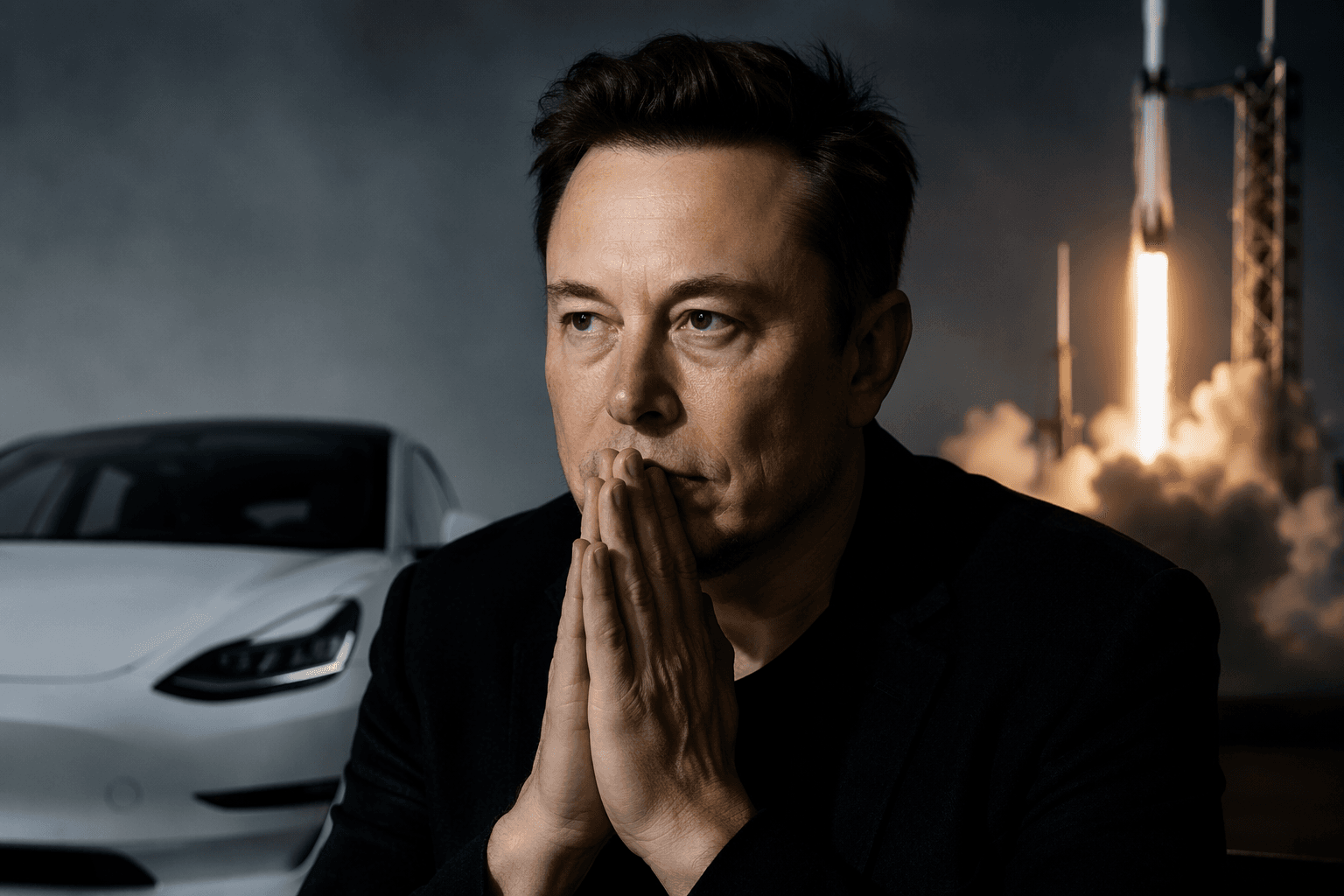
The filing lands as passive investing keeps absorbing more politics, personality and identity into portfolio design. Subversive already runs politically themed funds tied to the stock trades of Democratic and Republican members of Congress, including NANC and GOP, a lineup that shows the firm is comfortable building niche products around cultural and political signals as much as balance sheets. That approach now extends to Musk, whose high-profile backing of Donald Trump and political activism have made him a polarizing figure for some investors.
The timing also matters. Bloomberg reported that SpaceX joined the Nasdaq 100 after just 15 days of trading, and that the company has also been added to FTSE Russell and MSCI indexes, creating fresh exposure for passive funds. Morningstar said new Nasdaq rules let SpaceX enter the benchmark without immediately forcing out another constituent. Reuters reported in May that Tesla’s 2010 public debut and later S&P 500 inclusion drove more than $50 billion of buying from index investors, a reminder of how quickly forced ownership can reshape flows.
Not everyone sees the new funds as a durable thesis. ETF.com’s Dave Nadig called the products a “gimmick” and said he was extraordinarily skeptical they would attract significant assets. His criticism cuts to the heart of the trade-off: once an ETF is built around excluding one founder, it can become a branding exercise as much as an investment strategy, with portfolio construction driven by personality risk instead of sector exposure, valuation or earnings power. Reuters also recently reported that Hedgeye Asset Management launched an index-inclusion ETF two weeks before SpaceX’s IPO, underscoring how the market is already trying to trade around the next wave of benchmark-driven buying.
This article was produced by Prism’s automated news system from verified source data, official records, and press releases, then run through automated quality and moderation checks before publishing. The system is built and supervised by the people who set the standards it runs under. Read our full AI policy.
Did this article answer your question?