Supreme Court Appears Ready to Back Trump Border Asylum Restrictions
Conservative justices signaled openness to reviving Trump's "metering" policy Tuesday, as the Supreme Court heard arguments in Noem v. Al Otro Lado over whether agents can turn asylum seekers away on Mexican soil.
The Supreme Court spent more than an hour Tuesday debating what "arrives in" the United States means, with the Trump administration pressing justices to restore a border enforcement tool that would allow federal agents to turn away asylum seekers before they set foot on American soil.
Some conservative justices seemed receptive to the Justice Department's push to overturn a lower-court ruling against the practice known as metering. Several of the conservative justices appeared at least open to siding with the Trump administration, perhaps in a limited way.
The policy at the center of Noem v. Al Otro Lado is no longer in place, but the Trump administration calls it a "critical tool for addressing" surges in immigrants at the border. Under the policy, officials from Customs and Border Patrol would stand along the U.S.-Mexico border and turn back noncitizens without valid travel documents, including asylum seekers, before they could enter the United States.
The legal dispute at the heart of the metering case centers on the meaning of the words "arrive in." The Justice Department argues it means anyone who is in the United States already, so it doesn't apply to people authorities stop on the Mexico side of the border. Solicitor General D. John Sauer pressed that position directly before the justices: "You can't arrive in the United States while you're still standing in Mexico. That should be the end of this case," Sauer said, arguing that a 1990s case backing the government's decision to send back Haitian asylum seekers intercepted at sea supported the metering policy.
Chief Justice John Roberts peppered an attorney for the migrants with questions on exactly where someone must be to claim asylum. Justice Ketanji Brown Jackson suggested that those questions are hard to answer when the policy isn't being used, saying: "It just seems to me that we have a lot of hypotheticals regarding how this policy may have worked in the past, how it's possibly going to work in the future, but we don't have a policy in effect right now."
Advocates for asylum seekers countered that the government's reading would gut the protections Congress built into immigration law. "Congress carefully crafted our asylum system to ensure that the United States lives up to its ideals and its treaty obligations towards non-citizens fleeing persecution," attorney Corkran told the court. "The turn back policy flouted both."
The policy began as an informal practice at the tail end of the Obama administration, when immigration officers at the San Ysidro Port of Entry dealt with a large influx of Haitian asylum seekers by turning them away when the officers deemed the port to be at capacity. In 2017, the government extended that policy to all ports of entry across the U.S. border with Mexico, and it was formalized in a memorandum in 2018. Biden rolled back the metering policy in November 2021, though his Justice Department continued defending its legality in court, telling the Ninth Circuit that the policy was "reasonably based on demonstrated capacity constraints."
Al Otro Lado, an immigrant rights group, and 13 asylum seekers went to federal court in southern California to challenge the policy. In 2024, a divided panel of the Ninth Circuit ruled that, for purposes of being able to apply for asylum under federal immigration law, noncitizens who were turned away from ports of entry before they could enter the United States had "arrived in" the country within the meaning of the statute. The Trump administration then appealed to the Supreme Court, which agreed last fall to hear the case.
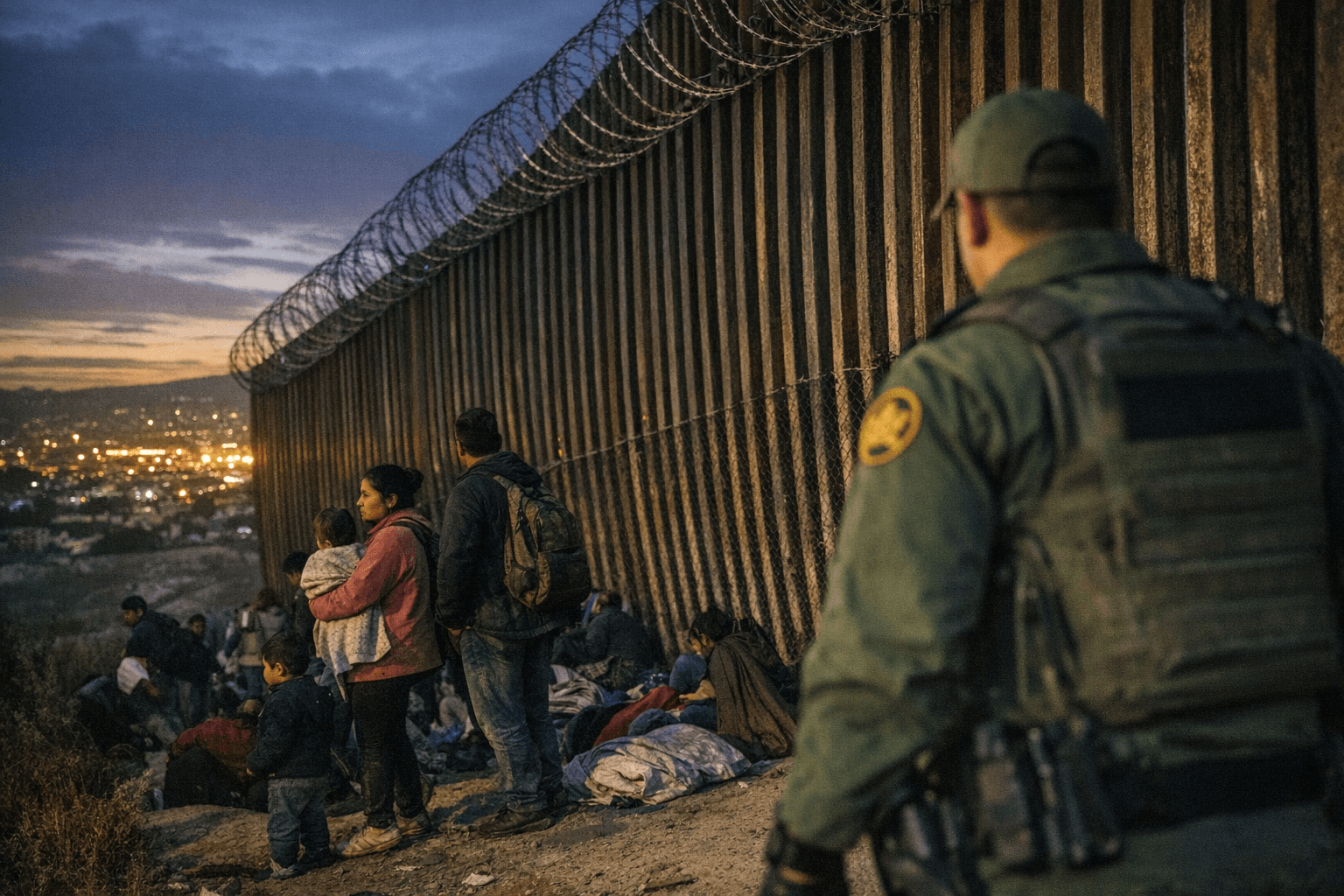
Immigration authorities had limited the number of people who could apply for asylum, saying it was necessary to handle increases at the border. Advocates say the policy created a humanitarian crisis during Trump's first term as people who were turned away settled in makeshift camps in Mexico while they waited for a chance to seek asylum.
One of those migrants was Benito, a Mexican asylum seeker who declined to give his last name and spoke through a translator at an event hosted by Al Otro Lado. "I was partially tortured, had a lot of lesions, and emotional harm, and traumas and I'm still healing from that," he said. He described approaching a U.S. immigration agent on the Mexican side: "I knew I could apply for asylum in that moment, on the side of Mexico, and so I did everything correctly. I came close; I told the [U.S.] immigration agents that I needed to apply for asylum because I was scared and thought I would be killed." He said that despite visible injuries, "they said to me that they couldn't help me, couldn't accept me."
The Trump administration's decision to continue backing the metering policy in court underscores its desire to keep the policy as a backup avenue to stem the flow of migrants as other restrictive measures face challenges. "The administration would like to be able to reinstate metering if and when border conditions justify," Suri told the justices.
Georgetown University law professor and CNN Supreme Court analyst Steve Vladeck raised a procedural concern: "The Supreme Court isn't supposed to decide hypothetical questions, which is why it's weird that it agreed to take up this appeal in the first place." He added that the policy's current inactivity "ought to be fatal to the Supreme Court's power to decide this case, one way or the other."
The ACLU has argued that the current administration's border posture goes even further than metering, warning that a related proclamation invoking a 212(f) "invasion" declaration would "eliminate virtually all asylum at the southern border, even at ports of entry, for everyone except Mexicans." A federal court blocked that proclamation separately, with Laura St. John, legal director of the Florence Immigrant and Refugee Rights Project, calling the administration's use of 212(f) "blatantly xenophobic" and demanding the government "restart processing at the border immediately."
A decision in Noem v. Al Otro Lado is expected by the end of June.
This article was produced by Prism’s automated news system from verified source data, official records, and press releases, then run through automated quality and moderation checks before publishing. The system is built and supervised by the people who set the standards it runs under. Read our full AI policy.
Did this article answer your question?