Supreme Court ruling weakens Voting Rights Act, raises redistricting fears nationwide
A 6-3 ruling on Louisiana’s map weakened Section 2 and pushed states from Alabama to Virginia into a new fight over who gets represented.
The Supreme Court’s Louisiana decision immediately shifted the balance in a national redistricting fight, weakening a key Voting Rights Act protection at the same moment several states were redrawing House maps to lock in partisan advantage. For voters, the ruling matters less as a legal abstraction than as a question of who keeps a real chance to elect a candidate of choice, and which party gets structural help from the lines.
In Louisiana v. Callais, decided April 29, 2026, the court’s conservative majority struck down Louisiana’s 2024 congressional map and said the state’s Sixth District relied too heavily on race. Justice Samuel Alito wrote for the majority. Justice Elena Kagan dissented, warning that the ruling puts Section 2’s achievement in peril. The case grew out of redistricting after the 2020 census, when Louisiana’s 2022 map had only one majority-Black congressional district and a federal judge found it likely violated Section 2, forcing lawmakers to redraw the map in 2024.
That sixth district became the center of the legal fight because it linked communities including Shreveport, Alexandria, Lafayette and Baton Rouge, spanning more than 200 miles in a shape Chief Justice John Roberts once described as a “snake.” The court’s ruling leaves unclear how far Section 2 still reaches, especially in challenges to majority-Black and Latino districts. Election law expert Nicholas Stephanopoulos has estimated that nearly 70 of the 435 congressional districts are protected by Section 2, a number that underscores how widely the decision could ripple.
The immediate fallout has already reached other states. In Louisiana, Gov. Jeff Landry moved to postpone the congressional primary while lawmakers weighed new maps, even as early in-person voting had been scheduled to begin. Lawsuits followed from a Democratic candidate, voters and civil rights groups. In Alabama, Gov. Kay Ivey called a special legislative session to begin May 5, 2026, to consider a new U.S. House map. In Tennessee, Gov. Bill Lee called lawmakers back to examine redrawing the state’s one Democratic-held House district, centered on Memphis.
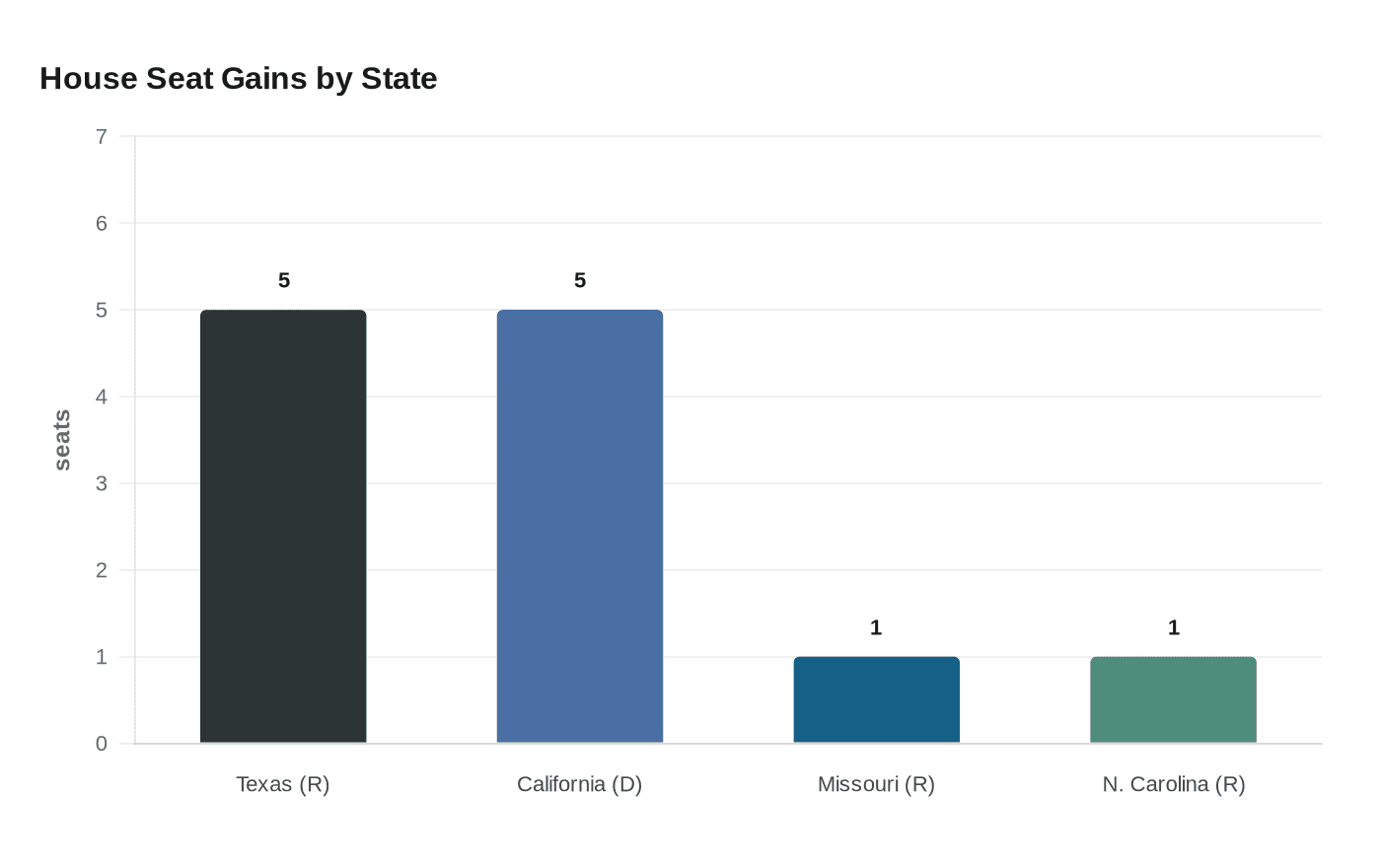
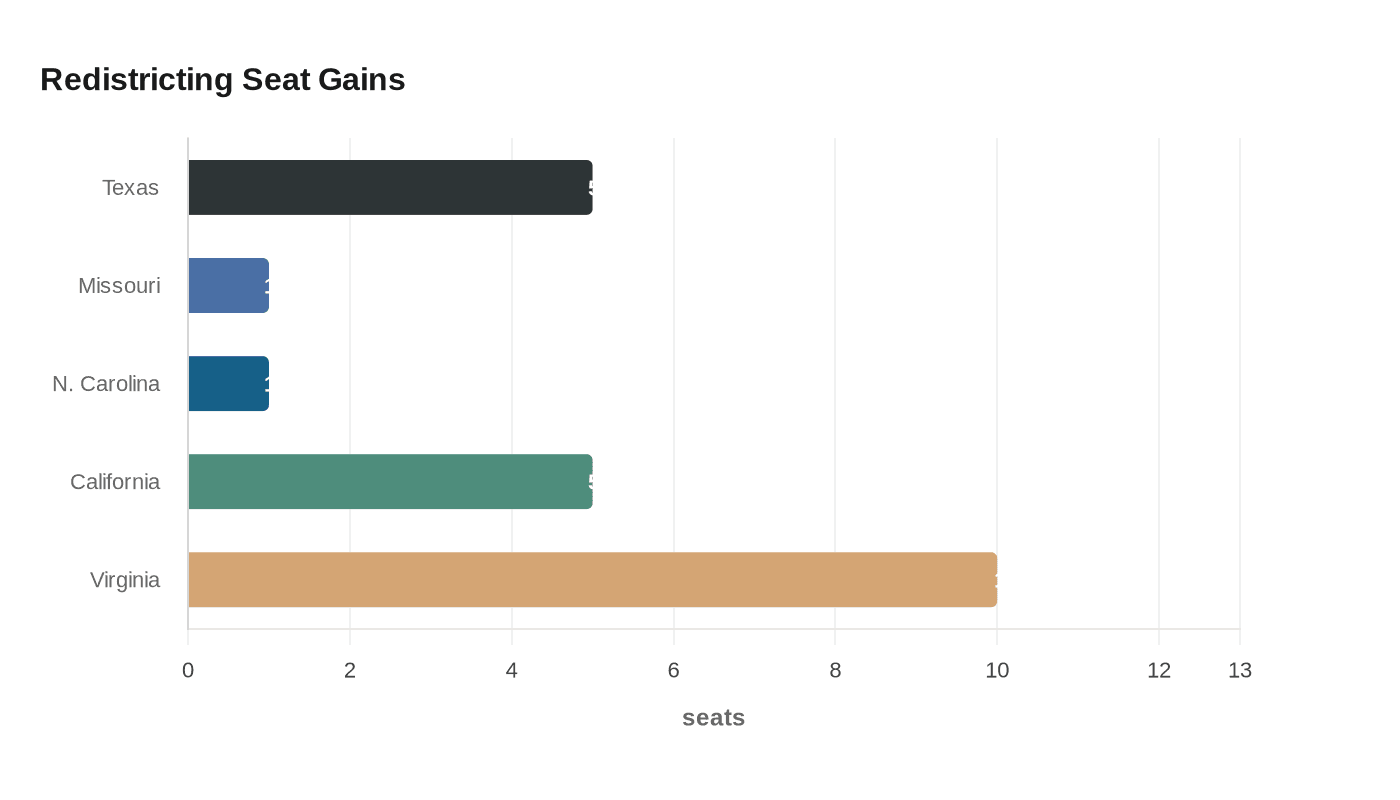
The broader map war was already well under way. Texas enacted a congressional plan designed to give Republicans five additional House seats. Missouri and North Carolina each adopted maps adding one Republican seat. California voters approved a ballot initiative expected to give Democrats five more seats. At that point, lawmakers, commissions or courts had already adopted new House districts in eight states.
Virginia added another warning. On May 8, 2026, the Virginia Supreme Court tossed out a voter-approved redistricting referendum that would have given Democrats an advantage in 10 House districts and left just one safe Republican seat. More than 1.3 million Virginians had already voted before lawmakers took the final procedural step on the amendment, and the court said the legislature violated the state constitution’s intervening-election rule.
The Louisiana ruling may matter most in 2028, because most filing deadlines for the 2026 congressional races had already passed. But its broader effect is already visible: a weaker Voting Rights Act gives states more room to draw lines that can entrench power, narrow minority voting strength and make it harder for voters to challenge maps they see as unfair.
This article was produced by Prism’s automated news system from verified source data, official records, and press releases, then run through automated quality and moderation checks before publishing. The system is built and supervised by the people who set the standards it runs under. Read our full AI policy.
Did this article answer your question?

