Supreme Court Signals Friday Rulings in Trump Tariff Challenge
The Supreme Court indicated on Jan. 7 that it could release opinions at a scheduled 10:00 a.m. sitting on Friday, Jan. 9, with the most consequential matter a challenge to President Donald Trump’s country-specific tariffs imposed under the International Emergency Economic Powers Act. The decision could resolve a major test of presidential emergency authority and trigger immediate market and trade repercussions for industries and foreign partners.
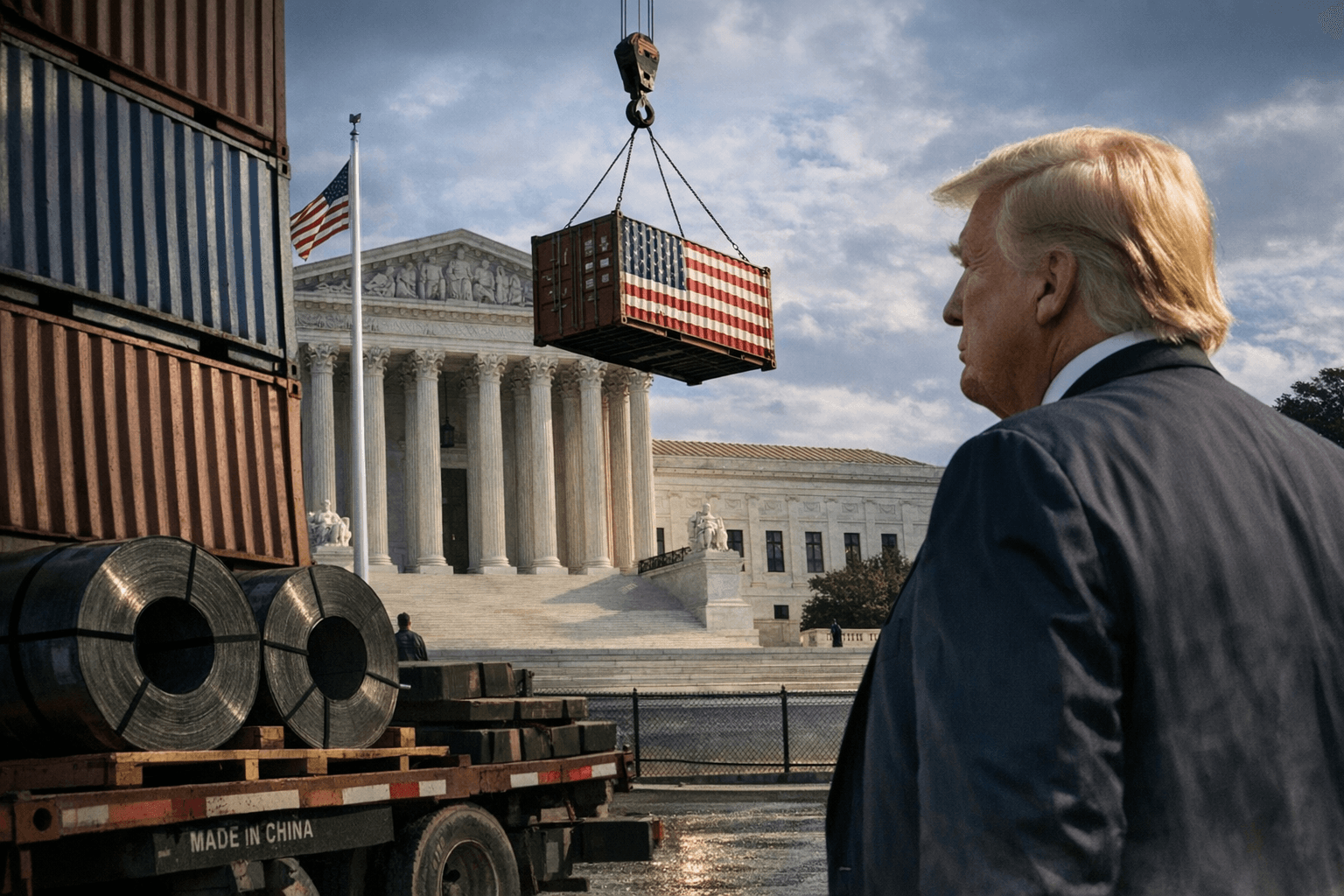
On Jan. 7 the Supreme Court posted that its justices could issue opinions when they take the bench at a 10:00 a.m. sitting on Friday, Jan. 9, signaling a possible early release of rulings in several high-stakes cases. The court customarily does not disclose which opinions will be handed down, but the notice came as the justices returned from a four-week recess and on the heels of expedited briefing in a dispute with potentially large economic and constitutional consequences.
The most closely watched case challenges the legality of country-specific tariffs imposed by President Trump under the International Emergency Economic Powers Act of 1977. The administration used IEEPA to impose tariffs on imports from multiple countries, including China, Canada and Mexico, citing what it described as a national emergency tied to trade deficits and the need for leverage to curb trafficking of fentanyl and other illicit drugs. Opponents argue that the 1977 statute does not authorize the imposition of tariffs and note that no prior president had used IEEPA for that purpose.
Lower courts have ruled that the administration exceeded its authority in imposing many of those tariffs, and the Supreme Court agreed to hear the case on an expedited schedule. Justices probed the government’s statutory theory during oral argument, raising questions about the scope of emergency powers and the separation of powers between the executive and Congress. The court’s ultimate ruling could be a broad, clean decision either endorsing or invalidating large swaths of the tariff program, or a narrower, case-specific disposition that sustains some measures while striking down others.
The economic stakes are high. A comprehensive invalidation of the tariffs would remove a layer of import restrictions that has altered cost structures across manufacturing, agriculture and retail supply chains, while an affirmation would cement a new presidential tool for trade policy with global ramifications. Financial markets and trade-sensitive sectors are likely to react quickly to the court’s ruling, given the uncertainty firms have faced since the tariffs were announced.
Other matters that may be resolved include voting-rights and redistricting disputes with significant political implications, free-speech questions, and further delineations of executive authority. The court’s current 6–3 conservative majority means its decisions this term are poised to reshape election law, administrative power and economic policy in ways that could affect control of Congress and the scope of federal regulatory programs.
Demonstrators have appeared outside the court on past argument days, underscoring the public intensity around these issues. Observers say whatever opinions are released on Friday will prompt immediate legal and policy battles in lower courts and legislatures, as affected industries, foreign governments and political actors assess the new legal landscape. The court will announce any opinions when it convenes Friday morning; until then the precise list of cases to be decided remains undisclosed.
This article was produced by Prism’s automated news system from verified source data, official records, and press releases, then run through automated quality and moderation checks before publishing. The system is built and supervised by the people who set the standards it runs under. Read our full AI policy.
Did this article answer your question?