Supreme Court Strikes Down Emergency Tariffs, Could Lower Retailers' Import Costs
The Supreme Court ruled 6-3 that IEEPA does not authorize emergency tariffs, a Feb. 20, 2026 decision that could roll back levies as high as 34% and ease apparel and footwear costs.

The Supreme Court held that the president lacked authority under the International Emergency Economic Powers Act to impose sweeping import tariffs, a 6-3 decision on Feb. 20, 2026 that immediately reverberated through apparel and footwear supply chains. Chief Justice John Roberts wrote the majority opinion, stressing that the president must “point to clear congressional authorization” to justify extraordinary tariff power and concluding the statute enacted in 1977 does not authorize the levies at issue.
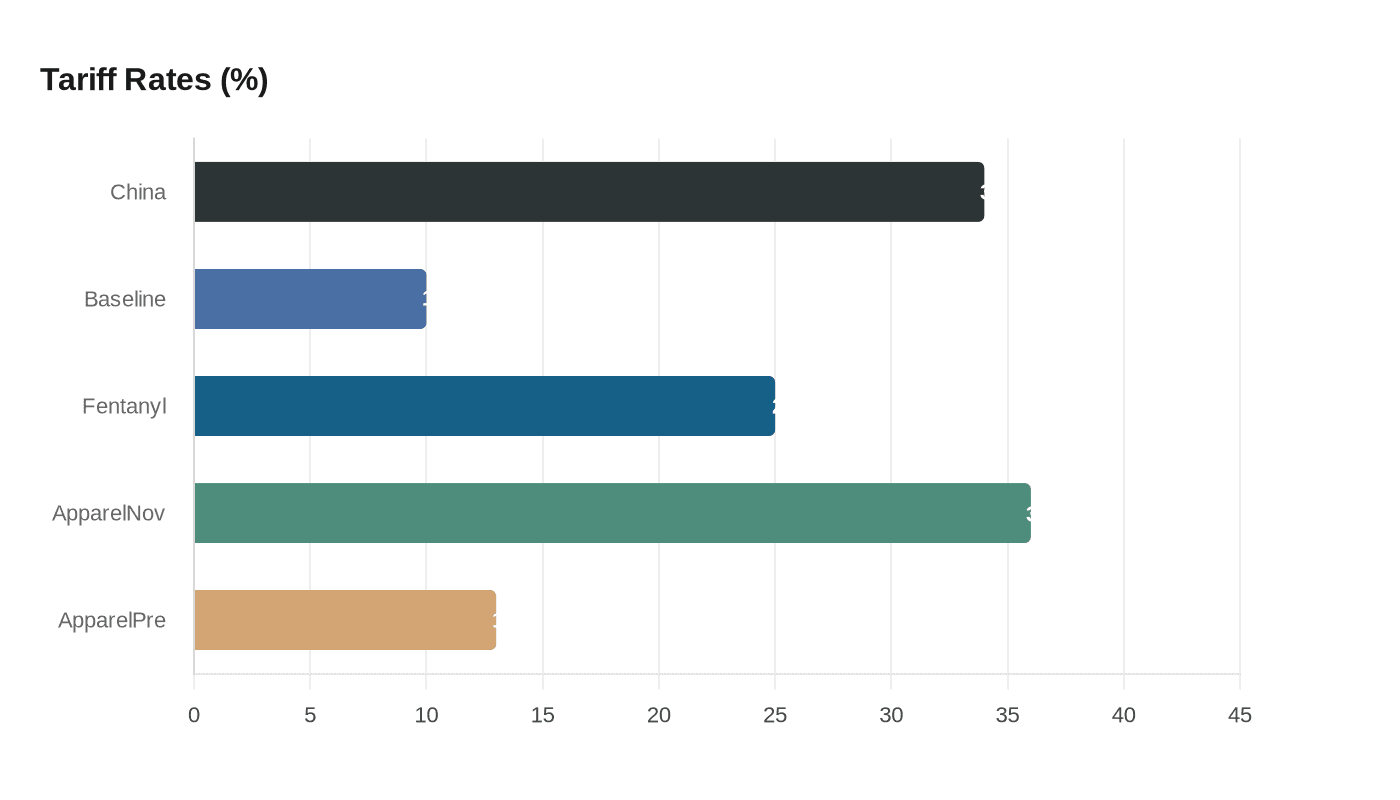
The ruling strikes down emergency tariffs that had been applied across sectors embedded in global supply chains, including apparel, footwear, personal luxury goods, automotive manufacturing, and semiconductor-dependent electronics. The Fashion Law reported that the duties included rates as high as 34% on imports from China and a roughly 10% baseline on goods from most other countries, and that 25% duties tied to fentanyl enforcement on certain goods from Canada, China, and Mexico were also invalidated.
The immediate market context underscores the scale of the change: Business of Fashion cited the BoF‑McKinsey State of Fashion 2026 finding that the weighted average tariff on apparel and footwear imports was 36% as of November 2025, up from 13% prior to the April 2 tariff announcement that had sent a shockwave through the fashion industry. Fashion stocks rose modestly after the ruling, with companies ranging from Vans owner VF Corp. to Abercrombie & Fitch posting gains of up to 4%, Business of Fashion reported.
Corporate and consumer price effects were stark before the decision. Forbes reported that Nike absorbed about $1 billion in tariff-related costs while Adidas faced roughly $235 million in such costs, and that Walmart and Macy’s tied price increases to higher import costs. Forbes also noted Walmart saying the cost of electronics and appliances would rise 3% for consumers on an earnings call, and that Ford raised prices on three Mexico-produced models by as much as $2,000 last May.
Industry groups and trade associations pressed for practical follow-through. Matt Priest, CEO of the Footwear Distributors and Retailers of America, called the decision an “important step toward creating a more predictable and competitive environment for American businesses and consumers,” and added, “By removing these widespread tariffs, the footwear industry can redirect billions of dollars toward innovation, job creation, and affordability for families across the country.” The National Retail Federation urged the lower court to ensure “a seamless process to refund the tariffs to U.S. importers. The refunds will serve as an economic boost and allow companies to reinvest in their operations, their employees and their customers,” and NRF executive vice president David French said, “The Supreme Court’s announcement today regarding tariffs provides much-needed certainty for U.S. businesses and manufacturers.”
Legal and administrative uncertainty remains acute over refunds. Justice Brett Kavanaugh warned in dissent that the ruling “says nothing today about whether, and if so how, the Government should go about returning the billions of dollars that it has collected from importers,” adding that the refund “process is likely to be a ‘mess,’ as was acknowledged at oral argument.” Sourcingjournal quoted an individual identified only as “Lamar” expressing confidence that Customs and Border Protection can move quickly and that CBP’s “recently modernized, fully electronic refund process should help to expedite this effort.”
Retailers, brands, and importers will now watch lower courts and CBP guidance closely as they evaluate repricing, rollbacks, and reinvestment plans. The ruling removes the emergency tariff authority used to reshape sourcing strategies, but the pathway to refunds and the possibility of alternative trade controls remain open questions for companies from Nike and Adidas to Walmart, Macy’s, VF Corp., and Abercrombie & Fitch.
Know something we missed? Have a correction or additional information?
Submit a Tip