Supreme Court strikes down Hawaii handgun permission law, expands gun rights
The court voided Hawaii’s private-property carry rule and narrowed a federal gun ban for marijuana users, opening new fights in lower courts. The rulings point gun-law challenges toward history, not modern policy.

The Supreme Court wiped out Hawaii’s handgun permission rule on June 25 and, a week earlier, narrowed a federal gun ban for unlawful drug users, giving gun-rights lawyers two fresh openings in the next round of litigation. In Wolford v. Lopez, the court voted 6-3, with Justice Samuel Alito writing for the majority, to strike down a state law that barred carrying firearms on private property open to the public unless the owner gave express and affirmative consent. The law conflicted with the nation’s historical tradition of firearm regulation and imposed severe restrictions on the daily activities of licensed carry holders. That reasoning lands squarely in the framework the court set in 2022’s Bruen decision, which protected the right to carry handguns outside the home for self-defense and forced judges to look to history and tradition rather than modern policy judgments when evaluating gun laws.
In United States v. Hemani, the justices ruled 9-0 on June 18 that applying 18 U.S.C. §922(g)(3) to Ali Danial Hemani violated the Second Amendment as applied to him. Hemani, a dual citizen of the United States and Pakistan born in Texas, told investigators he used marijuana about every other day after agents searched his family home in 2022, found a gun, and recovered marijuana on the property. The government later charged him under the federal ban on firearm possession by unlawful users of controlled substances. The court rejected that application of the statute, with Justice Neil Gorsuch writing for the majority. Brady United and GIFFORDS quickly criticized the decision.
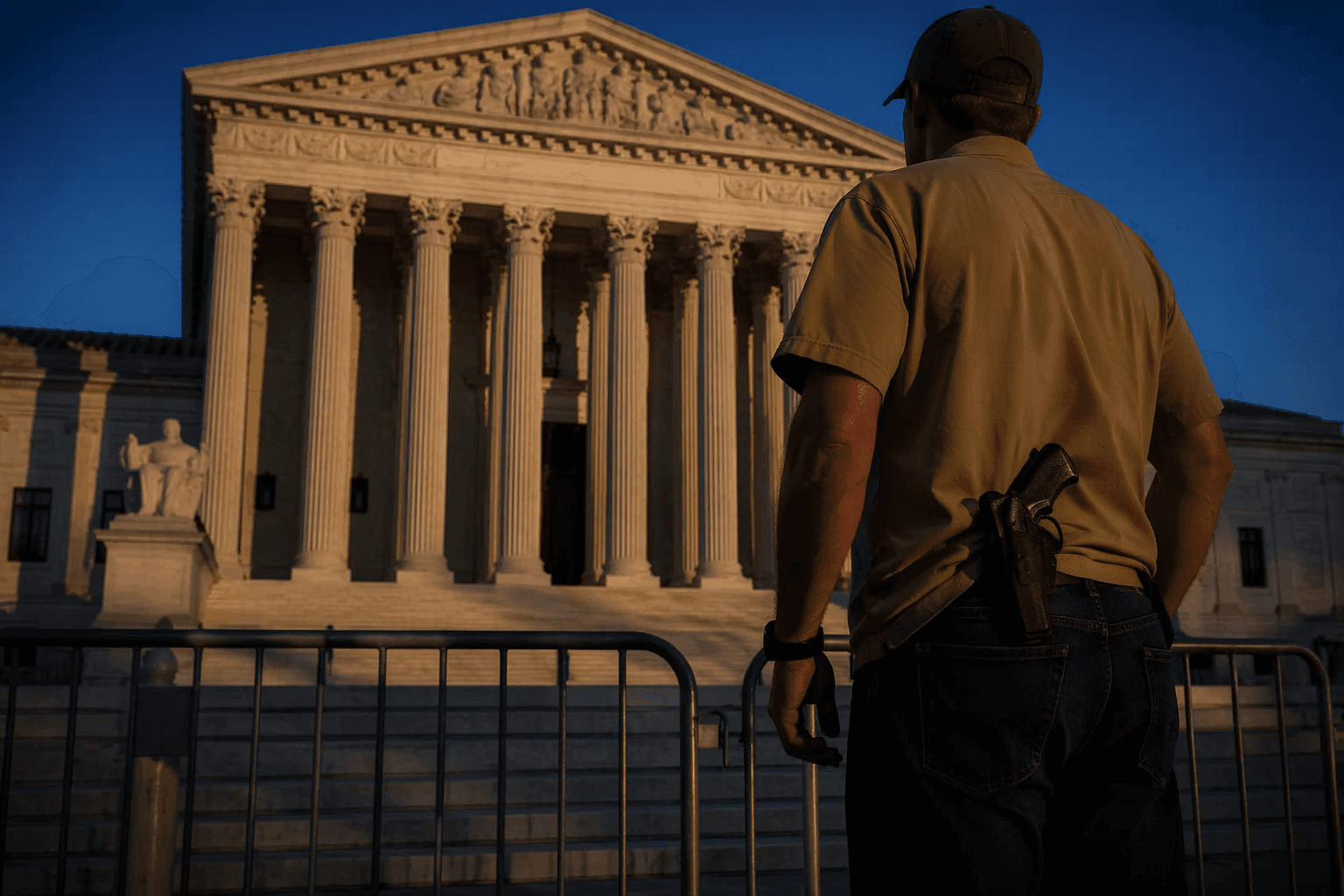

Hawaii’s law was one of a class of private-property no-carry defaults that have been considered or enacted in California, Maryland, New York and New Jersey. The Ninth Circuit had already been wrestling with related Hawaii and California restrictions before Wolford reached the court. Justice Amy Coney Barrett wrote separately in Wolford, joined in part by Justices Clarence Thomas and Neil Gorsuch, while Justices Elena Kagan and Ketanji Brown Jackson, joined by Justice Sonia Sotomayor, dissented.
This article was produced by Prism’s automated news system from verified source data, official records, and press releases, then run through automated quality and moderation checks before publishing. The system is built and supervised by the people who set the standards it runs under. Read our full AI policy.
Know something we missed? Have a correction or additional information?
Submit a Tip