Supreme Court to hear challenge to federal gun ban for drug users
Justices will hear United States v. Hemani on March 2 to decide whether 18 U.S.C. § 922(g)(3) bars firearm possession by unlawful drug users, a ruling with nationwide effects.
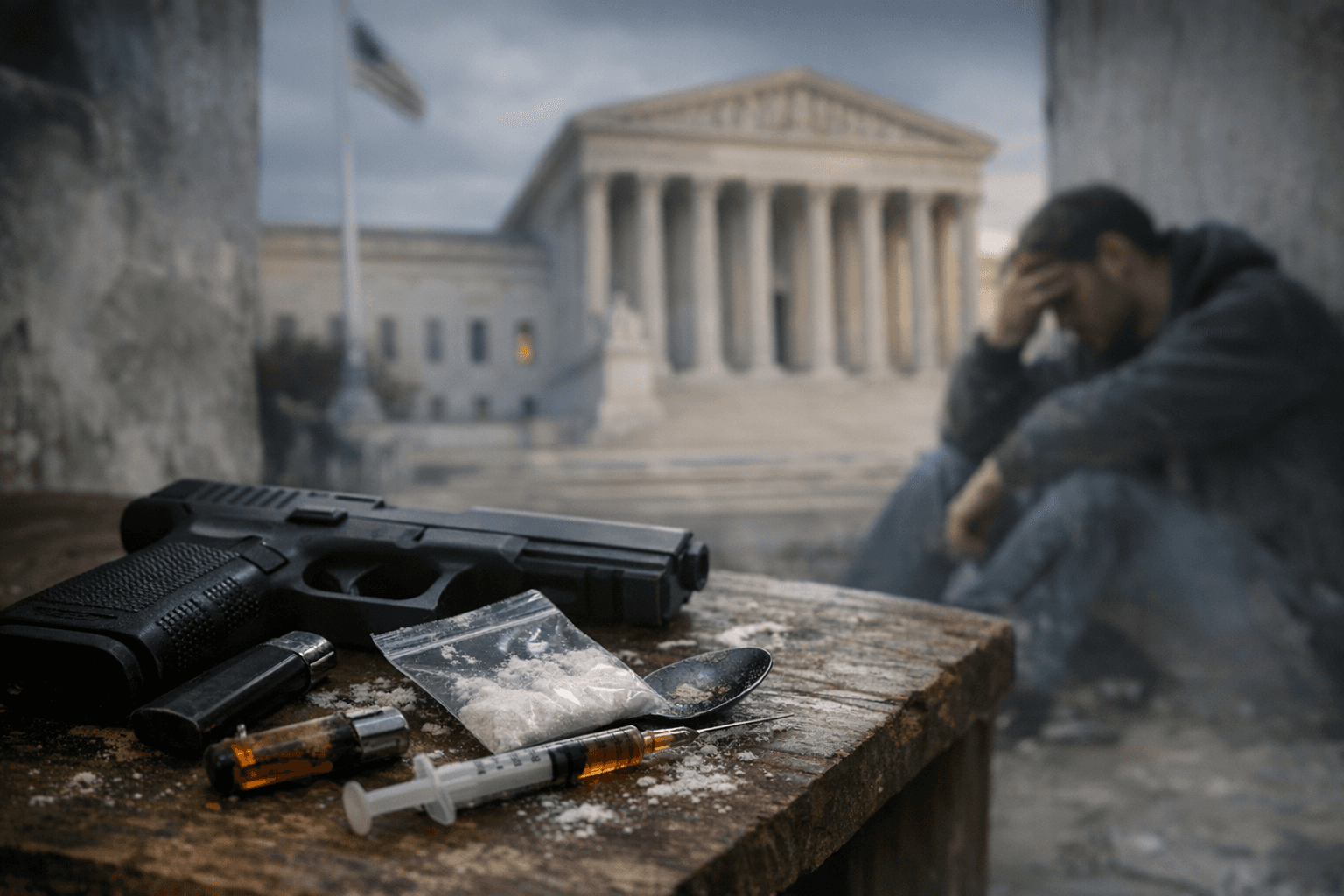
The Supreme Court will hear United States v. Hemani on Monday, March 2, to decide whether a federal statute that bars anyone who is an “unlawful user of or addicted to any controlled substance” from possessing firearms is constitutional under the Second Amendment. The outcome could unsettle gun-eligibility rules and complicate background-check enforcement, particularly in states that have legalized marijuana.
The defendant, identified in court filings as Ali Danial Hemani, is a Texas man whose home search reportedly turned up a Glock 19, marijuana, and a small amount of cocaine. Federal prosecutors have charged Hemani under 18 U.S.C. § 922(g)(3), a felony that can carry up to 15 years in prison. Department of Justice filings, as reported, also allege prescription-drug abuse and sales and assert links to an Iranian terrorist group; those allegations appear in the record but are not central to the narrow constitutional question the high court will resolve.
A three-judge panel of the U.S. Court of Appeals for the Fifth Circuit concluded that the statute, as applied, infringed Second Amendment rights. The Justice Department under the Trump administration asked the Supreme Court to overturn the Fifth Circuit, reinstate the charge, and clarify whether § 922(g)(3) can be applied to regular marijuana users given conflicts among lower courts since the Supreme Court’s 2022 Bruen decision. The government frames the issue as whether longstanding federal law that for more than five decades has barred “unlawful users” of controlled substances from possessing firearms survives the Bruen framework for historical analogues.
Legal scholars say Hemani presents a fraught vehicle for the Court. “This is a real indication that we have a court that’s more willing to and more interested in taking these cases,” Andrew Willinger, executive director of the Center for Firearms Law at Duke University, said of the Court’s docket. Willinger also warned that “in this particular case, the facts are kind of unique and, you might say, egregious,” suggesting the factual record could shape how broadly the Court decides the constitutional question.
The case arrives after the Court’s 2024 decision in United States v. Rahimi, in which justices upheld a federal prohibition on firearms for people subject to certain domestic violence restraining orders while allowing courts to rely on analogues. Legal observers note Rahimi involved a court determination that an individual posed a risk, whereas Hemani implicates a congressional determination about a category of people. “Hemani’s case is different in that it involves a determination by Congress about which groups of people are considered dangerous and subject to disarmament,” one commentator said.
Gun-control advocates warn that a narrowing or overturning of § 922(g)(3) would weaken the practical functioning of the background-check system. Douglas Letter, chief legal officer with Brady United, said the background check system “must be able to work easily, and practically, you have to have very clear lines,” and added, “The whole point is to keep guns away from people Congress have decided are some kind of danger and should not have guns.”
The Court’s decision, expected later in its term, will join a second major firearms dispute this term after arguments over Hawaii’s restrictions on where concealed-carry licensees may bring guns. Dozens of other petitions asking the justices to revisit federal firearm disqualifications remain pending, underscoring the broader stakes for congressional gun restrictions and the background-check architecture that governs purchases nationwide.
This article was produced by Prism’s automated news system from verified source data, official records, and press releases, then run through automated quality and moderation checks before publishing. The system is built and supervised by the people who set the standards it runs under. Read our full AI policy.
Did this article answer your question?