Surrey exhibit revives Expo 86’s art and lasting Vancouver legacy
A Surrey exhibit is pulling Expo 86 out of the archives, using art to show how the fair still shapes Metro Vancouver’s skyline, memory and civic identity.
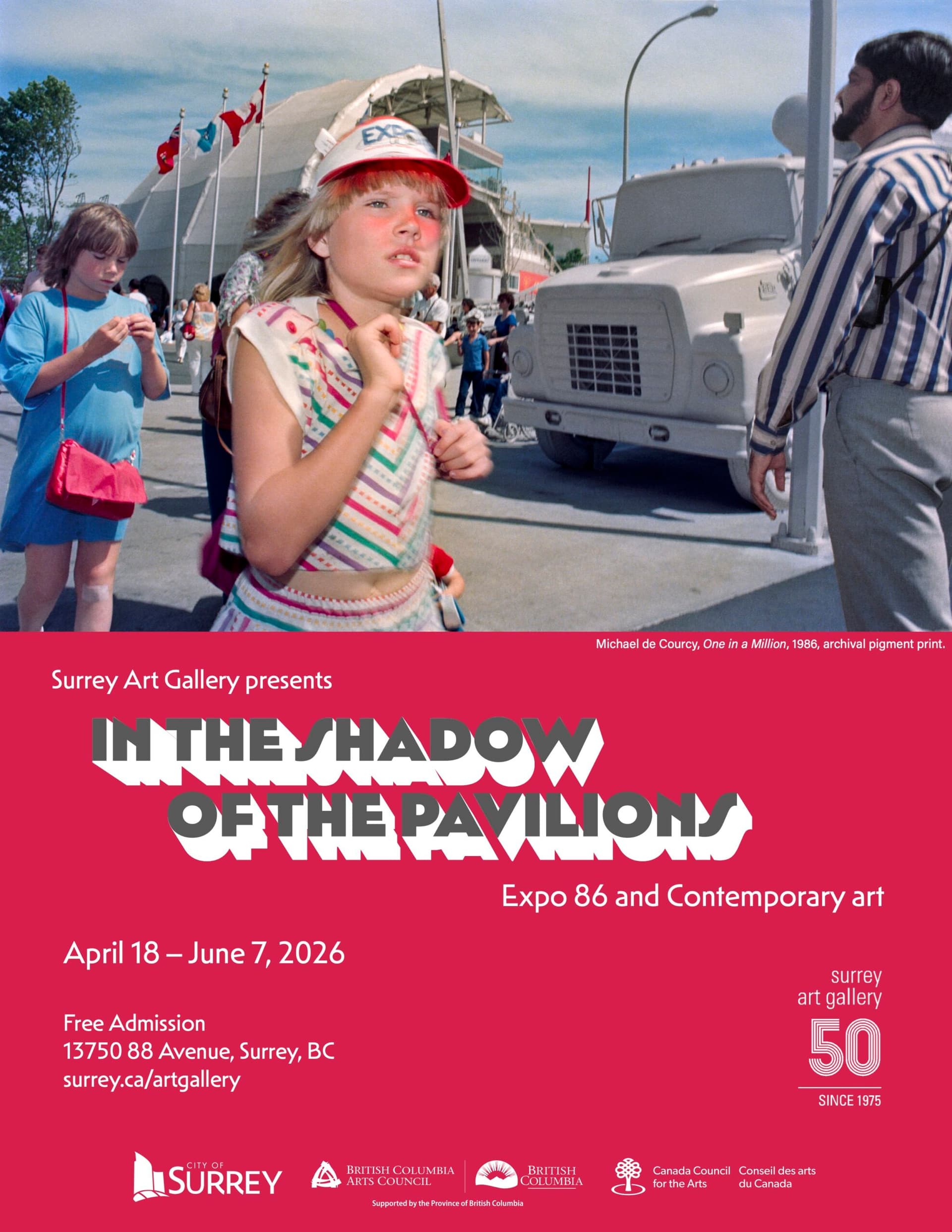
A Surrey gallery is using painting, photography, sculpture and archival material to pull Expo 86 back into public view, not as a postcard memory but as a force that still shapes British Columbia’s built environment and civic identity. In The Shadow of the Pavilions: Expo 86 and Contemporary Art opened at Surrey Art Gallery on April 18 and runs through June 7, with free admission. The gallery describes it as the first exhibition to closely examine Expo 86 through its art, a timely move as the fair’s 40th anniversary has revived questions about what the event meant, who it celebrated and what it left behind.
Expo 86 ran from May 2 to October 13, 1986, drawing 20,111,578 visits, or close to 22 million by some accounts. The world’s fair covered about 70 hectares across the False Creek site and the Canada Pavilion site, and it opened with the Prince and Princess of Wales. Its physical legacy remains hard to miss. SkyTrain was conceived as an Expo 86 legacy project and opened on December 11, 1985, before the fair began. The Expo Centre was later renovated and reorganized as Science World. Four decades on, the exhibition suggests the fair’s biggest impact may be less its temporary spectacle than the city it helped normalize.
Curator Jordan Strom has framed the show through the memory of seeing Expo as a 14-year-old, but the exhibition broadens that recollection into a larger civic story. Surrey Art Gallery says more than 35 artists are included; Surrey Now-Leader reported original and archival work by more than 50 artists. Among the names represented are Bill Reid, Robert Davidson, Debra Sparrow, Paul Wong and Hank Bull. The show follows themes of communication, transportation, urban development, resource extraction and Indigenous self-determination, pushing beyond nostalgia to ask whose version of Expo became official history and which communities were left outside the celebration.
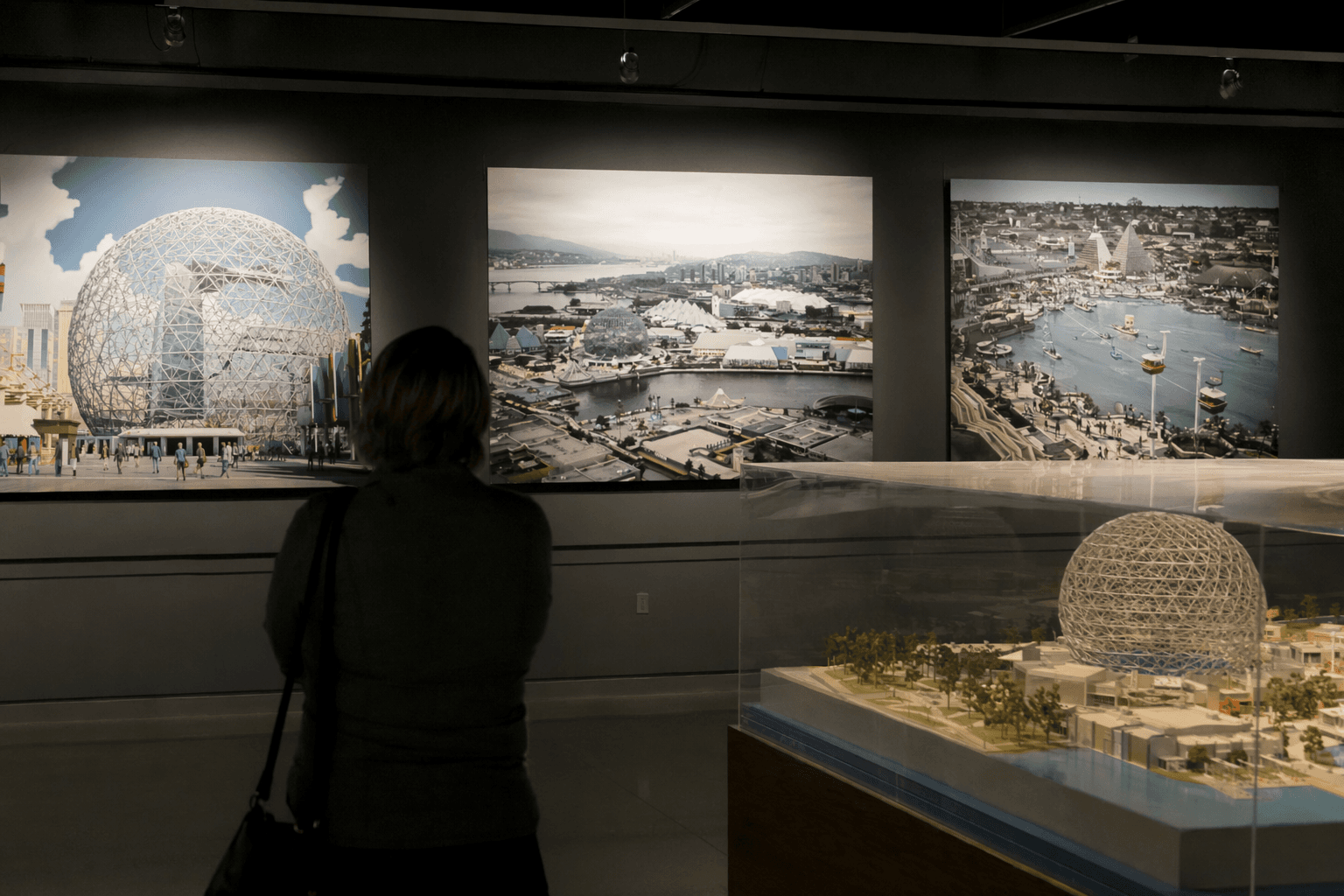
One centerpiece is Highway 86, the 216-metre, seven-hundred-foot participatory installation by New York architect James Wines and SITE. Built from concrete and steel, the work was meant to evoke 20th-century air, land and sea transportation. The sculpture itself did not survive, but the exhibition reconstructs its impact through concept art, photographs and posters. Another key work is Michael de Courcy’s One In A Million, a documentary-style archive of thousands of candid Expo images that captures fairgoers at the site and helps restore the social texture of the event.
The gallery has also scheduled a symposium for May 9, a curator’s tour for May 28 and a family art party on June 7. Together, the exhibition treats Expo 86 as more than a vanished fairground. It presents the event as a turning point in how Metro Vancouver imagined development, culture and public memory, and as a legacy still being contested in the city it helped build.
This article was produced by Prism’s automated news system from verified source data, official records, and press releases, then run through automated quality and moderation checks before publishing. The system is built and supervised by the people who set the standards it runs under. Read our full AI policy.
Did this article answer your question?