Swaner Preserve and EcoCenter: 1,200-Acre Kimball Junction Trails, Education Hub
Swaner Preserve and EcoCenter at Kimball Junction protects 1,200 acres with roughly 10 miles of trails and a visitor EcoCenter offering education programs. It expands local access to nature, recreation, and conservation learning.

The Swaner Preserve and EcoCenter at Kimball Junction is a 1,200-acre protected nature preserve that combines wildlife habitat, trail-based recreation, research, and community education. With wetlands, upland sage areas and roughly 10 miles of trails open for hiking, biking and snowshoeing, the site functions as both a local outdoor resource and a regional hub for conservation work.
The EcoCenter visitor facility runs exhibits and programs geared to families and school groups, including guided nature walks and seasonal offerings such as children's camps and family crafts. Typical visitor hours for the EcoCenter are Wednesday-Sunday, 10 a.m.-4 p.m. The preserve is actively managed for wildlife habitat, recreation and research, and also hosts volunteer habitat work that engages local residents in stewardship.
For Summit County, the preserve is more than a green space. Easy access to trails and nature-based programming provides ongoing opportunities for physical activity, outdoor learning and mental health benefits that are particularly important during long winter months on the Wasatch Back. School groups and family programs at the EcoCenter introduce children to local ecosystems, an experience that supports science education and environmental literacy across the county.
Community engagement at Swaner also intersects with broader equity and public health concerns. Centralized conservation education and volunteer programs create pathways for residents to gain hands-on skills, build social connections and participate in local decision-making about land stewardship. In neighborhoods that lack private outdoor space, a nearby preserve reduces barriers to recreation and nature exposure, which public health research has linked to improved well-being and reduced healthcare burdens.
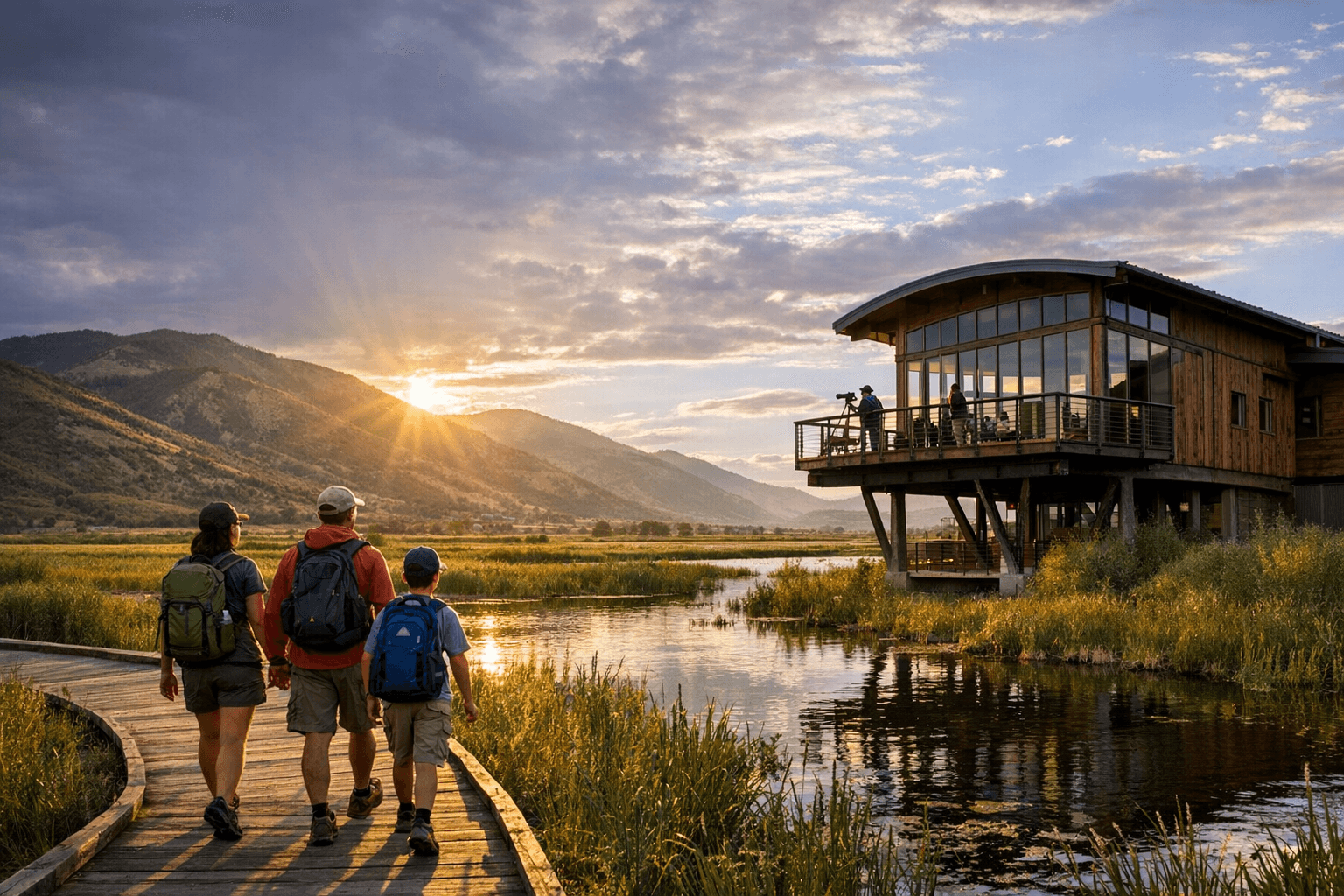
The preserve’s emphasis on wildlife habitat and research provides practical benefits for long-term resilience. Wetlands and sage habitats contribute to biodiversity and can play roles in watershed health for the region. Volunteer habitat projects give Summit County residents a direct role in maintaining those systems and learning about climate adaptation, species protection and local restoration techniques.
Practical access details and program schedules are posted by the EcoCenter online. For residents looking to visit, join seasonal programs or volunteer, the EcoCenter’s web page is a starting point: extension.usu.edu/swaner/
As Summit County plans for growth and seasonal tourism pressures, Swaner Preserve and EcoCenter stand as a community asset that combines recreation, education and stewardship. For local families, teachers and volunteers, the preserve offers concrete ways to get outside, learn about the local landscape and help shape the ecological future of the Kimball Junction area.
Sources:
Know something we missed? Have a correction or additional information?
Submit a Tip